 Tampa Siding
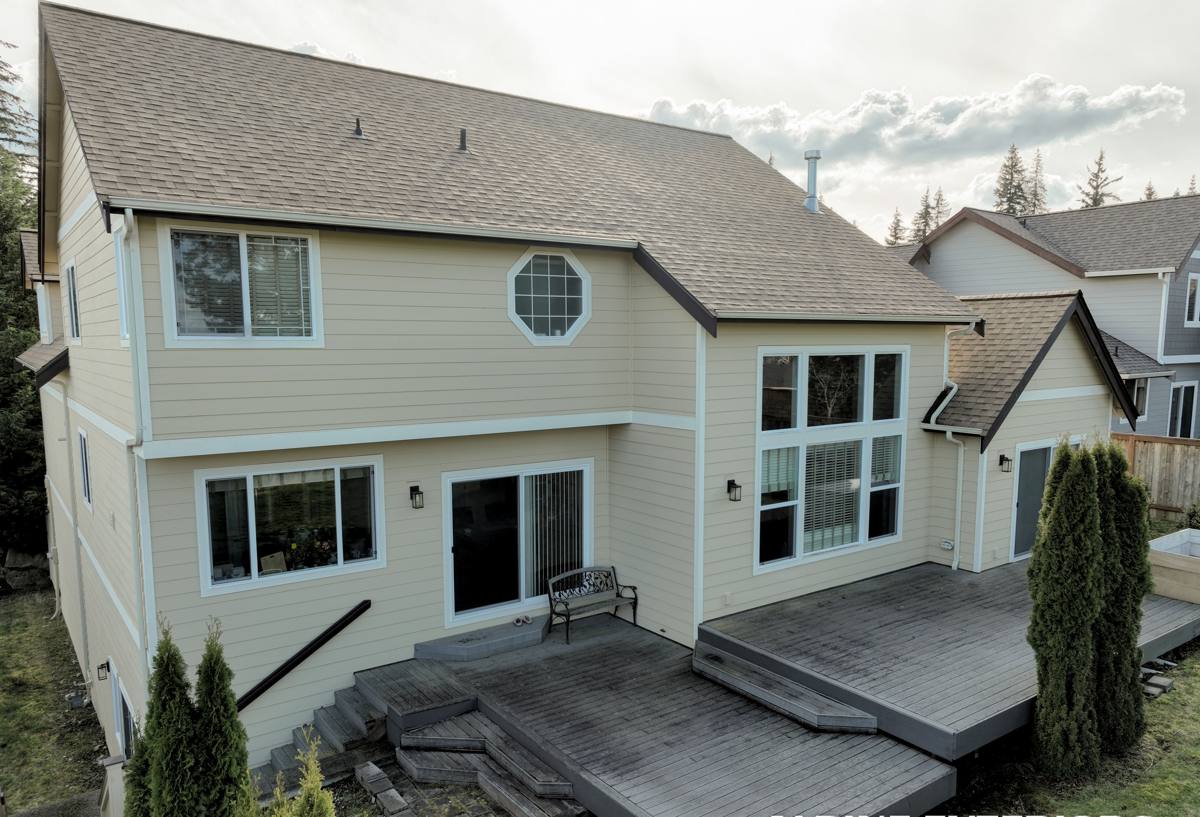
 Building a Deck That's Made for Ybor City
Ybor City sits close to the bay, close to downtown Tampa, and squarely in the path of everything Florida's climate throws at outdoor structures over a year. A deck here isn't just a weekend carpentry project — it's an exterior structure that has to survive intense UV exposure almost every day of the year, sudden downpours, salt-laden air drifting in off the water, and the real possibility of hurricane-force wind during storm season. A deck built without those conditions in mind will show it within a few seasons: loose railings, cupped boards, corroded fasteners, and connections that were never rated for the loads they're actually carrying.
We build and repair custom decks for homes in and around Ybor City, and the approach we take reflects what actually happens to lumber, composite, fasteners, and footings in this specific part of Hillsborough County — not a generic build plan pulled from a colder, drier climate.
What Tampa's Climate Actually Does to a Deck
Every material decision on a custom deck traces back to a handful of stressors that are constant in this area:
- UV exposure: Florida sun breaks down wood fibers and degrades the surface finish on lower-grade composites faster than in most parts of the country, leading to graying, splintering, or fading if the material and finish weren't chosen with that in mind.
- Heat cycling: Deck boards expand and contract daily as surface temperatures swing from cool mornings to hot, direct sun. Gaps, fasteners, and board spacing all need to account for that movement or the deck will buckle or gap unevenly over time.
- Humidity and wind-driven rain: Moisture gets driven sideways into ledger connections, stair stringers, and any spot where two pieces of material meet. Trapped moisture is what causes rot in wood framing and corrosion in fasteners, even under decking that looks fine on the surface.
- Salt air: Ybor City's proximity to Tampa Bay means airborne salt is part of the environment, not an occasional coastal event. Untreated or standard-grade metal hardware corrodes faster here than it would further inland.
- Wind load: Hurricane season isn't hypothetical here. A deck's railings, stair connections, and ledger attachment to the house all need to be built to resist uplift and lateral wind, not just support foot traffic.
None of these are exotic problems — they're just the baseline conditions for any outdoor structure in this part of Florida. The difference between a deck that lasts and one that doesn't usually comes down to whether the builder actually designed around them.
Choosing the Right Decking Material
There's no single "best" decking material — there's the right material for your budget, how the deck will be used, and how much upkeep you're willing to do. Here's how the common options hold up under Tampa conditions specifically.
| Material | How It Handles Heat, Humidity & Salt Air | Maintenance |
|---|---|---|
| Pressure-treated pine | Affordable and strong, but prone to checking, warping, and splintering under intense sun/rain cycling if not sealed and resealed regularly | High — annual inspection, periodic sealing/staining |
| Composite decking | Resists rot and doesn't splinter; quality varies a lot by product line, so board density and cap-stock quality matter more here than in milder climates | Low — periodic cleaning, no sealing/staining |
| PVC/cellular decking | Fully synthetic, doesn't absorb moisture, generally the most stable option in high-humidity, high-UV conditions | Low — periodic cleaning |
| Tropical hardwoods (e.g., ipe) | Naturally dense and rot-resistant, but installation is unforgiving and requires the right fasteners and pre-drilling to avoid splitting | Moderate — periodic oiling to maintain color |
Pressure-Treated Wood
Still a reasonable choice for homeowners who want a lower up-front cost and don't mind maintaining it. The key in this climate is proper board spacing for expansion, quality fasteners, and a realistic maintenance plan — skipping resealing for a couple of Florida summers is usually what leads to cupping and premature wear.
Composite Decking
A good middle-ground for homeowners who want low maintenance without the higher cost of PVC. We pay attention to which composite lines actually perform in heat and humidity versus ones that were designed with a milder climate in mind — cap-stock quality varies more than people expect, and it's the difference between a board that stays cool-ish underfoot and one that gets uncomfortably hot by early afternoon.
PVC and Cellular Decking
The most stable option when moisture and humidity are the primary concern, since it doesn't absorb water the way wood-plastic composites can at the core. It costs more, but for a deck near the bay air that will see near-constant humidity, it's often the material that needs the least babying over its lifespan.
Framing and Structure Come Before the Boards
Homeowners naturally focus on what the decking surface looks like, but the framing underneath is what actually determines whether a deck survives a decade of Tampa storms. A beautiful composite deck on an undersized or poorly fastened frame is still a deck that can fail.
On every custom deck we build in this area, we pay particular attention to:
- Ledger board attachment: This connection point to the house is one of the most common failure points nationally, and it's especially critical where wind-driven rain can get behind an improperly flashed ledger and rot the rim joist it's attached to.
- Fastener selection: Stainless steel or heavy hot-dip galvanized fasteners rated for coastal/salt-air exposure, not standard-grade hardware that will corrode faster this close to the bay.
- Footings and post bases: Sized and set to local code requirements, with post bases that keep wood off standing water and away from prolonged ground moisture.
- Railing and guardrail connections: Built to resist both everyday leaning loads and the lateral wind forces that come with tropical storms and hurricanes.
- Joist spacing: Tightened up where needed for the specific decking material chosen, since composite and PVC products often have different span requirements than solid wood.
Permits and Local Code
Most attached decks in Hillsborough County require a building permit, and for good reason — an unpermitted deck is one nobody has verified for structural adequacy or wind resistance, which matters a great deal in a hurricane-prone area. Permitting typically covers footing depth and sizing, ledger attachment method, guardrail height and baluster spacing, and stair geometry.
Some properties in and around Ybor City also fall under historic-district design guidelines given the neighborhood's status as one of Tampa's most recognized historic areas. Where that applies, it can affect visible details like railing style or decking sightlines from the street, and it's worth confirming early rather than after materials are ordered. We handle the permit submission and inspection scheduling as part of the build so it isn't left for the homeowner to sort out.
How Our Custom Deck Process Works
- On-site consultation: We look at the space, discuss how you'll actually use the deck, and talk through material options given your budget and maintenance preferences.
- Design and material selection: We put together a layout and a materials plan — decking, framing, fasteners, and railing — sized correctly for the structure and the local wind and moisture conditions.
- Permitting: We prepare and submit the permit package and coordinate the required inspections.
- Construction: Framing first, inspected before decking goes down, then decking, railings, and any stairs or built-in features.
- Final walkthrough: We go over the finished deck with you, including what maintenance (if any) the material you chose will need going forward.
Maintaining a Deck in Ybor City's Climate
Even low-maintenance materials benefit from a basic seasonal check in this environment. A simple routine goes a long way toward getting the full lifespan out of the structure:
- Rinse off salt residue and pollen buildup every few weeks, more often for homes closer to the water
- Check fastener heads and railing connections at least once a year for corrosion or looseness
- Inspect the ledger board area and any spots where two materials meet for signs of trapped moisture
- Reseal or restain pressure-treated wood on the schedule the product actually requires — not "when it looks bad"
- Clear leaves and debris from between boards so moisture doesn't sit trapped against the frame
- After any significant storm, walk the deck and check railings and stair connections before assuming everything is fine
What Affects the Cost of a Custom Deck
| Factor | Why It Matters |
|---|---|
| Size and shape | Multi-level decks, curves, and built-in features add framing complexity and labor time |
| Decking material | Pressure-treated wood costs less up front; composite and PVC cost more but reduce long-term maintenance |
| Height off grade | Taller decks need more substantial railing and stair structures, and often more engineering attention |
| Fastener and hardware grade | Coastal-rated stainless or galvanized hardware costs more than standard-grade but resists corrosion far longer |
| Site access and existing conditions | Demolition of an old deck, uneven grading, or tight access can add time and cost |
We don't quote a deck without seeing the site, since the actual cost depends heavily on these specifics rather than a flat per-square-foot number.
Why a Crew That Already Works in Ybor City Matters
A deck built by someone unfamiliar with this area tends to make the same predictable mistakes: standard-grade fasteners that corrode within a couple of years, framing that wasn't detailed for wind uplift, or a finish schedule that assumes a drier, cooler climate than Hillsborough County actually has. A crew that regularly works in and around Ybor City already knows which materials hold up here, what the local permitting process expects, and how to detail a deck so it's still solid after a few hurricane seasons — not just at the final walkthrough.
If you're planning a new custom deck or need an existing one evaluated for storm-readiness, we're happy to take a look and put together a straightforward plan. Fill out the form below for a free, no-pressure estimate — we'll walk the site, talk through your options, and give you a clear picture of what the project actually involves.