 Tampa Siding
 Siding Built for Clearwater's Coastal Conditions
Clearwater sits close enough to the Gulf that its weather behaves differently than homes even a few miles further inland. Salt-laden air moves off the water daily, the sun is intense and nearly constant, and afternoon storms roll in fast during the wet season. Add hurricane season into the mix and you have a combination of stresses that most exterior siding products were never designed to handle over the long term. We serve homeowners throughout the greater Tampa Bay area, and Clearwater is one of the communities where we see the clearest evidence of what coastal exposure does to the wrong siding choice.
This page walks through what local homes are actually up against, how our siding, roofing, window, and deck work fits together as a coastal exterior system, and why we install only James Hardie fiber cement siding rather than the vinyl, LP SmartSide, or wood-based products still common on older homes in the area.
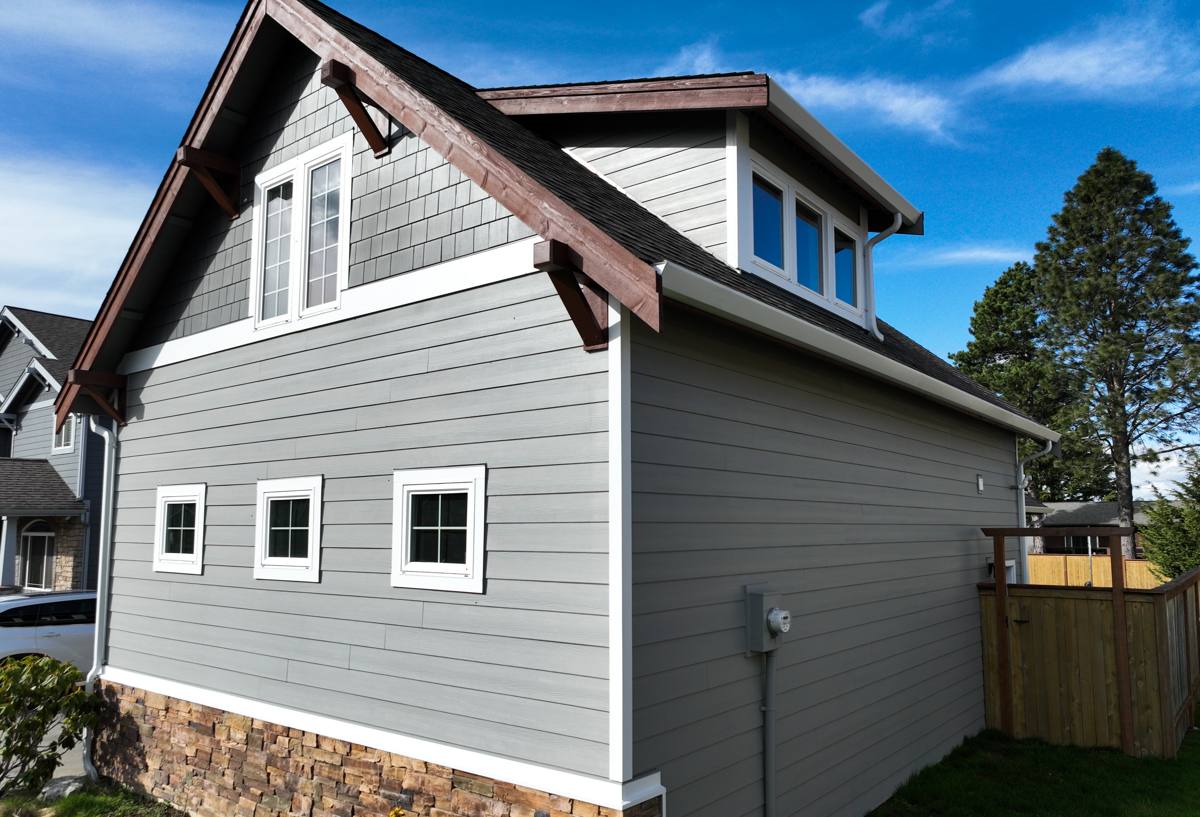
What Clearwater's Climate Does to a Home's Exterior
Salt Air and Corrosion
Proximity to Gulf water means airborne salt settles on siding, trim, fasteners, and window frames year-round, not just during storms. Salt is corrosive to metal fasteners and accelerates the breakdown of certain siding materials, especially products that rely on adhesives, laminated layers, or exposed seams. Over years, this shows up as fastener staining, edge deterioration, and premature fading long before a homeowner expects to think about replacement.
UV Exposure
Florida sun is strong nearly every month of the year, and a west- or south-facing wall in Clearwater takes a real beating. UV breaks down pigments and surface coatings, which is why so many homes in the area show chalky, faded siding on one side of the house while the shaded side still looks close to original. Factory-applied finishes that are engineered specifically to resist UV hold their color far longer than field-applied paint.
Wind-Driven Rain
Rain in this region rarely falls straight down. Gulf breezes push it sideways into walls, seams, and window edges, which means water intrusion risk isn't limited to hurricanes — it's a factor in ordinary summer thunderstorms too. Siding that isn't installed with the right flashing, clearances, and joint treatment can let moisture behind the cladding, where it causes rot, mold, and sheathing damage that isn't visible until it's advanced.
Hurricane-Force Wind
Hillsborough and Pinellas County homeowners both live with the reality of tropical systems. Siding has to stay fastened under sustained high wind and wind-driven debris, not just look good on a calm day. Installation details — fastener pattern, starter strips, corner treatment — matter as much as the product itself when a storm actually arrives.
Why We Standardized on James Hardie Fiber Cement
We made a deliberate decision to install only James Hardie fiber cement siding, and we don't treat that as a marketing detail — it's a professional standard we hold ourselves to on every job, including here in Clearwater. Fiber cement is non-combustible, dimensionally stable in heat and humidity, and doesn't rely on an adhesive laminate or exposed engineered-wood core the way some competing products do. James Hardie's ColorPlus factory finish is baked on and warranted against fading in a way that field-applied paint simply can't match, which matters directly given how much UV this area gets.
James Hardie also builds climate-specific HZ product lines engineered for humid, high-moisture climates like ours, rather than a single generic formulation used everywhere in the country. That distinction is part of why we don't stock or install alternatives like LP SmartSide, vinyl, Cemplank, Allura, or primed wood siding — we'd rather install one product correctly and stand behind it than offer several and hope one holds up.
What We Deliberately Don't Install, and Why
| Product | Where it falls short in this climate |
|---|---|
| Vinyl siding | Can warp or deform under sustained heat and intense sun; seams and panel edges are vulnerable in wind-driven rain and high wind events |
| LP SmartSide | Engineered-wood core is more moisture-sensitive than fiber cement; edge sealing and maintenance are more critical in a humid coastal climate |
| Primed spruce or cedar | Wood remains an organic material vulnerable to moisture, rot, and pests; requires ongoing repainting and edge maintenance that salt air accelerates |
| Cemplank / Allura | Fiber cement competitors without the same factory finish warranty depth or climate-specific product engineering we rely on |
How We Approach a Clearwater Siding Project
Inspection First
Every project starts with a real look at the existing wall assembly — not just the siding surface, but what's underneath it. In a coastal area like Clearwater, we're specifically checking for moisture intrusion around windows, prior water staining at the base of walls, and any signs that wind-driven rain has been getting behind existing cladding. This tells us whether we're dealing with a straightforward re-side or whether sheathing repair needs to happen first.
Installation Details That Matter Here
- Correct fastener type and spacing to hold up under sustained coastal wind loads
- Proper flashing and water-management details around windows, doors, and penetrations
- Manufacturer-specified clearances at grade and roofline to prevent moisture wicking
- Factory-finished ColorPlus panels installed per Hardie's published instructions to preserve the warranty
- Attention to corner and joint treatment, which is where wind-driven rain most often finds a way in
Why Installation Quality Outweighs Product Choice Alone
Even the best siding product fails early if it's installed off-spec. Gaps left for movement, wrong fastener placement, or skipped flashing details are the most common reasons a homeowner sees problems years before they should. We install to the manufacturer's documented specifications specifically because doing so keeps the transferable warranty intact and gives the siding its full expected service life in this climate.
Siding, Roofing, Windows, and Decks as One System
Siding doesn't work in isolation. Roof edges, window flashing, and even deck ledger connections all interact with how water moves around a house, and in a wind-driven-rain climate like Clearwater's, gaps between trades are where problems start. Because we handle siding, roofing, windows, and decks, we can look at a home's full exterior envelope rather than just the wall cladding in front of us, and catch conflicts — like a roof edge detail that's been dumping water onto a wall — that a siding-only contractor might miss entirely.
This also matters at renewal time: if a roof, windows, and siding all reach the end of their service life around the same period, coordinating that work avoids redundant trips, mismatched flashing details, and gaps in coverage between contractors who don't talk to each other.
Cost Factors for a Clearwater Siding Project
Every home is different, so we don't quote broad averages that don't reflect your actual house. What we can tell you is what tends to move the number up or down on a coastal Tampa Bay project:
| Factor | Why it affects cost |
|---|---|
| Extent of moisture or rot damage found underneath existing siding | Sheathing repair adds labor and material before new siding can go on |
| Home size and wall complexity | More corners, gables, and trim details mean more cutting, fitting, and labor time |
| Siding profile and finish selection | Lap, shingle-style, and panel profiles carry different material and labor costs |
| Trim and accessory scope | Fascia, soffit, and trim replacement alongside siding changes the total project size |
| Access and site conditions | Tight lots, landscaping, or multi-story sections affect staging and labor time |
Why a Local Crew Matters
A crew that works throughout the Tampa Bay area regularly sees how this specific climate — salt air, UV, wind-driven rain, and hurricane exposure — actually plays out on homes over time, not just in a training manual. That familiarity shapes real decisions on site: where to add extra attention to flashing, which details tend to fail first locally, and how to sequence a project around Florida's wet season. It also means a homeowner isn't relying on a crew that installs the same way regardless of region.
Maintaining Hardie Siding in a Coastal Climate
- Rinse siding periodically to clear salt residue and airborne grime, especially on Gulf-facing walls
- Inspect caulking and joints annually, particularly after hurricane season
- Keep irrigation heads and sprinklers from hitting siding directly, since repeated wetting accelerates wear at the base of walls
- Trim vegetation back from exterior walls to maintain airflow and reduce trapped moisture
- Address any paint or trim issues promptly, since small gaps are easier to seal before wind-driven rain finds them
Get a Local, No-Pressure Estimate
If your Clearwater home's siding is showing fading, staining, or signs of moisture behind the walls, it's worth having someone who knows this climate take a look before problems get more expensive to fix. We're happy to walk the exterior with you, explain what we find in plain terms, and put together a straightforward estimate — no pressure, no obligation. Use the form below to get started.