 Tampa Siding
 One Product, One Standard
Homeowners sometimes ask why we don't offer a menu of siding brands the way some contractors do. The honest answer is that we made a decision years ago to install one fiber cement product line — James Hardie — and to stop installing anything else. That's not a marketing gimmick. It's a standard we hold because Tampa's climate is genuinely hard on exterior building materials, and we got tired of being called back to fix or explain problems that started with the product, not the installation.
Hillsborough County sits in a spot that stacks several stresses on a home's exterior at once: tropical humidity that never really lets up, UV exposure strong enough to fade and chalk lesser paints within a few years, wind-driven rain that finds every gap in a lap joint, hurricane-force wind loads during the season, and salt-laden air pushing in from Tampa Bay. Any one of those is manageable. All of them together, year after year, is what separates siding that looks good for 10 years from siding that looks good for 30.
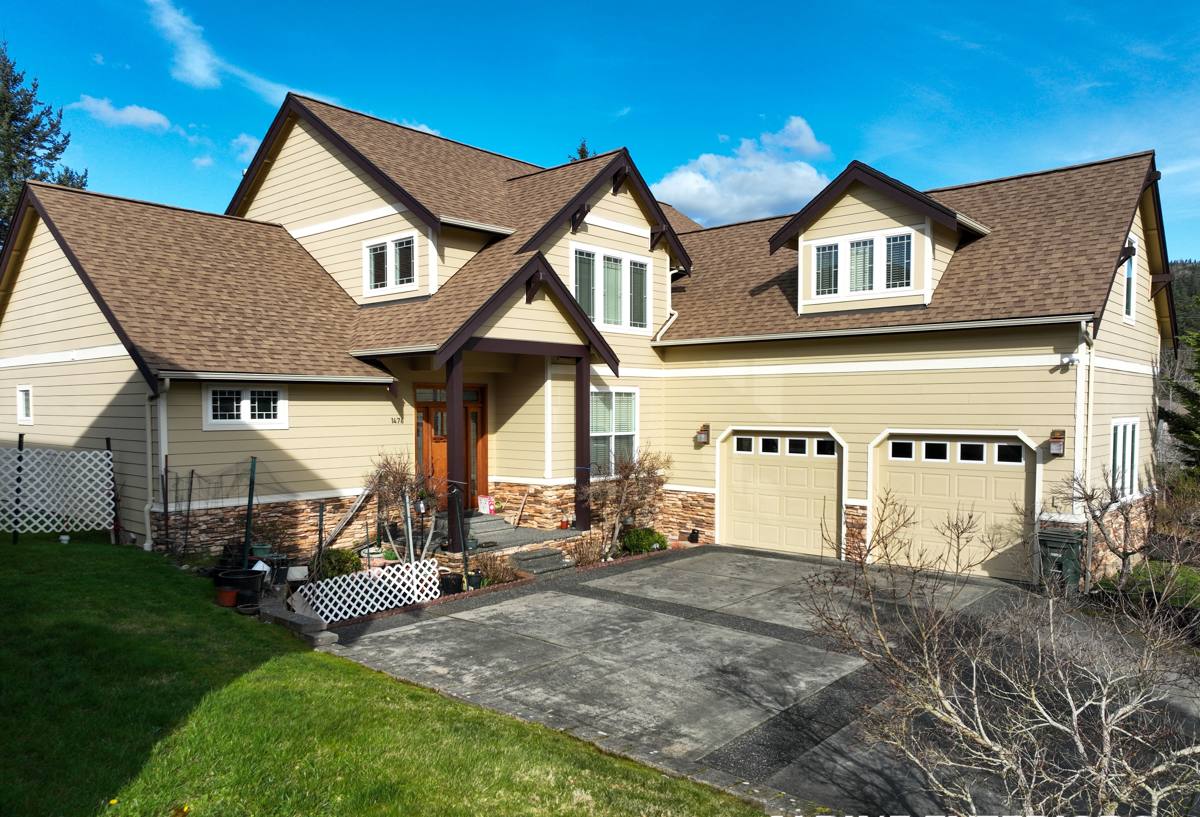
What Fiber Cement Actually Is
James Hardie siding is made from a mix of Portland cement, sand, and cellulose fiber, cured into rigid boards and panels. It's not plastic (like vinyl), not a wood composite (like LP SmartSide), and not raw wood (like cedar or primed spruce). That distinction matters more than it sounds like it should, because a lot of what goes wrong with siding in Florida traces back to how a material responds to moisture and heat.
Fiber cement doesn't expand and contract with temperature the way vinyl does, doesn't swell or rot at cut edges the way wood-based products can, and it's non-combustible — a genuine safety advantage, not a sales point, when you consider that homeowners insurance in Florida increasingly weighs exterior material in underwriting decisions.
How It Differs From What We Used to Install
We used to install other products, including vinyl and wood-based sidings, because that's what most contractors carry. Over time, the pattern of service calls made the decision for us: moisture-related failures at seams and cut edges, color fade that showed up faster in direct Gulf Coast sun than manufacturers' literature suggested, and, with vinyl, the wind-load limits becoming a real concern on homes exposed to open ground near the bay. None of those products are junk — they have legitimate uses and price points. We simply stopped being comfortable putting our name behind installations we expected to have problems within the product's own realistic lifespan in this specific climate.
Built for the Conditions Tampa Actually Sees
James Hardie doesn't sell one product nationwide and call it done. The company engineers regional formulations, and the HZ5 line is built specifically for hot, humid, high-moisture climates like ours — the same category as most of the Gulf Coast and Southeast. That matters for three reasons specific to this area:
- Wind resistance — properly installed Hardie board, fastened to spec, is rated to hold up under the wind loads Hillsborough County's building code requires for hurricane exposure zones.
- Moisture behavior — fiber cement doesn't absorb and swell like wood-based siding, which matters through a wet season that regularly hits several inches of rain in a single afternoon.
- UV stability — the factory-applied finish resists the chalking and fading that intense, near-constant Florida sun causes in field-applied paint over just a few years.
Salt air is the fourth factor, and it's the one people underestimate if they haven't lived near the bay. Airborne salt accelerates the breakdown of a lot of coatings and fasteners. It's part of why we spec corrosion-resistant fasteners on every Hardie installation, not just the ones closest to the water.
ColorPlus: Why the Finish Matters as Much as the Board
A siding board is only half the product. The other half is the finish, and this is where James Hardie's ColorPlus Technology is genuinely different from field-painted siding. ColorPlus is a multi-coat finish baked onto the board at the factory under controlled conditions, rather than sprayed or rolled on-site after installation.
The practical difference for a Tampa homeowner: factory-cured finishes bond more consistently and hold color longer under intense UV than paint applied on a job site, where temperature, humidity, and dry time all vary. It also means color matches from board to board and from repair patches to original siding, which field-applied paint struggles to guarantee once a few years have passed and the original batch is gone.
Color and Trim Options
Hardie's color palettes are regionally curated, and the Tampa area's options lean toward tones that perform well against strong sun without absorbing excess heat. Trim, soffit, and fascia products are designed to be installed as a matched system, which keeps expansion, fastening, and finish behavior consistent across the whole exterior rather than mixing materials that age at different rates.
Comparing the Basics
We're not going to tell you every alternative product is bad — plenty of them are reasonable choices in the right climate or budget. Here's a straightforward look at how the categories typically stack up on the factors that matter most in a Florida coastal climate:
| Factor | James Hardie Fiber Cement | Vinyl | Wood-Based / Wood Siding |
|---|---|---|---|
| Moisture & humidity resistance | Strong — doesn't swell or rot | Good, but seams can trap moisture | Vulnerable at cut edges and joints |
| UV / fade resistance | Strong with factory finish | Moderate — can fade and grow brittle | Depends entirely on paint maintenance |
| Wind performance | High when installed to spec | Lower wind-load ratings | Varies by installation method |
| Combustibility | Non-combustible | Combustible | Combustible |
| Typical repaint interval | Long — factory finish, not field paint | Doesn't repaint, can't be easily refreshed | Every 3-7 years in this climate |
What "Installed to Spec" Actually Means
Fiber cement's real-world performance depends heavily on installation. This is the part of the conversation contractors sometimes skip, and it's arguably more important than the brand debate. James Hardie publishes detailed installation requirements, and skipping them is how a good product ends up with a bad reputation.
- Correct nail or screw fastening pattern and depth — overdriven fasteners crack boards, underdriven ones work loose in wind
- Proper clearance from grade, roof lines, and decks so water doesn't wick into the bottom edge
- Correct gapping and caulking at butt joints and around penetrations
- A compliant water-resistive barrier and flashing detail behind the siding, not just at the surface
- Painting or caulking any field-cut edges per manufacturer instructions
- Fastener spacing tightened to meet high-wind-zone requirements, not just standard spacing
We install to Hardie's published specifications for our wind zone, not the minimum spacing allowed in milder climates. It's more labor per job. It's also why the finished installation holds up through a normal Florida storm season instead of showing loose boards after the first one.
Warranty: What's Actually Backed
James Hardie's warranty structure is a real factor in why we standardized on it. The siding substrate carries a non-prorated limited warranty measured in decades, and ColorPlus finishes carry their own separate finish warranty — a meaningful distinction, since a lot of "lifetime" siding claims from other manufacturers only cover the substrate and leave the finish, which is what actually fails first, unprotected. Hardie's warranties are also transferable to a subsequent homeowner within the stated terms, which matters for resale value in a market where buyers increasingly ask about siding age and condition.
Warranty coverage assumes installation according to Hardie's published instructions — another reason correct installation isn't optional in our process. A warranty is only as good as the install underneath it.
Cost Factors Homeowners Should Actually Weigh
| Factor | Why It Affects Your Cost |
|---|---|
| Board thickness and profile | Lap, shingle, and panel styles vary in material and labor cost |
| Trim and accessory scope | Matched fascia, soffit, and trim add cost but keep the system consistent |
| Substrate condition | Rotted sheathing or water damage found during tear-off adds repair cost |
| Home height and access | Multi-story sections and tight lot lines increase labor time |
| Color | Factory ColorPlus finishes cost more upfront than primed board you paint yourself, but remove a recurring repaint expense |
We won't quote a number here since every home is different, but we will say this: the lowest bid on a siding job is very often the one skipping flashing details, fastener spec, or substrate repair — the parts of the job you can't see once it's finished.
Maintenance: What Ownership Actually Looks Like
- Rinse siding periodically to clear salt residue and dust, especially on homes closer to the bay
- Inspect caulking at joints and penetrations annually and re-caulk if it's cracked or pulling away
- Keep sprinklers from spraying directly on siding long-term
- Address any impact damage promptly rather than letting a cracked board sit through a wet season
- Keep landscaping and mulch from holding moisture against the bottom edge of the siding
That's a shorter maintenance list than most exterior products in this climate require, which is part of the appeal — but it isn't a zero-maintenance product, and anyone who tells you otherwise isn't being straight with you.
The Bottom Line
We install James Hardie exclusively because, after years of exterior work across the Tampa Bay area, it's the product we trust to perform through the specific combination of wind, sun, rain, and salt air this region throws at a house every year — provided it goes on correctly. If you're weighing a siding replacement or new install and want a straight answer about what's realistic for your home, we're happy to walk the exterior with you and put together a free, no-pressure estimate.