 Tampa Siding
 Two Products That Look Similar on a Spec Sheet
If you've been shopping for siding replacement in the Tampa Bay area, you've probably run into two names that get mentioned in the same breath: James Hardie and Cemplank. Both are fiber cement. Both are sold as a step up from vinyl. Both show up on contractor bids, sometimes for very different prices. That similarity is exactly why homeowners get confused, and exactly why we think it's worth explaining, in plain terms, why our company installs one and not the other.
This isn't a takedown of Cemplank. It's a legitimate fiber cement product and plenty of homes wear it without issue. This page is about why we, as a contractor who has to stand behind our work in Hillsborough County's climate, made fiber cement standardization a company policy rather than a job-by-job decision.
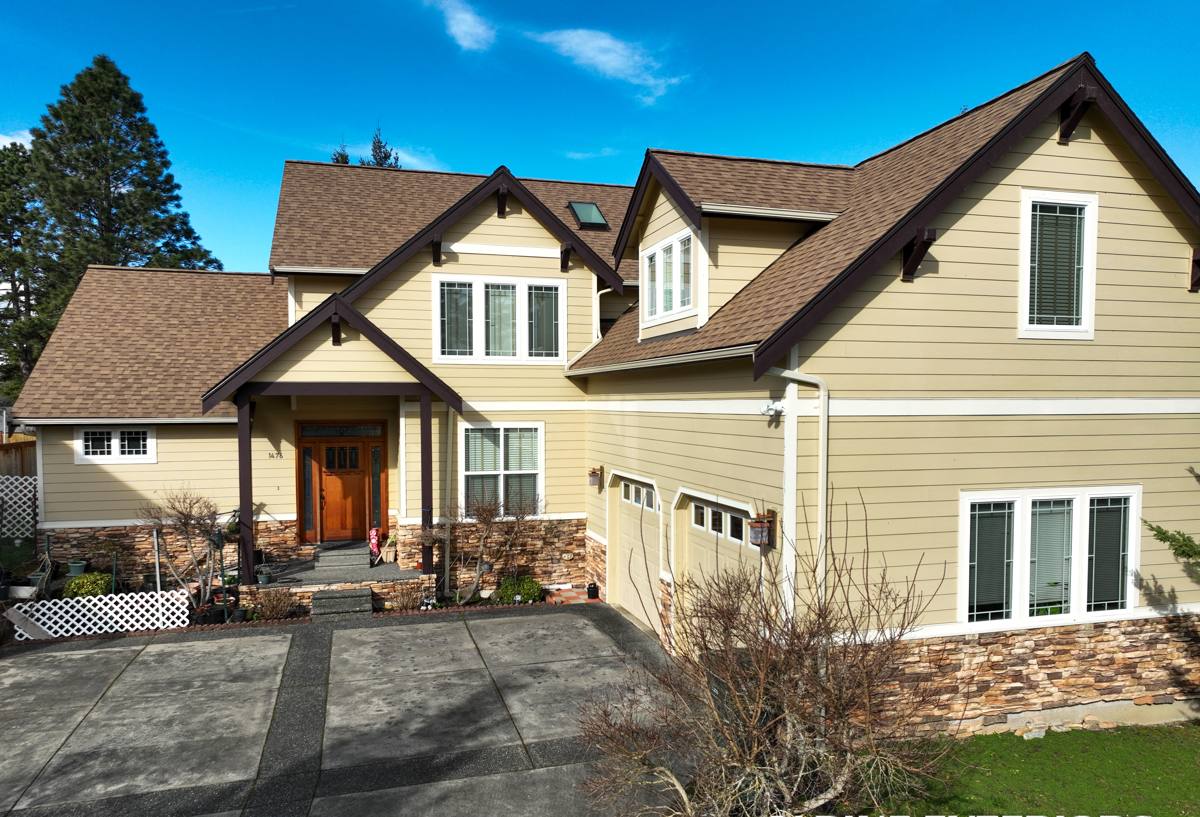
What the Two Products Actually Have in Common
It's worth starting here, because a lot of marketing on both sides overstates the differences. Both Cemplank and James Hardie siding are made from a mix of Portland cement, sand or silica, and cellulose fibers, pressed and cured into planks. Compared to wood or vinyl, both share the same core advantages:
- Non-combustible — fiber cement doesn't feed a fire the way wood siding can
- Resistant to termites and wood-boring insects, which matter in a humid Gulf Coast climate
- Won't rot the way solid wood or engineered wood siding can if water gets behind it
- Holds paint and factory finishes better than vinyl over the long run
- Rigid enough to resist the dings and impact damage that vinyl is prone to
So if a homeowner tells us "the other bid was for fiber cement too," they're not wrong about the material category. The differences that matter are in how each product is engineered, finished, warrantied, and supported — and those differences are exactly what shows up on a house after a few Tampa summers.
Where They're Sold Matters More Than It Sounds
Cemplank is commonly sold through big-box and general building-supply channels as a value-priced fiber cement option, often primed rather than factory-finished. James Hardie built its business around a dedicated network of trained, often certified installers and a factory-applied finish system. That distribution difference isn't cosmetic — it shapes everything else on this page, from paint performance to warranty terms to who's accountable if something goes wrong five years after installation.
Where the Two Products Diverge
Factory Finish vs. Field-Painted
James Hardie's ColorPlus finish is baked on and cured at the factory, under controlled conditions, with a finish designed to hold color and resist fading, chipping, and cracking for years — backed by its own finish warranty separate from the product warranty. Cemplank is more commonly sold primed, meaning the color coat gets applied on-site, in the field, under whatever weather and humidity conditions exist that day. In Tampa, where summer afternoons swing from blistering sun to sudden downpour, field-applied paint is far more sensitive to temperature, humidity, and dry time than a factory process ever will be. A rushed or poorly timed field paint job is one of the most common reasons fiber cement siding looks tired within a few years, regardless of brand.
Climate-Zone Engineering
James Hardie engineers its HZ product lines by climate zone — HZ5 for the Gulf Coast humidity and moisture patterns that Hillsborough County deals with, versus formulations built for drier or colder regions. That's a meaningful distinction in a market that sees wind-driven rain, near-constant humidity, and salt air pushed inland from Tampa Bay. Not every fiber cement product on the market is engineered with a region-specific moisture and expansion profile, and that engineering is part of what we're paying for and installing to when we spec Hardie on a home here.
Warranty Structure and Transferability
James Hardie backs its siding with a long, transferable limited warranty and a separate ColorPlus finish warranty, both of which have been in place long enough to have a track record homeowners and future buyers can actually check. Warranty terms and the manufacturer standing behind them vary across the fiber cement category, and a shorter or less transferable warranty matters more than it seems when you're planning to sell the home someday — a strong, well-documented warranty is a selling point; a thin one is a question a buyer's inspector will raise.
Installer Training and Accountability
Fiber cement is not a forgiving material to install wrong. Gaps, wrong fastener patterns, or improper clearance from grade or roofing can lead to moisture problems no matter whose name is on the plank. James Hardie invests heavily in contractor training and certification programs, and building a crew around one system means our installers are drilling the same nailing patterns, the same flashing details, and the same joint treatments on every single job — instead of switching techniques between two or three different manufacturers' specs. That consistency is a bigger factor in how siding performs over 20 years than most homeowners realize.
Side-by-Side: What the Difference Looks Like in Practice
| Factor | James Hardie | Typical Cemplank Purchase |
|---|---|---|
| Finish | Factory-applied ColorPlus, cured under controlled conditions | Commonly sold primed for field painting |
| Climate engineering | Zone-specific HZ formulations (HZ5 for Gulf Coast) | General-purpose fiber cement formulation |
| Warranty | Long-term, transferable product and finish warranties | Varies by product line and retailer |
| Installer network | Nationwide certified contractor training program | Installed by whichever crew a retailer or contractor assigns |
| Typical distribution | Specified through trained pro contractors | Often available through big-box and general suppliers |
None of this makes Cemplank a bad material by definition. It makes it a different product with a different support structure behind it — and that support structure is a big part of what a homeowner is actually buying when siding goes on a house.
Why Installation Sensitivity Is the Real Story
Fiber cement, as a category, punishes shortcuts more than vinyl does. Improper fastener spacing, missing kick-out flashing, caulked butt joints instead of properly flashed ones, or panels installed too close to grade will eventually let water find a way in — and once moisture gets behind fiber cement siding in a humid climate like ours, the damage shows up in the sheathing and framing behind it, not just the siding itself. This is true of every fiber cement product, Hardie included. The difference is that a manufacturer with a mature, well-documented installation system and a trained contractor network makes it much easier for a crew to get every detail right, job after job, without guessing.
When we standardized on one fiber cement brand, we weren't just picking a product — we were picking one installation system to master completely, one set of flashing and fastening details to train every crew member on, and one manufacturer's technical support line to call when a detail on an odd roofline or window return needs a second opinion. Splitting that focus across multiple brands means splitting expertise, and on a material this sensitive to installation quality, that's not a trade-off we're willing to make.
Why We Put Hardie on Tampa Homes
Hurricane-force wind events, intense year-round UV exposure, wind-driven rain off the Gulf, and salt air moving inland from Tampa Bay all put real, cumulative stress on a home's exterior. We wanted a fiber cement system engineered for that specific combination, with a factory finish that doesn't depend on field weather conditions the day it's painted, backed by a warranty with a long track record, and installed by a crew trained on one consistent system rather than several. James Hardie's HZ5 line, ColorPlus finish, and installer training program checked those boxes in a way we could stand behind on every job, not just the ones where conditions happened to be ideal.
What to Ask Any Contractor Pitching Fiber Cement Siding
Whether you go with us or shop around, these questions will tell you more about the job you're about to get than the brand name on the invoice:
- Is the siding factory-finished or will it be painted on-site, and what's the plan if humidity or rain hits during that window?
- Is the specific product line engineered for Gulf Coast humidity and wind-driven rain, or is it a general-purpose formulation?
- What's the product warranty, is it transferable to a future buyer, and is there a separate finish warranty?
- Is the installation crew trained or certified on this specific manufacturer's system?
- What clearance from grade, roofline, and other penetrations does the manufacturer require, and will the crew document that it was followed?
- Who do you call, manufacturer or contractor, if a finish or warranty issue shows up in year eight?
Cost Is Real, But It's Not the Whole Story
We're not going to pretend price doesn't matter — fiber cement siding is a meaningful investment, and lower-cost products exist for a reason. But the honest comparison isn't installed cost per square foot in isolation; it's installed cost against finish life, warranty coverage, and how forgiving the product and installation system are of Tampa's climate over the 20-plus years you'll likely own the siding. A cheaper material that needs repainting in year six or that leaves you chasing warranty coverage after a wind event usually costs more over time than paying for a factory-finished, climate-engineered system up front.
Let's Talk About Your Home Specifically
Every house in Hillsborough County carries its own mix of sun exposure, wind exposure, and existing siding condition, and the right answer for your home deserves a real look, not a generic pitch. If you'd like a straightforward, no-pressure estimate and a chance to ask us anything on this page in person, the form below gets you on our schedule.