 Tampa Siding
 Plant City's Exterior Climate Reality
Plant City sits inland in eastern Hillsborough County, and that inland position shapes what its siding actually has to survive. Homes here don't take the direct salt spray that hits properties closer to Tampa Bay, but they get everything else the region throws at exteriors: long stretches of intense, nearly year-round UV exposure, thick summer humidity that never fully lets up, and the wind and wind-driven rain that come with tropical storms and hurricanes tracking through West Central Florida. Hurricane-force gusts don't stop at the coastline — inland communities like Plant City still see damaging wind loads during named storms, and that wind is what tests siding fastening and butt joints, not just the rain behind it.
Add in Plant City's agricultural, semi-rural character — larger lots, more mature tree cover, homes that sit further apart and see more direct sun exposure on at least one full elevation — and you get a specific set of stresses: UV breakdown on south- and west-facing walls, moisture cycling from humidity and afternoon storms, and periodic high-wind events that find every weak point in a siding installation.
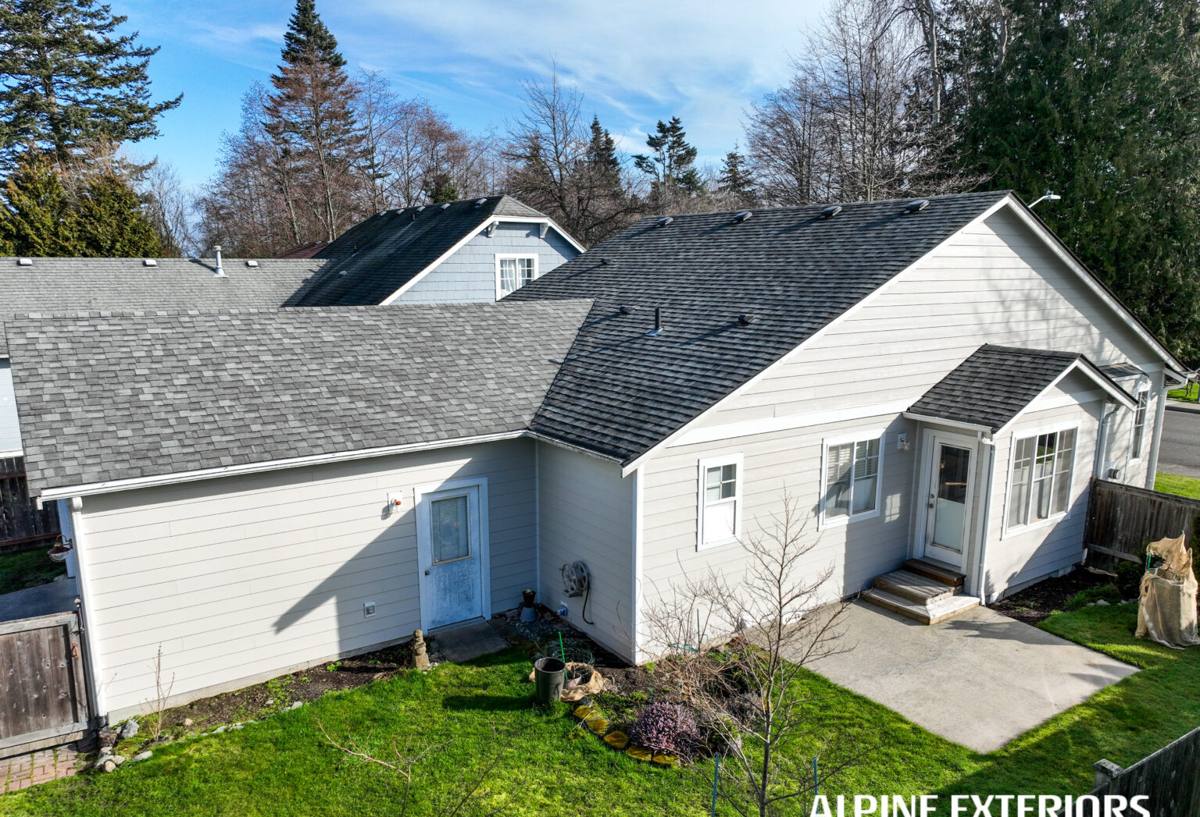
What This Does to Siding Over Time
None of this is dramatic on any single day. It's cumulative. UV bakes out plasticizers and pigments in lower-grade materials, causing fading and brittleness. Humidity keeps wood-based products at an elevated moisture content for more of the year than they were engineered for, which is where swelling, delamination, and rot start. Wind-driven rain finds any gap in flashing, caulking, or lap coverage and pushes water behind the cladding instead of letting it run off. And wind itself — even without a hurricane making landfall nearby — stresses fasteners and panel edges over repeated storm seasons.
The homes we see with siding problems in Plant City are rarely the victims of one bad storm. They're usually showing the slow result of a product or installation that wasn't matched to this climate in the first place.
Common Problems We See on Plant City Homes
- Older wood or hardboard lap siding with soft spots, delamination, or visible swelling at the bottom edge of boards
- Vinyl siding that has warped, buckled, or faded unevenly, especially on sun-exposed elevations
- Caulk-dependent seams that have dried out and cracked, letting wind-driven rain behind the siding
- Paint failure and chalking on painted wood or fiber cement that was never refinished with the manufacturer's spec
- Fastener corrosion and nail pops from repeated wet/dry and hot/cold cycling
- Trim and corner boards rotting faster than the field siding because they hold moisture longer
Why We Install Only James Hardie Fiber Cement
We made a deliberate decision as a company: we install James Hardie fiber cement siding, and only James Hardie. We don't install LP SmartSide, vinyl, Cemplank, Allura, primed spruce, or cedar. That's not a marketing position — it's a standard we hold because of what we've seen happen to exteriors in this exact climate over years, not just at installation.
Non-Combustible Material
Fiber cement is primarily sand, cement, and cellulose fiber. It doesn't burn, warp from heat the way vinyl can, or provide fuel the way wood-based products do. That matters on any home, and it's a meaningful, verifiable advantage over engineered wood and vinyl alternatives.
HZ5 — Engineered for This Climate
Hardie's HZ5 product line is specifically formulated for hot, humid, storm-prone climates like ours. It's built to resist moisture-related damage and hold up under the humidity and wind exposure that's constant in Hillsborough County, rather than being a general-purpose product adapted after the fact.
ColorPlus Factory Finish
Instead of field-applied paint, ColorPlus finishes are baked on in a controlled factory environment through multiple coats, and they carry their own finish warranty separate from the substrate warranty. In a market with this much UV exposure, that finish durability is one of the biggest practical differences between fiber cement done right and a product relying on paint applied on-site or years down the road during a repaint.
A Real, Transferable Warranty
James Hardie backs its siding with a strong warranty structure that's transferable to a new owner if the home sells — a detail that matters to buyers and appraisers alike in a market where exterior condition gets scrutinized during inspections.
What Correct Installation Actually Involves
Fiber cement siding is only as good as the installation behind it. Hardie itself is explicit that improper installation — wrong fastener spacing, insufficient clearance, skipped flashing details — voids warranty protection and shortens the real-world lifespan of the product. This is where a lot of siding jobs, regardless of brand, quietly fail.
- Correct fastener type, spacing, and embedment per Hardie's published installation specifications
- Proper water-resistive barrier and flashing at every window, door, and penetration
- Minimum clearance maintained between siding and roof lines, decks, and grade
- Panel and joint treatment that accounts for expansion and prevents water intrusion at seams
- Caulking used only where specified — not as a substitute for correct flashing
- Attention to corner boards, trim, and transitions, which are where most failures actually start
A crew that treats every job the same, regardless of brand or climate, is how you end up with siding that looks fine at handoff and fails early. We install to Hardie's spec because that spec exists for a reason, and cutting corners on it defeats the point of choosing the material in the first place.
What Drives Siding Cost in Plant City
Every home is different, but the factors that move a siding project's price are consistent. We don't publish blanket pricing because lot size, home layout, and existing condition all matter — but homeowners should understand what they're paying for.
| Cost Factor | Why It Matters |
|---|---|
| Home size and wall complexity | More square footage, corners, gables, and dormers means more material and labor time |
| Existing siding removal | Tear-off of old wood, vinyl, or hardboard adds labor and disposal cost versus a bare-wall install |
| Substrate and moisture condition | Rotted sheathing or water damage found underneath must be repaired before new siding goes on |
| Hardie product line and profile | Lap, panel, board-and-batten, and shingle profiles carry different material and labor costs |
| ColorPlus vs. field-painted finish | Factory-finished ColorPlus costs more upfront but removes a future repaint cycle |
| Trim, fascia, and soffit scope | Full exterior packages cost more than siding alone but avoid mismatched future repairs |
| Access and lot conditions | Larger, more open Plant City lots can simplify staging and access compared to tighter urban lots |
More Than Siding: A Full Exterior Approach
Siding doesn't perform in isolation. It works alongside the roof, windows, and any attached structures like decks to keep water out of a home, and problems in one area often show up as damage in another. We handle siding, roofing, windows, and decks, which means we're looking at a home's exterior as one connected system rather than treating siding as a standalone product install.
A roof with failing flashing at a wall intersection will keep soaking the siding below it no matter how good that siding is. Windows that were never properly flashed will leak into the wall cavity regardless of what's on the outside. And a deck ledger board attached without the right flashing detail is a chronic moisture source right at the house. Addressing siding correctly sometimes means flagging one of these other issues first — and having one crew capable of handling all of it means fewer handoffs and less risk of finger-pointing between trades.
Why a Local Hillsborough County Crew Matters
Plant City homes fall under Hillsborough County permitting and building code requirements, including wind-load standards tied to our hurricane exposure. A crew that works in this county regularly knows the permitting process, the inspection expectations, and the wind-zone requirements that apply to exterior work here — that's not the same knowledge base a crew that mostly works in a different climate or code jurisdiction brings to the job.
Local also means accountability. A contractor based in the Tampa area, working Plant City and the surrounding communities on an ongoing basis, has a reputation to maintain in this specific market. That's a different incentive structure than an out-of-town crew that won't be back through the neighborhood next year.
Maintaining Fiber Cement Siding in This Climate
One reason we standardized on Hardie is that it asks less of homeowners over time than the alternatives, but "low-maintenance" isn't "no-maintenance." A simple rinse-down once or twice a year removes pollen, mildew film, and general grime that Florida humidity encourages. Caulking at trim and penetrations should be checked periodically and replaced when it dries out or cracks. ColorPlus finishes hold their color far longer than field-applied paint, but if the surface is ever compromised, using Hardie-approved products for any touch-up keeps the warranty intact. Keeping mulch, landscaping, and irrigation heads from spraying directly on the siding also goes a long way toward avoiding unnecessary moisture exposure at the base of the wall.
Getting Started
If your Plant City home has siding that's showing its age — fading, soft spots, cracked caulking, or storm damage from a recent season — we're happy to take a look and talk through what we're seeing, with no pressure and no obligation. Use the form below to request a free estimate, and we'll walk the exterior with you and explain exactly what condition it's in and what your options are.