 Tampa Siding
 Every siding problem eventually forces the same question: patch it, or replace it? The honest answer is that it depends less on how bad the siding looks today and more on what's actually happening underneath it, what material you're dealing with, and how much of the house is affected. This guide walks through the practical decision-making — the math, the trade-offs, and the scenarios where one answer is obviously right and the other is a waste of money.
Repair and Replacement Aren't Opposite Ends of One Scale
It's tempting to think of repair as the cheap option and replacement as the expensive one, with the "right" choice just a matter of budget. That's not how it works. A repair that's poorly matched to the actual problem can cost you more over five years than a replacement would have cost today — and a full replacement on a section of siding that only needed a board or two swapped out is money spent for no real benefit.
The decision really comes down to three questions: How localized is the damage? What's the condition of the material and the substrate behind it? And what's the cost and appearance trade-off of patching versus doing the whole elevation or the whole house?
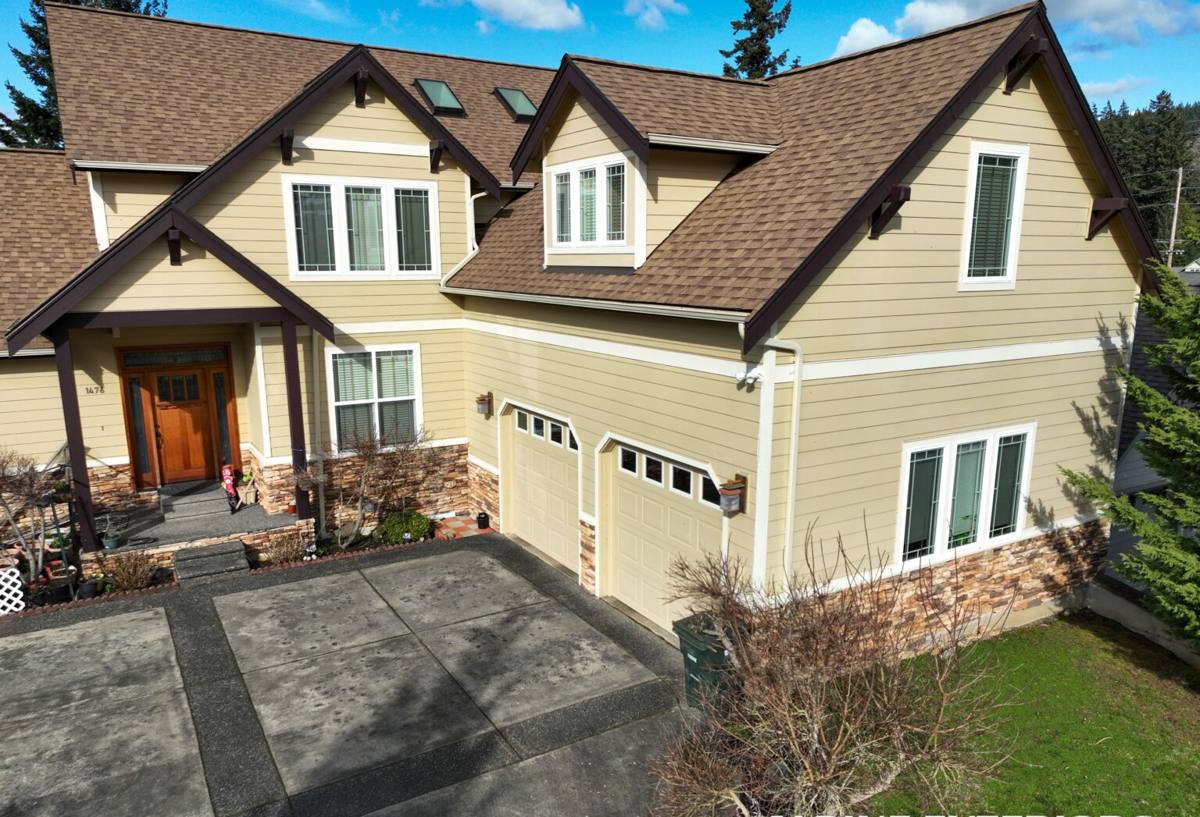
When Repair Is the Right Call
Repair makes sense when the damage is contained and the surrounding siding and structure are sound. Common scenarios where a targeted repair is the honest recommendation:
- A single panel or a few boards cracked or knocked loose by wind-blown debris, with no signs of water having gotten behind them
- Impact damage from a fallen branch or a lawn tool, isolated to a small area
- Failed caulking or trim details around windows and doors that let moisture in locally, but the siding itself is intact
- Fastener issues — nails backing out or panels rattling loose — on siding that's otherwise structurally fine
- Cosmetic fading or chalking on a small, sun-exposed section that doesn't match the rest but isn't a functional problem
In these cases, replacing the whole elevation isn't more thorough, it's just more expensive. A good contractor will tell you when a repair is genuinely sufficient, not push a bigger job because it's a bigger invoice.
When Replacement Is the Honest Answer
Replacement becomes the right call once the damage stops being isolated or the substrate behind the siding is compromised. Signs that point toward a full or near-full replacement:
- Moisture has reached the sheathing or framing — soft spots, staining, or a musty smell at multiple points, not just one
- Damage is spread across a large percentage of a wall or across multiple elevations rather than confined to one spot
- The siding is an older material (aging vinyl, untreated wood, older fiber cement formulations) where matching new pieces to the existing color and profile isn't realistic
- Recurring problems in the same areas after prior repairs — a sign the underlying installation or moisture management was never right
- The siding is past its expected service life for the region, even if it hasn't visibly failed yet
The pattern to watch for is repetition. One repair is maintenance. The same repair, or a new one nearby, two years later, is a sign the whole system needs to be addressed rather than patched again.
Why Patch Repairs Behave Differently by Material
Whether a repair is even a realistic option — and how well it holds up — depends heavily on what the siding is made of.
Vinyl
Vinyl can often be spot-replaced fairly easily, but color-matching is a real problem. Vinyl fades with UV exposure over time, and a new panel next to twelve-year-old panels will visibly stand out, sometimes for years, until the rest of the wall fades to match. It's also prone to warping in intense heat, which is a real factor on west- and south-facing walls in the Tampa sun.
Wood and engineered wood (LP SmartSide and similar)
These products can be patched, but the repair only addresses the visible symptom. If moisture got in through a failed edge seal or a poorly flashed joint once, the same failure point is still there after the repair unless the underlying detail is corrected. Repeated patching on engineered wood siding is one of the more common repair cycles we get called out to look at.
Fiber cement
Fiber cement holds up well structurally and doesn't rot, but older or off-brand formulations can still crack from impact or shift with the substrate. The advantage with a factory-finished product like James Hardie's ColorPlus line is that replacement boards from the same production run match far more closely than field-painted materials do, which makes a targeted repair a cleaner, longer-lasting fix when the damage really is isolated.
What Tampa's Climate Adds to the Repair-vs-Replace Math
Hillsborough County doesn't give siding an easy life. Hurricane-force wind events drive rain sideways into seams and laps that were never designed to shed water horizontally. Year-round, intense UV breaks down caulking, sealants, and less UV-stable finishes faster than in milder climates. Salt air moving inland from Tampa Bay accelerates corrosion of fasteners and trim hardware, especially closer to the water. And Tampa's humidity means that once moisture gets behind siding, it doesn't dry out quickly — it sits there and does damage.
All of that shortens the window where a repair is genuinely a repair. A problem that might sit dormant for years in a drier, calmer climate can turn into sheathing rot here within a couple of seasons if it's not caught and corrected properly. That's why an inspection after any storm event, even one that didn't cause obvious damage, is worth the hour it takes.
The Cost Factors That Actually Drive the Decision
Here's how the trade-offs typically break down. These are general factors, not a quote — every house is different, and only an in-person look tells you which column you're really in.
| Factor | Favors Repair | Favors Replacement |
|---|---|---|
| Extent of damage | Isolated, one or two spots | Spread across a wall or multiple elevations |
| Substrate condition | Sheathing and framing dry and sound | Moisture has reached wood framing |
| Age of existing siding | Well within its service life | At or past expected service life |
| Color/profile match | Factory-finished material with matching stock available | Faded or discontinued material that won't match |
| Repair history | First occurrence | Same area repaired more than once already |
| Upfront cost | Lower | Higher, but resets the clock on the whole wall |
| Cost over 10 years | Can add up if repairs recur | Predictable, backed by a warranty |
The upfront-cost column is the one homeowners focus on, but it's the ten-year column that usually matters more. A cheap repair on a system that's already failing isn't cheap if you're paying for it again in three years.
Insurance, HOAs, and Other Wrinkles
Insurance claims: If damage is storm-related, your insurer's adjuster may only approve repair costs for the damaged sections, not a full replacement, unless the rest of the siding is also documented as compromised. It's worth having a contractor's assessment in hand before the adjuster's visit, especially if the damage is more extensive than it looks from the ground.
HOA and deed-restricted communities: Many Tampa-area HOAs have specific rules about matching siding color and material on any visible repair. If your existing siding has faded or the manufacturer has discontinued the color, a "simple" patch can turn into an HOA compliance problem that pushes you toward replacing a full elevation anyway.
Financing and timing: Replacement is a bigger expense at once, but repairs done piecemeal over several years often add up to more total spend with no warranty continuity between jobs, since each patch may be treated as a separate, smaller repair rather than part of one covered system.
What We Look At When We Assess a Repair-vs-Replace Call
When we inspect a home for this decision, we're not just looking at the visible damage. We check moisture content in the siding and, where accessible, the sheathing behind it with a moisture meter. We look at how far the problem extends past the obviously damaged area — often further than what's visible from the ground. We check whether the existing material and color are still available to match. And we look at the underlying cause: was this one bad storm, or is it a systemic flashing, caulking, or installation issue that will keep producing the same failure regardless of how many times you patch it.
That assessment is what determines the honest recommendation — not a sales target.
A Practical Checklist Before You Decide
- Get an in-person inspection, not just a phone estimate — moisture problems aren't visible from the curb
- Ask specifically whether the substrate (sheathing, framing) has been checked for moisture, not just the siding surface
- Find out if your current siding color and profile can still be matched, or if a patch will visibly stand out
- Ask how many times this same area has already been repaired
- If storm-related, get your own assessment before or alongside the insurance adjuster's visit
- Check your HOA's rules on visible repairs before assuming a patch is allowed as-is
- Weigh the cost of the repair against the likely cost of doing it again in a few years, not just against a full replacement quote
Where We Land When It's Time to Replace
When the honest answer is replacement rather than repair, we install James Hardie fiber cement exclusively. It's non-combustible, it's engineered in HZ product lines specifically for humid, storm-prone climates like ours, and the factory-applied ColorPlus finish means future repairs — if you ever need one — actually match instead of turning into a patchwork of shades on your wall. It carries a strong transferable warranty, which matters more in a market like Tampa where storm damage and resale both come up more often than in calmer regions. We're not going to recommend a full replacement when a repair will genuinely hold up, and we're not going to recommend another round of patching when the underlying problem is only going to resurface.
If you're staring at a siding problem and aren't sure which side of this decision you're on, we'll come take a real look — no pressure, no upsell, just a straight answer on what your siding actually needs. Reach out for a free estimate using the form below.