 Tampa Siding
 Homeowners researching siding replacement in Tampa eventually run into two products marketed as tougher, lower-maintenance alternatives to vinyl and traditional wood: fiber cement (James Hardie is the dominant brand) and engineered wood, most commonly sold as LP SmartSide. Both are legitimate, code-approved siding systems installed on homes across the country. We get asked regularly why our crews only work with one of them. This page walks through how the two products are actually built, where they perform differently once they're on a house in Hillsborough County's climate, and why we standardized on fiber cement.
Two Different Materials Solving the Same Problem
Both products exist because builders and homeowners wanted something more durable than vinyl and less maintenance-heavy than solid wood. They arrive at that goal from opposite directions.
Engineered Wood (LP SmartSide)
LP SmartSide is an engineered wood product — strand board made from wood fibers bonded with resin, treated with a zinc borate additive for insect and fungal resistance, and finished with a factory-applied overlay. At its core, it's still a wood product. That's not a criticism; wood-based building materials have a long, proven track record. But it means the base material is organic, and organic materials respond to sustained moisture differently than mineral-based ones.
Fiber Cement (James Hardie)
James Hardie fiber cement siding is manufactured from Portland cement, sand, and cellulose fibers, cured into a dense, non-combustible board. There's no wood substrate to protect from moisture or pests. Hardie's HZ5 product line is specifically formulated for high-humidity, hurricane-prone climates like Florida's — it's engineered around the exact conditions Tampa siding actually has to survive.
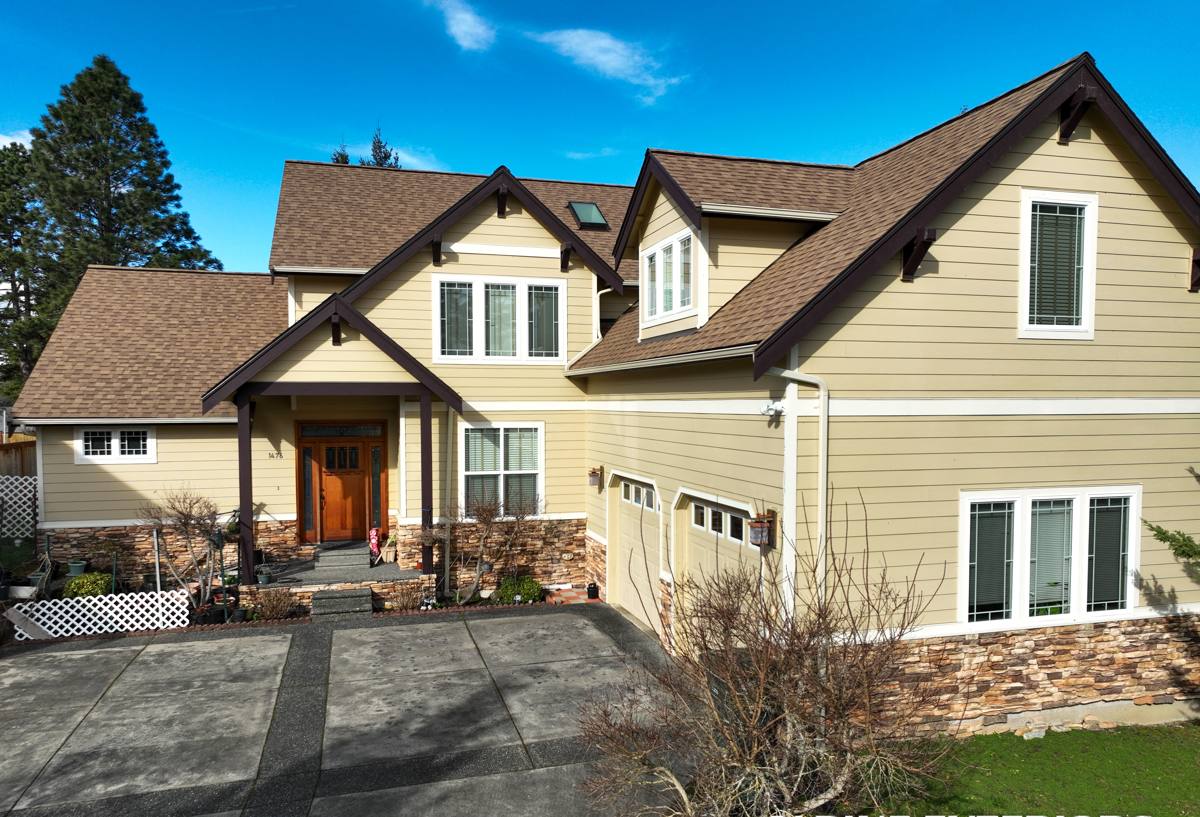
Moisture Is the Real Dividing Line
Tampa doesn't get occasional rain — it gets sustained wet seasons, wind-driven rain that pushes water sideways into wall assemblies, and humidity that rarely lets siding fully dry out between storms. This is the single biggest factor separating the two products.
Engineered wood siding is manufactured with resin binders and edge treatments specifically to resist moisture intrusion, and manufacturers publish clear installation requirements — particularly around sealing cut edges — to maintain that resistance. In our experience, wood-based siding is far less forgiving of installation shortcuts in a humid climate: an unsealed field cut, a gap at a butt joint, or a fastener installed wrong creates an entry point where moisture can reach the wood fiber core. Once moisture gets past the surface treatment, wood-based products are more prone to swelling, delamination at the edges, and softening over time, especially in areas that stay wet longer, like north-facing walls, roof-to-wall intersections, and lower courses near grade.
Fiber cement doesn't have that vulnerability because there's no wood fiber to swell or rot. It absorbs some moisture at the surface and releases it — it doesn't break down structurally from repeated wet-dry cycles the way an organic substrate can. In a climate where siding spends a large part of the year damp, that difference compounds over the life of the product.
Fire Classification
James Hardie fiber cement is a non-combustible material. It carries a Class A fire rating and, in some cases, contributes to reduced homeowner's insurance premiums, since insurers recognize the fire-resistance benefit. Engineered wood, being wood-based, is a combustible material regardless of the treatments applied to it. For most Tampa homeowners this isn't the deciding factor on its own, but it's a real, measurable difference we think people should know before they choose, particularly for homes near dry brush, sheds, or tightly spaced lots.
Sun and Color Retention
Hillsborough County gets intense, direct UV exposure essentially year-round. That's hard on any exterior finish, and it's one of the areas where the two products diverge the most.
James Hardie's ColorPlus Technology is a factory-applied, baked-on finish process that's specifically engineered to resist UV fading, and it carries its own multi-year finish warranty separate from the substrate. Engineered wood products are also available with factory finishes, but the finish sits over a wood substrate, and if the topcoat is compromised by UV or moisture, the wood beneath is directly exposed. Repainting or refinishing engineered wood siding on a Florida-facing elevation tends to come up sooner than homeowners expect, which turns a "low-maintenance" product into one that still needs a maintenance budget.
Wind and Storm Performance
Both products are code-rated for use in high-wind zones and are installed under Florida Building Code requirements that account for Hillsborough County's wind exposure. Where they differ is what happens after impact — from wind-driven debris, hail, or ladder contact during other repair work. Fiber cement's density gives it better resistance to denting and puncture than engineered wood in our field experience. It's also simply heavier and stiffer once fastened to the wall, which matters when a product has to survive decades of hurricane seasons, not just meet the minimum code test.
Installation Sensitivity
Neither product installs itself, and both perform worse than advertised when installation shortcuts are taken. But the consequences of a mistake aren't equal.
- Engineered wood: every field cut needs to be sealed with the manufacturer-specified sealant before installation; skipping this is one of the most common causes of moisture-related callbacks in the trade.
- Fiber cement: requires correct fastener spacing, proper clearance from grade and roof lines, and correctly lapped joints — get those right and there's no substrate to protect from an unsealed cut edge.
- Both: require correct flashing and water-resistive barrier detailing behind the siding — the siding itself is only half of a weatherproof wall assembly.
We standardized our crews on one system so every installer on every job follows the same, well-practiced sequence, rather than switching techniques and tolerances between two materials with different failure modes.
Warranty Structure
James Hardie backs its fiber cement products with a non-prorated limited warranty on the siding itself, plus a separate finish warranty on ColorPlus factory-painted products, and the warranty is transferable to a subsequent homeowner if the home sells — something buyers and their agents increasingly ask about on resale. Engineered wood products also carry manufacturer warranties, but because the underlying material is organic, warranty terms for wood-based siding typically include more specific exclusions tied to moisture exposure and installation compliance. Read any siding warranty closely — the material itself is only part of what determines what's actually covered.
Side-by-Side Comparison
| Factor | Fiber Cement (James Hardie) | Engineered Wood (LP SmartSide) |
|---|---|---|
| Core material | Cement, sand, cellulose fiber | Wood strand, resin binder |
| Combustibility | Non-combustible, Class A rated | Combustible |
| Moisture vulnerability | Low — no organic substrate to swell or rot | Moderate — depends on sealed edges and intact finish |
| Factory finish | ColorPlus baked-on finish, UV-engineered | Factory primed or finished overlay |
| Weight/density | Heavier, more impact and dent resistant | Lighter, easier to handle on site |
| Typical repaint interval | Longer, especially with ColorPlus | Shorter on high-UV, high-humidity elevations |
| Warranty transferability | Transferable to new owner | Varies, often with moisture-related exclusions |
| Installed cost | Generally higher upfront | Generally lower upfront |
Engineered wood's lower upfront installed cost is real, and for some budgets and some climates it's a reasonable trade-off. In Tampa's combination of sustained humidity, intense UV, and hurricane wind exposure, we don't think that trade-off holds up over the life of the siding — which is why we stopped offering it.
What We Recommend Homeowners Check Before Choosing
- Ask what the siding's core material actually is, not just the brand name — "wood composite" and "fiber cement" perform very differently in wet climates.
- Ask whether the fire rating matters for your insurance policy or your lot's proximity to other structures.
- Ask what the finish warranty covers separately from the structural warranty, and whether it transfers on resale.
- Ask how the installer handles cut-edge sealing, fastener spacing, and flashing details — get it in writing, not just verbally.
- Ask for the manufacturer's published wind rating and confirm it matches Hillsborough County's Florida Building Code wind zone requirements.
- Compare the realistic maintenance schedule, not just the installed price — repainting and edge maintenance are real, recurring costs.
Why We Standardized on James Hardie
We're not against engineered wood as a category — it's a genuine, code-compliant product that works fine in a lot of climates and on a lot of budgets. But we install siding on homes that have to hold up against Gulf humidity, salt-laden air moving in off Tampa Bay, wind-driven summer storms, and direct sun for most of the year, year after year, without us there to catch every maintenance item. Fiber cement's moisture behavior, non-combustible core, and factory-baked finish line up with what actually survives that combination long-term. Standardizing our crews on one product also means every installer has deep, repeated experience with Hardie's specific fastening, flashing, and joint details, instead of splitting attention across two systems with different tolerances for error. That's a call about what we're willing to put our name behind, not a claim that the alternative doesn't work anywhere.
If you're weighing siding options for a home in Tampa or elsewhere in Hillsborough County, we're glad to walk your specific house — sun exposure, wall orientation, existing siding condition — and give you a straight answer, not a sales pitch. Reach out for a free, no-pressure estimate using the form below.