 Tampa Siding
 Two Very Different Materials, One Big Decision
If you're re-siding a home in Tampa, you've probably narrowed it down to two main contenders: vinyl siding and fiber cement siding. Both are widely available, both come in dozens of colors, and both get installed on homes across Hillsborough County every year. But they are not close substitutes once you look past the showroom sample. They're made from different materials, they age differently, and they respond to Florida's climate in very different ways.
We only install James Hardie fiber cement siding. We're not going to pretend that's an emotionally neutral fact, but we'd rather explain the actual trade-offs than just tell you to take our word for it. This page lays out how the two materials really compare, including where vinyl holds its own.
What Each Product Actually Is
Vinyl Siding
Vinyl siding is an extruded PVC plastic panel, usually installed over a layer of house wrap or foam backer board. It's lightweight, relatively inexpensive to manufacture, and widely stocked, which is why it remains popular in new construction and budget-driven remodels across the country.
Fiber Cement Siding
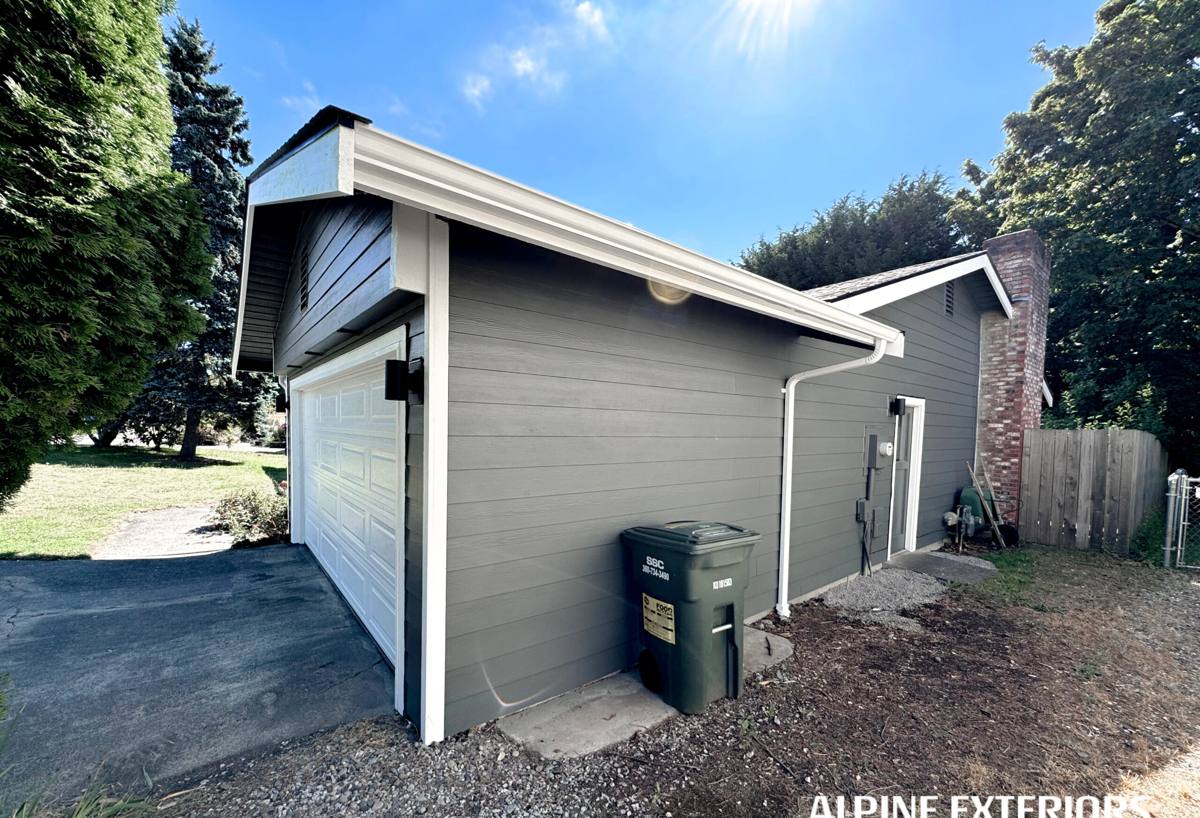
Fiber cement is a composite of Portland cement, sand, and cellulose fibers, formed under pressure and cured. James Hardie's HZ5 product line is specifically engineered for hot, humid climate zones like ours, and the boards arrive with a factory-applied ColorPlus finish baked on rather than painted on-site. It's heavier, denser, and behaves more like a fiber-reinforced masonry product than a plastic one.
How They Hold Up in Tampa's Climate
Hillsborough County isn't a gentle place to test a building material. We get hurricane-force wind events, wind-driven rain that gets forced sideways into wall assemblies, intense UV exposure nearly year-round, and salt air drifting inland from Tampa Bay. All four of those factors show up in how these two products age.
Wind and Storm Performance
Vinyl siding is rated for wind resistance, but the rating depends heavily on correct fastening and the panel's ability to flex slightly without popping loose from its nailing hem. In sustained high wind, vinyl panels can rattle, bow, or blow off entirely, especially at corners and near rooflines where uplift pressure concentrates. Fiber cement is heavier and more rigid, and when installed to Hardie's fastening specifications it holds tighter to the wall assembly under wind load. Weight and rigidity aren't marketing points here — they're physical properties that matter when a tropical system rolls through.
UV and Heat Exposure
Vinyl is a plastic, and plastics degrade under UV exposure over time. The most common visible symptom is fading, particularly in darker colors, along with gradual brittleness that shows up as cracking around fastener points after years of sun. Fiber cement's ColorPlus finish is a factory-cured, resin-based coating specifically formulated to resist UV fade, and the substrate underneath is cement, not plastic, so it doesn't get brittle the same way.
Wind-Driven Rain and Moisture
This is where the two products diverge the most. Vinyl siding is not a water barrier — it's designed to shed most water while allowing the wall's house wrap to do the actual waterproofing, and it relies on overlapping panels staying properly seated. Wind-driven rain, the kind we get regularly during Tampa's storm season, can force water behind loose or warped panels. Fiber cement is dimensionally stable and, when caulked and flashed correctly at every joint, resists that intrusion far better. Neither product is waterproof on its own — the house wrap and flashing detail behind either one still do real work — but fiber cement gives you a more forgiving margin when a fastener backs out or a panel shifts slightly over time.
Salt Air
Homes closer to Tampa Bay deal with a slow, steady salt exposure that vinyl doesn't chalk or corrode from directly, but the fasteners and trim pieces around vinyl systems can be more exposed to corrosion depending on how the system was detailed. Fiber cement itself is inert to salt air; it's not a metal and it doesn't corrode.
Side-by-Side Comparison
| Factor | Vinyl Siding | Fiber Cement (James Hardie) |
|---|---|---|
| Material | Extruded PVC plastic | Cement, sand, cellulose fiber composite |
| Typical lifespan | 15-25 years before fading/brittleness becomes noticeable | 30-50+ years when installed and maintained to spec |
| Wind performance | Rated, but panels can loosen or blow off in sustained high wind | Heavier and more rigid; holds tight under proper fastening |
| UV/fade resistance | Fades over time, especially dark colors | Factory ColorPlus finish resists fade for decades |
| Fire resistance | Combustible plastic | Non-combustible |
| Impact resistance | Can crack or shatter, especially when cold or aged | Resists dents and impacts better; won't shatter |
| Upfront cost | Lower material and labor cost | Higher material and labor cost |
| Repainting needed | Not designed to be painted, though it can be done | Factory finish can go 15+ years before repaint is needed |
Cost: The Honest Picture
Vinyl is less expensive upfront — that's not in dispute. It's lighter to ship, faster to install, and the material cost per square foot is lower than fiber cement in almost every case. If your only variable is the number on the initial quote, vinyl wins.
Where the math changes is over the life of the siding. Vinyl that fades, cracks, or needs partial panel replacement after a decade or two of Florida sun and storms carries a real cost, even if it doesn't show up on day one. Fiber cement's higher install cost is offset by a service life that's often double what vinyl delivers, plus a factory finish that doesn't need repainting nearly as often. We'd rather you make this decision with the full timeline in front of you than just the first invoice.
Other Real Trade-Offs Worth Knowing
- Weight: Fiber cement is significantly heavier, which means it requires a crew that knows how to handle, cut, and fasten it correctly — it's less forgiving of rushed installation than vinyl.
- Cutting and dust: Fiber cement generates silica dust when cut and requires proper dust-control practices on site; this is a real job-site consideration, not a homeowner-facing one, but it's part of why installation quality varies more between contractors.
- Impact resistance: Vinyl can crack from a stray baseball or ladder bump, especially in cooler weather when it's more brittle; fiber cement handles impacts better but isn't indestructible.
- Repairability: Both materials can have individual boards or panels replaced, but color-matching an aged vinyl panel gets harder over time as the rest of the wall fades; ColorPlus finishes hold their color more consistently, making later repairs blend better.
- Resale perception: Fiber cement is generally viewed by appraisers and buyers as a more premium, durable exterior, which can matter if you're planning to sell within the ownership window.
Why We Standardized on James Hardie
We made a decision years ago to only install James Hardie fiber cement, and it's a decision driven by what we see when we tear old siding off Tampa homes, not by a sales pitch. Vinyl performs fine in a lot of climates. Ours is not a gentle one. Between the wind load standards our homes need to meet, the UV intensity, the wind-driven rain during storm season, and the salt air near the bay, we'd rather stand behind a product engineered for exactly these conditions.
James Hardie's HZ5 line is climate-engineered for hot, humid zones, the ColorPlus finish is warrantied against fading, and the company backs installations with a transferable warranty that matters if you sell the home. None of that means fiber cement is the right call for every budget or every project — it's a bigger investment upfront. But it's the product we're willing to put our name behind.
What to Ask Before You Decide
- What's the wind rating of the siding system as installed, not just the panel itself?
- Is the finish factory-applied or field-painted, and what's the fade warranty?
- Who is responsible if a panel fails from wind or moisture intrusion — the manufacturer, the installer, or you?
- What does the manufacturer's warranty actually cover, and is it transferable if you sell the home?
- How does the contractor handle flashing and moisture barrier detailing behind the siding, regardless of which material you choose?
If you're weighing vinyl against fiber cement for a home in Tampa or anywhere in Hillsborough County, we're glad to walk through your specific house, its exposure, and what makes sense for your budget and timeline. Reach out for a free, no-pressure estimate — we'll give you a straight answer, not a script.