 Tampa Siding
 Siding Replacement Built for Riverview, Not Just Tampa in General
Riverview sits in unincorporated Hillsborough County along the Alafia River, wedged between Tampa's urban core and the more rural stretches of the county to the east. It's one of the fastest-growing residential areas in the Tampa Bay region, with a mix of newer HOA-governed developments and older homes on larger lots. That mix matters when it comes to siding. A ten-year-old house in a newer Riverview subdivision and a thirty-year-old home on an acre lot outside the HOA boundary can have completely different siding histories, different failure points, and different replacement needs, even though they're a few miles apart and facing the same weather.
This page is specifically about siding replacement for Riverview homes, not general siding information, and not a repair guide. If your siding is past the point where caulk and touch-up paint will hold it together, this is what you need to know before you get quotes.
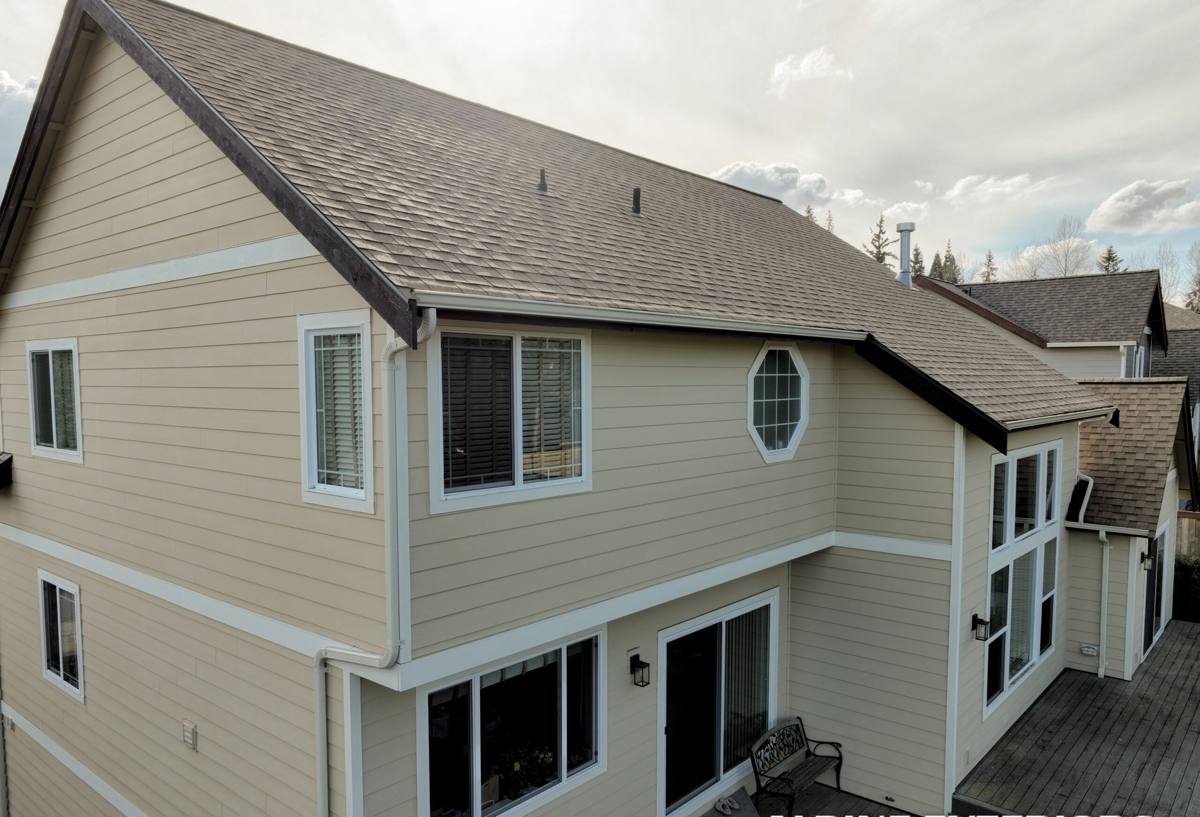
What Tampa-Area Weather Does to Siding Over Time
Riverview doesn't get hit any differently than the rest of the greater Tampa area, but it gets hit by the same combination of stressors that make Gulf Coast Florida one of the toughest climates in the country for exterior building materials:
- Hurricane-force wind events that test every fastener, seam, and panel edge on a home's exterior, not just during a direct hit, but during the tropical storms and squall lines that pass through most years.
- Intense, near year-round UV exposure that breaks down cheap coatings, fades paint, and dries out organic materials faster than in most other parts of the country.
- Wind-driven rain that gets forced sideways and upward into laps, seams, and trim joints that were only ever designed to shed water falling straight down.
- Humidity that rarely lets up, keeping moisture in contact with exterior walls for longer stretches than drier climates, which accelerates rot, mold, and coating failure.
- Salt air influence that reaches well inland from Tampa Bay and the Gulf, accelerating corrosion of fasteners and metal trim even on homes that aren't waterfront.
None of these are exotic problems, they're just constant. Siding in Riverview isn't dealing with one bad storm a year and calm weather the rest of the time. It's under low-grade stress from sun and moisture every single day, with occasional wind events layered on top. That's the standard we design a replacement job around.
Signs a Riverview Home Needs Replacement, Not Just Repair
A lot of homeowners call us wanting a patch or a caulk-and-paint refresh, and sometimes that's genuinely the right call. But certain signs mean the siding system itself has reached the end of its useful life and repair is just delaying a bigger problem:
- Soft, spongy, or crumbling spots when you press on the siding, especially near the bottom courses or around windows and doors
- Visible warping, buckling, or panels that have pulled away from the wall line
- Paint that won't hold anymore no matter how well it's prepped, a sign the substrate underneath is failing, not just the finish
- Persistent moisture staining, streaking, or a musty smell along interior walls that back up to exterior siding
- Widespread caulk failure at seams and trim, letting water track behind the siding
- Visible mold or algae growth that keeps coming back even after cleaning
- Siding that's simply reached or passed the end of its expected service life for its material type
If you're seeing two or more of these across a meaningful portion of the home, replacement is almost always the more cost-effective path over the next decade compared to chasing repairs on a system that's already failing.
Why We Install Only James Hardie Fiber Cement
We don't install vinyl, LP SmartSide, or the other engineered wood and composite products that show up in siding quotes around Tampa. That's a deliberate standard, not a sales pitch, and it's worth explaining honestly.
Vinyl is inexpensive and easy to install, but it's a thin plastic product that softens and can warp in extreme heat, becomes brittle with UV exposure over years, and can crack or blow off in high wind if it isn't installed exactly to spec, a real risk during the wind events this area sees. Engineered wood products use real wood fiber, which means they're more vulnerable to moisture intrusion at cut edges and seams than a fiber cement product; if water gets behind the coating or into an unsealed edge, the wood substrate can swell and deteriorate, and that failure mode is hard to catch until it's already progressed.
James Hardie fiber cement is a different category of product. It's made from cement, sand, and cellulose fiber, non-combustible, dimensionally stable, and not vulnerable to the same rot and insect issues as wood-based sidings. Hardie's HZ5 product line is specifically engineered for hot, humid, high-moisture climates like ours, and the ColorPlus factory-applied finish is baked on under controlled conditions rather than field-painted, which gives it better fade and wear resistance than a job-site paint job. It also carries a strong transferable warranty, which matters if you plan to sell the home down the road.
None of this means other products are junk, it means we've made a professional decision about what we're willing to put our name on in this climate, and fiber cement is it.
Quick Comparison: What Homeowners Are Usually Weighing
| Factor | Vinyl Siding | Engineered Wood Siding | James Hardie Fiber Cement |
|---|---|---|---|
| Wind resistance | Can crack or detach in high wind if not installed precisely | Generally solid, but edge damage compromises the panel | Rated for high-wind installation when installed to spec |
| Moisture behavior | Doesn't absorb water, but can trap it behind the panel | Wood substrate can swell or rot if moisture gets past the coating | Resists moisture damage, not an organic substrate |
| UV and fade resistance | Can fade and become brittle over years of sun exposure | Field-applied finishes fade and need repainting | Factory ColorPlus finish holds color longer |
| Fire rating | Combustible | Combustible | Non-combustible |
| Typical warranty structure | Varies widely by manufacturer and grade | Typically shorter, prorated coverage | Long-term, transferable coverage |
What a Correct Siding Replacement Job Actually Involves
Replacing siding isn't just pulling old panels off and nailing up new ones. A correct job on a Riverview home involves several steps that are easy to skip and hard to notice once the new siding is up:
- Full tear-off and inspection of the wall sheathing. You can't know what's underneath until the old siding is off. This is where hidden rot, old water damage, or failed flashing gets found and dealt with, not covered up.
- Repair or replacement of damaged sheathing and framing. New siding over compromised substrate just hides a problem that will resurface.
- Correct water-resistive barrier installation. The house wrap or building paper has to be installed and lapped correctly, especially around penetrations, to actually do its job against wind-driven rain.
- Proper flashing at every penetration. Windows, doors, hose bibs, vents, and light fixtures are the most common places water gets behind siding, and flashing details here matter more than the siding material itself.
- Correct fastener pattern and spacing. James Hardie publishes specific fastening requirements for wind zones like ours. Skipping or shortcutting this is the single most common cause of fiber cement siding failures we see on homes that weren't installed by a Hardie-experienced crew.
- Proper joint and seam treatment. Butt joints, corners, and trim intersections need to be detailed correctly to shed water rather than collect it.
- Final inspection and cleanup against the manufacturer's installation checklist, not just a visual walk-around.
Every one of these steps affects whether the siding performs for its expected lifespan or starts failing in five years. This is also why installer experience matters as much as the product choice, Hardie siding installed poorly can still fail early, and that failure often gets blamed on the material instead of the installation.
Our Process for a Riverview Siding Replacement
Working in Riverview specifically, rather than treating it as an anonymous stop on a Tampa-wide route, changes how a job gets handled in a few practical ways:
- Assessment first. We walk the full exterior, check for the failure signs above, and give you an honest read on whether you need full replacement, partial replacement, or repair.
- HOA awareness. Many Riverview neighborhoods have architectural review requirements for exterior changes, including siding color and style. We factor that into scheduling so it doesn't become a surprise mid-project.
- Permitting. Siding replacement in Hillsborough County typically requires a permit, and we handle that process rather than leaving it on the homeowner.
- Material staging and weather planning. Given how often afternoon storms roll through this area in the warmer months, job sequencing is planned around keeping the home weather-tight at every stage, not just at project completion.
- Punch-list walkthrough. Before we consider the job done, we walk it with you against the original scope, not just a general looks-good sign-off.
Because we're regularly working in and around Riverview rather than treating it as a one-off drive, we already know which neighborhoods have HOA review boards, what the permitting turnaround typically looks like locally, and what kinds of siding issues tend to show up on the area's housing stock. That familiarity shortens the surprises.
Cost Factors for Riverview Siding Replacement
We're not going to quote a number here, every home is different, but these are the real variables that drive cost up or down on a Riverview job:
| Factor | Why It Matters |
|---|---|
| Home size and wall complexity | More square footage, gables, and architectural detail means more material and labor |
| Condition of the sheathing underneath | Hidden rot or water damage found during tear-off adds repair scope |
| Siding profile and Hardie product line chosen | Lap width, texture, and product line affect material cost |
| Trim and accessory scope | Fascia, soffit, corner boards, and trim replacement alongside siding adds cost but improves the whole system |
| Story count and access | Two-story sections and difficult access points increase labor time |
| HOA-driven color or style requirements | Some communities restrict color palettes or require specific accents, which can affect material selection |
Why Hiring a Crew That Already Works Riverview Matters
Siding contractors that treat every job as a one-off in an unfamiliar neighborhood tend to miss things that a locally consistent crew catches automatically, which HOAs require design approval before work starts, what the county permitting office typically expects on a resubmission, and which parts of the county see the harshest combination of sun and wind exposure due to lot orientation and tree cover. None of that is exotic knowledge, but it's the kind of thing that only comes from actually doing the work here repeatedly, not from a generalized service-area map on a website.
It also matters for accountability. A crew that plans to keep working in your neighborhood has a real incentive to do the job right the first time, not just get through the punch list and move on to the next zip code.
Maintenance After Your New Siding Is Installed
Correctly installed James Hardie siding is low-maintenance, but low isn't zero. A short, realistic maintenance routine keeps it performing for the long haul:
- Rinse the exterior periodically to clear salt residue, pollen, and organic buildup, a garden hose is usually enough, avoid high-pressure washing directly at seams
- Walk the exterior after major storms to check for loose trim, damaged caulk joints, or debris impact
- Keep an eye on caulk at trim and window and door junctions and have it touched up before it fails outright
- Trim back vegetation and irrigation spray that keeps siding constantly wet in one spot
- Address any small paint chips or scratches promptly so the substrate underneath stays protected
None of this is heavy lifting, but it's the difference between siding that hits its expected service life and siding that needs attention sooner than it should.
Get a Straight Answer About Your Riverview Home
If your siding is showing wear, or you just want an honest read on whether it's a repair or a replacement situation, we're happy to take a look. There's no pressure and no obligation, just a straightforward assessment from a crew that already knows this area. Use the form below to request a free estimate.