 Tampa Siding
 Why Temple Terrace Siding Wears Differently Than Siding Up North
Temple Terrace sits inside Hillsborough County, wrapped in the same subtropical climate that defines the greater Tampa area — and that climate is hard on exterior siding in ways that homeowners moving in from other regions often underestimate. It isn't one single problem. It's four problems stacked on top of each other, year-round, for decades.
Intense UV exposure bakes painted and coated surfaces almost every day of the year, breaking down pigments and finishes far faster than in cooler, cloudier climates. Humidity stays high enough, long enough, that any siding material with a weakness for moisture absorption is under near-constant stress. Summer storm season brings wind-driven rain that gets forced sideways into seams, laps, and trim joints — not just straight down onto a roof. And when a tropical system or hurricane-force wind event moves through the Tampa Bay area, even homes well inland can see gusts strong enough to test how well siding was actually fastened, not just what brand name is on it.
Temple Terrace's neighborhoods also tend to have more mature tree canopy than newer subdivisions further out — a feature residents generally like, but one that means more debris impact, more shade-driven moisture retention on north-facing walls, and more organic buildup in areas that don't get direct sun to dry out quickly. None of this makes Temple Terrace unusual for the region. It just means siding here needs to be chosen and installed with all of that in mind, not treated as an afterthought.
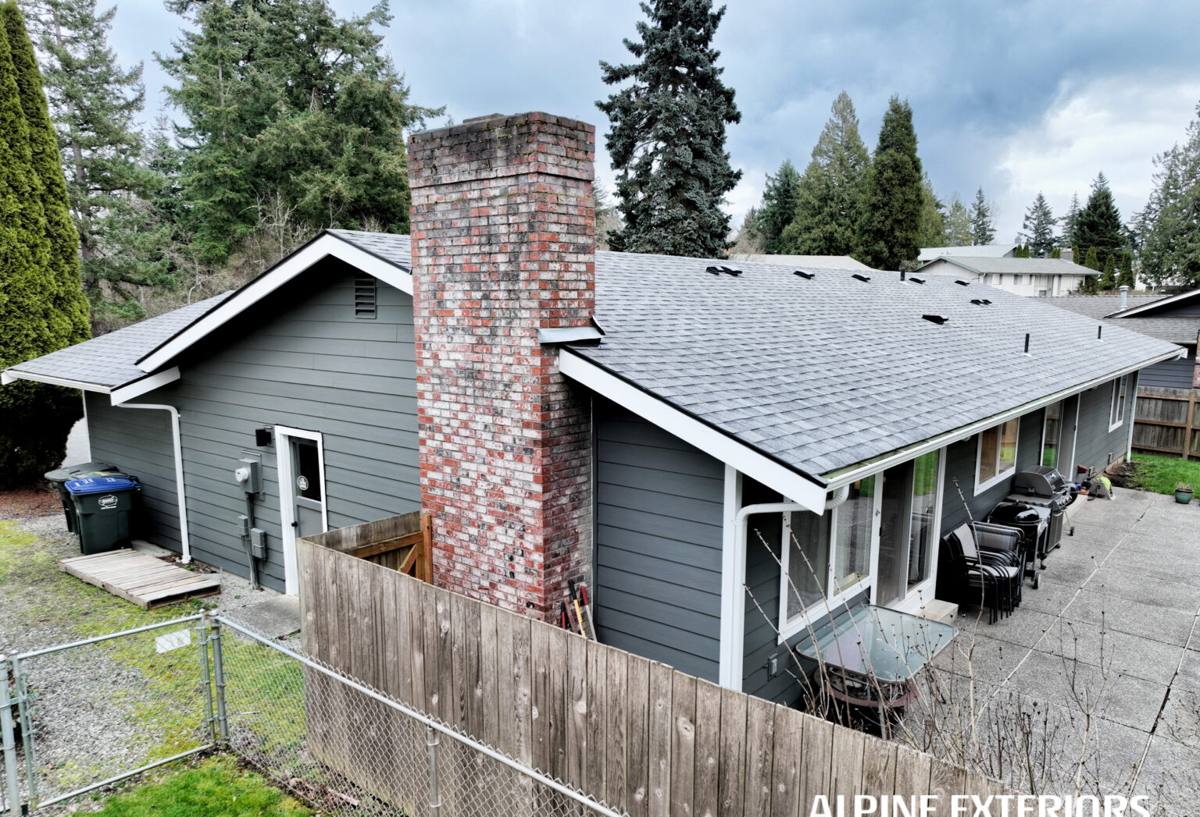
Signs a Temple Terrace Home Actually Needs Siding Replacement
Moisture-Related Damage
Soft spots, bubbling, or a spongy feel when you press on siding are signs moisture has gotten behind the surface material. In this climate, once moisture is trapped behind siding, it rarely dries out fully between rain events — it just keeps compounding.
Warping, Buckling, or Separating Panels
Repeated cycles of heat expansion and humidity swelling put real stress on siding materials. Panels that warp, cup, or pull away from the wall are usually past the point where caulk and paint will fix the underlying problem.
Chalking, Fading, and Finish Breakdown
Florida's UV load is intense enough that factory finishes and field-applied paint both degrade faster here than in most of the country. Heavy chalking (a powdery residue on your hand when you wipe the siding) usually means the protective finish is gone, not just dirty.
Storm and Impact Damage
Cracked, split, or missing sections after a wind event are the most obvious signal, but it's worth having any storm-adjacent damage inspected even if it looks minor — hidden cracking behind trim or at panel edges can let water in for months before it's visible from the ground.
What a Correct Siding Replacement Actually Involves
Siding replacement done right is not just stripping old material and nailing up new panels. The parts of the job you can't see afterward are the parts that determine whether it lasts 10 years or 40.
- Full tear-off to bare sheathing so the substrate can be inspected, not just re-covered
- Repair or replacement of any rotted or water-damaged sheathing found underneath
- A continuous, correctly lapped weather-resistive barrier (house wrap) installed shingle-fashion so water sheds outward, not inward
- Properly integrated flashing at every window, door, roofline, and penetration — this is where most siding failures actually start
- Correct fastener type, spacing, and placement for the specific siding product, matched to local wind-load requirements
- Proper clearances at grade, decks, and roof lines to keep new siding from sitting in standing moisture
Skipping any one of these steps can leave a home looking fine for a year or two while a moisture or wind problem quietly builds behind the new surface.
Why This Company Installs Only James Hardie Fiber Cement
We made a deliberate decision not to install vinyl siding, LP SmartSide, Cemplank, Allura, or unprimed wood products like spruce or cedar. That's not a marketing position — it's a standard we hold because of what we've seen these products do over time in exactly this climate.
Vinyl siding can warp or distort under sustained heat and direct summer sun, and it offers no fire resistance. Engineered wood products like LP SmartSide perform well in many climates but carry more sensitivity to sustained moisture exposure at cut edges and seams — a real concern in a region with Tampa's humidity and storm frequency. Unprimed or minimally treated wood siding demands a maintenance schedule most homeowners underestimate, and falling behind on it in this climate accelerates decay quickly.
James Hardie fiber cement siding is engineered specifically for climates like this one. It's non-combustible, resists moisture-driven warping and rot far better than wood-based alternatives, and its ColorPlus factory finish is baked on and warrantied against fading, chipping, and cracking — a meaningful advantage in a market where UV breaks down field-applied paint faster than almost anywhere else in the country. Hardie also engineers HZ5 product lines specifically for hot, humid Southeast climates, which is exactly the zone Temple Terrace and the rest of the Tampa Bay area fall into. Combined with a strong transferable warranty, it's the product we're willing to stand behind on a Temple Terrace home for decades, not just for the first few Florida summers.
What This Looks Like Across Hardie's Line
| Product | Best Use | Why It Fits This Climate |
|---|---|---|
| HardiePlank lap siding | Whole-home replacement, traditional and modern styles | Most common choice; resists moisture, wind-driven rain, and UV fade |
| HardieShingle | Accent areas, gables, dormers | Adds texture without sacrificing fire resistance or durability |
| HardiePanel vertical siding | Modern facades, porch and garage accents | Clean lines with the same climate-engineered core material |
| HardieTrim | Corners, window and door surrounds, fascia | Matches siding lifespan so trim doesn't fail years before the field material |
Our Process for Temple Terrace Homeowners
1. On-Site Inspection and Honest Assessment
We walk the exterior with you, identify problem areas, and explain what we're seeing in plain terms — including whether a repair might genuinely be enough, rather than defaulting to a full replacement recommendation.
2. Product and Color Selection
We help you pick the Hardie line and ColorPlus finish that fits the home's style and the neighborhood's general character, without overselling options you don't need.
3. Permitting
Siding replacement in Temple Terrace requires a building permit, as it does in most Florida municipalities. We handle the permit application and coordinate any required inspections so you're not chasing paperwork.
4. Tear-Off, Sheathing Repair, and Installation
Old material comes off down to the studs, sheathing is inspected and repaired as needed, the weather barrier and flashing go in correctly, and Hardie siding is installed to manufacturer spec and local wind-load requirements.
5. Final Walkthrough
We walk the finished job with you, point out details of the work, and make sure cleanup is complete before we consider the job done.
What Drives the Cost of a Siding Replacement
Every home is different, so we don't quote sight-unseen, but these are the main factors that move the price up or down on a typical project:
| Factor | Why It Matters |
|---|---|
| Home size and wall area | More square footage means more material and labor hours |
| Existing wall condition | Sheathing repair or rot remediation adds time and material beyond the siding itself |
| Number of stories | Multi-story homes require more staging, scaffolding, or lift equipment |
| Architectural detail | Gables, dormers, multiple trim profiles, and accent shingle areas add labor |
| Product selection | Plank, shingle, and panel Hardie products vary in material cost |
| Color and finish | Factory ColorPlus finishes vs. field-painted options affect both cost and long-term maintenance |
A Checklist for Vetting Any Contractor Before They Touch Your Siding
- Confirm they hold a valid Florida contractor's license and carry general liability and workers' compensation insurance
- Ask whether they pull their own permits with the City of Temple Terrace or Hillsborough County
- Ask specifically what house wrap and flashing details they use — not just what siding brand they install
- Ask how they inspect and repair sheathing before new siding goes on, not just how fast they can finish
- Confirm in writing what manufacturer warranty applies and whether it's transferable if you sell the home
- Ask how they handle HOA architectural review if your section of Temple Terrace has one
A contractor who already works regularly in Temple Terrace should be able to answer every one of these without hesitation — and should be comfortable explaining the "why" behind each answer, not just the "what."
HOA and Neighborhood Considerations
Some sections of Temple Terrace fall under homeowners association architectural guidelines that govern acceptable siding colors, materials, or profiles. If your property is part of one, it's worth confirming approval requirements before ordering material, since color and product selection may need sign-off ahead of installation. We're happy to work with whatever documentation your association requires as part of the planning process.
Getting Started
If your Temple Terrace home is showing signs of aging siding — fading, warping, soft spots, or storm damage — it's worth getting an honest, no-pressure look before small problems turn into structural ones. We'll walk the exterior with you, tell you plainly what we see, and put together a straightforward estimate using the form below.