 Tampa Siding
 Why Decks Age Faster in Town 'n' Country
Town 'n' Country sits in the humid subtropical belt west of downtown Tampa, and that climate is hard on outdoor wood structures in ways that a lot of homeowners don't fully appreciate until they're staring at a soft board or a wobbly rail. The combination of near-constant humidity, intense UV exposure almost every day of the year, wind-driven rain from summer thunderstorms and tropical systems, and salt-laden air drifting in off Tampa Bay all work on a deck at the same time, not one at a time. That's the part that catches people off guard — a deck that would last two decades in a drier, cooler climate can start showing real structural problems in half that time here if it wasn't built with this exact environment in mind.
UV breaks down the lignin in wood fibers and degrades the UV inhibitors in composite capping over years of exposure, which is why boards that looked fine last year can suddenly look chalky, faded, or splintery this year. Humidity and wind-driven rain get into end grain, fastener holes, and any spot where flashing was skipped or done wrong, and that moisture doesn't dry out quickly in our air. Salt air accelerates corrosion in anything metal — fasteners, brackets, post bases — long before the visible wood tells you there's a problem underneath.
What This Means for a Replacement, Not Just Repair
When a deck has reached the point where boards are soft, framing is sagging, or the ledger connection is questionable, patching individual boards doesn't fix the underlying issue. A proper replacement is the chance to correct the things that caused the failure in the first place — usually moisture management and material choice — instead of rebuilding the same weak points with new lumber.
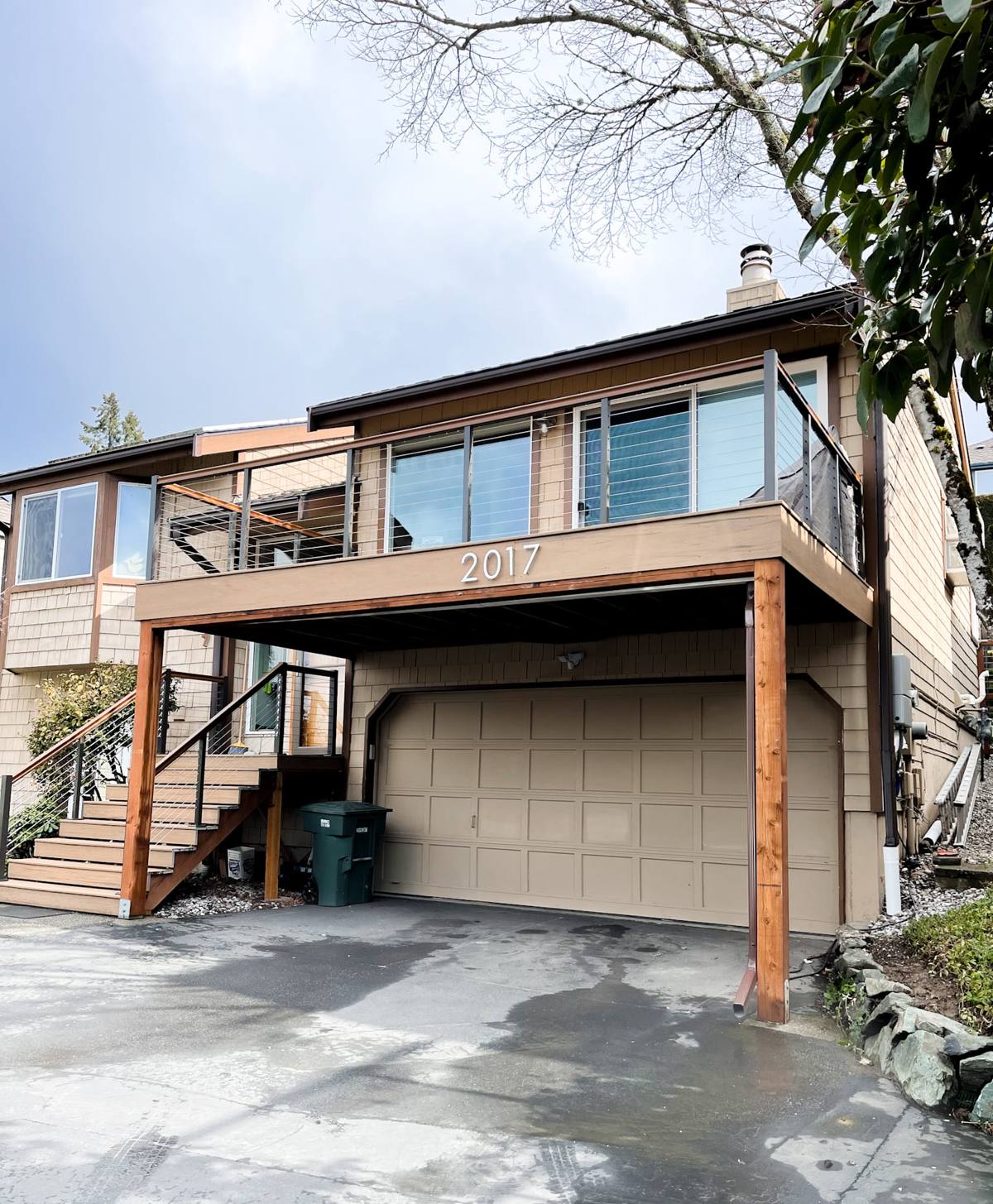
What a Correct Deck Replacement Actually Involves
A deck replacement done right is a structural project, not a cosmetic one. It starts below the decking boards, not at them.
- Footings and posts: Concrete footings are inspected or replaced to current code depth and bearing capacity, since undersized or shifted footings are one of the most common causes of a deck that feels "bouncy" or unlevel.
- Ledger attachment: Where the deck ties into the house, the ledger board and its flashing get full attention. A poorly flashed ledger is the single most common source of hidden rot, because water works its way behind the board and into the house's rim joist where nobody sees it until there's a real problem.
- Framing and joists: Joist spacing, hangers, and blocking are sized for the actual decking material and expected loads, not just copied from whatever was there before.
- Decking surface: Boards are installed with proper gapping for expansion and drainage, since Florida's heat and humidity swings cause more dimensional movement than drier climates.
- Railings and stairs: Rebuilt to current code, which matters both for safety and for passing inspection.
Skipping any one of these steps is how a deck ends up needing replacement again in five or six years instead of lasting the two-plus decades it should.
Choosing Decking Material for a Coastal Tampa Climate
There's no single "best" decking material — there's a best material for your budget, your maintenance appetite, and how much direct sun and rain the deck actually gets. Here's how the common options hold up under Hillsborough County conditions:
| Material | How It Handles Sun, Rain & Salt Air | Maintenance | Typical Lifespan Here |
|---|---|---|---|
| Pressure-treated pine | Affordable, but prone to checking, cupping, and fastener staining without diligent upkeep | Annual sealing/staining recommended | 10-15 years |
| Tropical hardwood (e.g. ipe) | Naturally dense and rot-resistant; handles UV and moisture very well | Periodic oiling to maintain color, though it's structurally fine without it | 20-25+ years |
| Composite decking | Capped composite resists moisture and fading well; quality varies by brand and capping type | Occasional washing; no sealing or staining | 20-30 years |
| PVC decking | Fully synthetic, unaffected by rot or insects; some products can run hot underfoot in direct sun | Lowest maintenance of the group | 25-30+ years |
We don't push one product over another as a rule — we walk through the trade-offs for your specific deck (sun exposure, how much upkeep you actually want to do, and budget) and let that drive the recommendation. What we do insist on is quality within whichever category you choose, because a bargain-grade board in any material category tends to disappoint fastest in this climate.
A Note on Cost Factors
Beyond material choice, the biggest cost swings on a deck replacement in this area come from a handful of factors: deck size and height, whether the ledger and framing need full replacement versus reuse, how much of the existing structure (footings, posts) can be safely retained, railing style and stair count, and whether permitting and inspection add scheduling steps. We'll walk through all of these plainly during your estimate — no vague "it depends" without an explanation of what it depends on.
Fasteners, Flashing, and the Details That Actually Prevent Failure
Most deck failures we see in this area don't start with the decking boards — they start with the small connection details that were rushed or skipped. Given the salt air drifting in from the Bay and the humidity that never really lets up, we treat these as non-negotiable:
- Stainless steel or coated corrosion-resistant fasteners rated for the specific decking material, since mismatched fasteners cause staining and premature failure.
- Self-adhering flashing tape at the ledger board, ideally combined with a proper drip cap, so wind-driven rain can't track behind the house band board.
- Joist tape or cap protection on framing lumber, which meaningfully slows moisture absorption into end grain and fastener holes.
- Hardware rated for exterior/coastal exposure on every hanger, post base, and structural connector — not just what happened to be on the shelf.
None of this is visible once the deck is finished, which is exactly why it's the part most likely to get shortcut by a crew in a hurry. It's also the part that determines whether you're looking at another replacement in eight years or in twenty-five.
Permits and Hillsborough County Code Considerations
Deck replacement in unincorporated Hillsborough County — which includes Town 'n' Country — generally requires a permit, and for good reason: footing depth, railing height, guard spacing, and stair geometry are all safety items that inspectors check for a reason, not paperwork for its own sake. Building to current code also matters at resale time, since an unpermitted deck can become a negotiating point or an insurance question down the line.
We handle the permitting and inspection scheduling as part of the job rather than leaving it to the homeowner to sort out, and we build to pass inspection the first time rather than treating it as an afterthought.
Our Process, Start to Finish
- Free on-site assessment: We look at the existing deck's framing, footings, and ledger connection, not just the surface boards, so the estimate reflects what's actually needed.
- Written estimate with material options: You get a clear breakdown of what's being replaced, what material options fit your situation, and a straightforward cost range for each — no pressure to upsize the project.
- Permitting: We pull the necessary permit and schedule inspections around the work.
- Demolition and structural rebuild: Old decking, framing, and footings are removed or upgraded as needed, with the ledger and flashing addressed first.
- Decking, railing, and stair installation: Installed per manufacturer spec for whichever material you chose, with proper spacing and fastening for our climate.
- Final walkthrough and inspection sign-off: We confirm everything passes inspection and walk you through basic care for your new deck.
Signs Your Deck Needs Replacing, Not Just Patching
Not every aging deck needs a full replacement — but these are the signs that patching individual boards is just delaying an inevitable, more expensive fix:
- Soft or spongy spots when you walk across the deck, especially near the house or stairs
- Visible rot, dark staining, or a musty smell at the ledger board where the deck meets the house
- Rusted, popped, or corroded fasteners and metal connectors
- Noticeable sag, bounce, or movement in the framing underfoot
- Posts or footings that have shifted, cracked, or settled unevenly
- Railings that flex or feel loose when leaned on
- Widespread splintering, cupping, or checking across most of the decking surface, rather than a few isolated boards
If you're only seeing one or two of these on a deck that's otherwise structurally sound, repair may genuinely be the right call, and we'll tell you that honestly rather than steering you toward a bigger job than you need.
Why a Crew That Already Works in Town 'n' Country Matters
A contractor who regularly works in this specific area already understands the practical realities that come up on the job: how humidity affects lumber acclimation before installation, how afternoon thunderstorm patterns affect scheduling, and what Hillsborough County's permitting and inspection process actually looks like in practice rather than in theory. That familiarity translates into fewer surprises — fewer schedule delays waiting on permit questions, fewer callback issues from moisture problems that a crew unfamiliar with coastal Florida conditions might not think to guard against.
It also means we're not learning the local flood zone considerations, soil conditions, or inspection expectations on your project. We've already built that knowledge working other decks in the same neighborhood and surrounding Tampa communities.
Keeping Your New Deck in Good Shape
Whatever material you choose, a few basic habits go a long way in this climate: keep gutters and downspouts directing water away from the deck rather than onto it, sweep off organic debris (leaves, pollen) regularly since it holds moisture against the surface, and do a quick annual check of railings and stair connections for movement. Wood decking will need periodic sealing or staining; composite and PVC mainly just need washing to stay looking sharp. We'll go over the specific care routine for your chosen material at the final walkthrough.
If your deck in Town 'n' Country is showing its age — or you're just not sure whether it needs repair or full replacement — we're happy to take a look and give you an honest read. Reach out for a free, no-pressure estimate using the form below.