 Tampa Siding
 Custom Decks Built for South Tampa's Climate
South Tampa sits close enough to the water that its homes deal with a different set of conditions than inland construction. Salt-laden air off the bay, long stretches of intense UV, sudden wind-driven downpours, and the very real possibility of hurricane-force wind loads all shape how a deck should be designed, framed, and fastened. A deck built the same way it would be in a drier, cooler climate tends to show problems early — loose fasteners, cupped boards, corroded hardware, or worse, a structure that wasn't actually engineered for local wind pressures.
We build custom decks specifically with these conditions in mind. That means paying attention to things that don't show up on a glossy brochure: which fasteners resist salt corrosion, how ledger boards get flashed against wind-driven rain, and how footings and framing hold up when a storm pushes real lateral load through the structure.
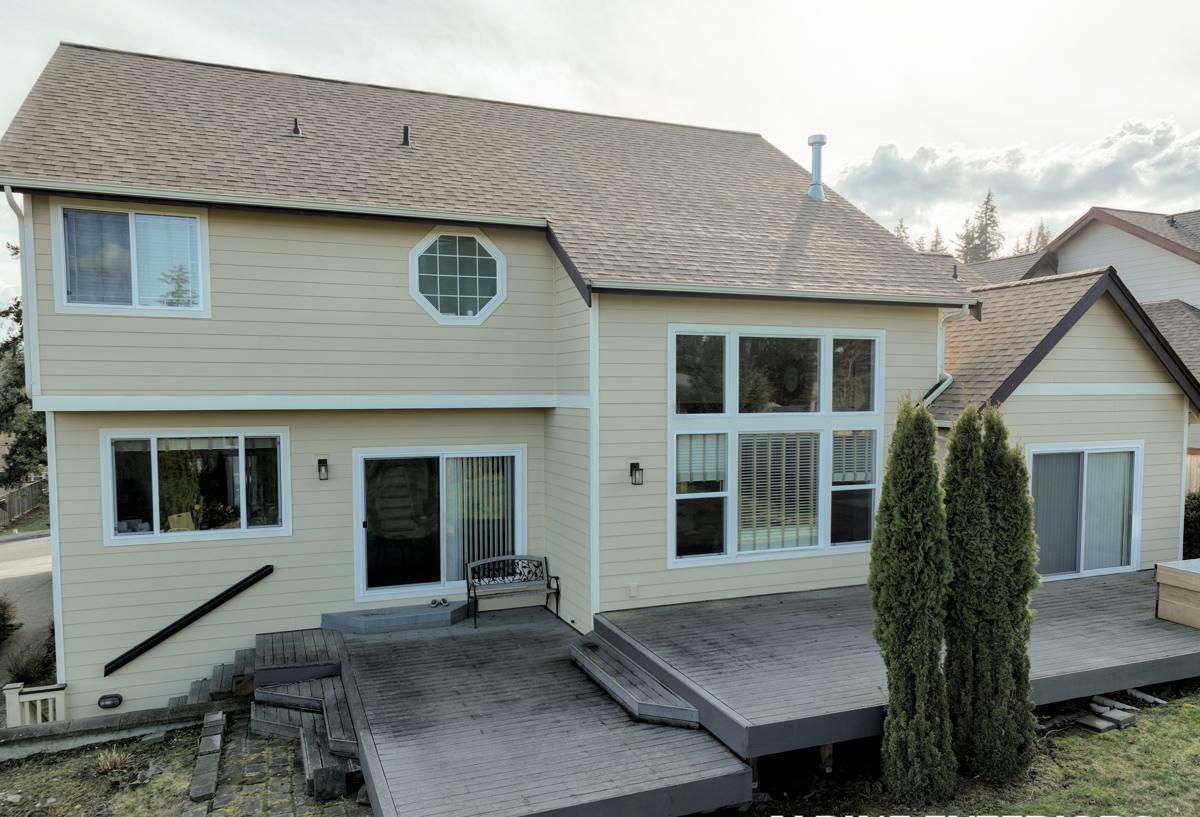
What South Tampa's Weather Actually Does to a Deck
It helps to understand the specific stresses a deck in this part of Hillsborough County is under year-round, not just during storm season.
Salt Air and Coastal Humidity
Proximity to Tampa Bay means airborne salt settles on everything outdoors, accelerating corrosion on unprotected metal. Standard hardware store screws and generic joist hangers can start rusting within a year or two in this environment. Combined with near-constant humidity, that corrosion also weakens the grip fasteners have on wood over time.
Year-Round UV Exposure
Florida sun is intense for most of the year, not just in summer. UV breaks down wood fibers, fades finishes, and dries out sealants and caulking faster than in most parts of the country. Composite and PVC decking aren't immune either — UV resistance varies significantly by product line, which is part of why material choice matters here.
Wind-Driven Rain
Tampa's storms don't just drop rain straight down — wind pushes it sideways, into ledger connections, under railings, and into any gap where flashing or sealant is incomplete. A deck that isn't properly flashed where it attaches to the house is one of the most common sources of hidden rot, because water gets behind the ledger board and stays there.
Hurricane-Force Wind Loads
Even a deck that never sees a direct hurricane hit still needs to be framed to handle high sustained winds and gusts. Railings, stair stringers, and the connection between the deck and the house all need to resist uplift and lateral force, not just support the weight of people standing on them.
Choosing the Right Decking Material for This Environment
There's no single "best" decking material — the right choice depends on budget, how much upkeep you're willing to do, and how exposed the deck is to sun and salt air. Here's an honest breakdown of what we typically discuss with South Tampa homeowners.
| Material | Salt Air / Humidity Behavior | UV / Fade Resistance | Maintenance |
|---|---|---|---|
| Pressure-Treated Pine | Prone to cupping and fastener corrosion if hardware isn't matched to the treatment chemical | Fades and grays without regular sealing | Annual cleaning and re-sealing recommended |
| Composite Decking | Generally stable, but quality varies widely by product line | Good on higher-end lines; lower-end products can fade or chalk | Occasional washing; no staining or sealing |
| PVC / Capped Polymer | Excellent resistance to moisture and salt exposure | Strong UV resistance on most cap-stock products | Low; periodic cleaning only |
| Tropical Hardwood (e.g., Ipe) | Naturally dense and rot-resistant | Fades to gray without regular oiling | Higher — needs periodic oiling to maintain color |
We don't push one product over another as a blanket rule. What we won't do is install a decking system in a way that ignores how it actually behaves in coastal humidity — that includes using the fastener and hardware types each manufacturer specifies, not substituting cheaper hardware to save a few dollars on a job.
Structural Details That Matter More Here Than Elsewhere
The visible decking boards get all the attention, but the framing underneath is what determines whether a deck survives storm season after storm season.
- Ledger board flashing that directs water away from the house rather than letting it pool against the siding or sheathing
- Corrosion-resistant fasteners and structural hardware — matched to the type of pressure-treated lumber being used, since some treatment chemicals accelerate corrosion in standard galvanized hardware
- Footings sized and set to local frost-free depth requirements and soil conditions, not just poured to a generic minimum
- Hurricane ties or equivalent uplift connectors at key framing points, sized to the deck's actual wind exposure
- Railing posts anchored with through-bolts rather than lag screws alone, since railings take direct lateral load in high wind
- Proper joist spacing and blocking for the specific decking material chosen, since composite and PVC products often have different span requirements than wood
Design Considerations Specific to South Tampa Homes
South Tampa has a mix of older bungalows, newer builds, and everything in between, often on lots where drainage and elevation are already tight. A few things come up repeatedly when we design a deck in this area:
Drainage and Grading
Florida's heavy rain events mean water needs somewhere to go. We look at how a new deck will affect water flow around the foundation and make sure footings and grading don't create standing water against the house.
Shade and Orientation
Given how much direct sun this area gets, orientation matters for comfort as much as looks. Homeowners often ask about pergolas, shade sails, or roof extensions paired with a deck — worth discussing early since it affects framing and post placement.
Pool-Adjacent Decks
Many South Tampa properties have pools, which adds chlorine exposure and constant moisture to the list of things the deck materials and hardware need to tolerate. This is one more reason material selection and fastener choice aren't one-size-fits-all decisions.
How Our Process Works
Every custom deck project follows the same basic sequence, adjusted for the specifics of your property:
- On-site assessment of the space, existing structure (if attaching to the house), soil, and drainage
- Design discussion covering layout, material options, railing style, and any add-ons like built-in seating or shade structures
- Written estimate with material and labor broken out, so you know what you're paying for
- Permitting through Hillsborough County / City of Tampa, including any required engineering for wind load
- Construction, starting with footings and framing before decking, railings, and finishing details
- Final walkthrough and inspection sign-off
Maintenance That Actually Matters in a Salt Air Climate
What a deck needs to stay in good shape here is different from what's typically recommended in maintenance guides written for other climates.
- Rinse salt residue and debris off the deck surface periodically, especially after storms with wind off the bay
- Check railing posts and stair connections for movement at least once a year — loosening often shows up here before anywhere else
- Inspect ledger board flashing and the area where the deck meets the house for any signs of water intrusion
- Re-seal or re-oil wood decking on the schedule appropriate to the product, rather than waiting until it visibly grays
- Look for corrosion on visible hardware — surface rust on a fastener is worth addressing before it compromises the connection
Permitting and Local Code Requirements
Decks in Hillsborough County require permits, and depending on size, height, and attachment method, may require engineered plans addressing wind load. This isn't paperwork for its own sake — it's the mechanism that ensures a deck is actually built to withstand the wind conditions this area sees. We handle the permitting process as part of the job, including any required inspections, so the finished structure is documented and code-compliant rather than something that could complicate a future home sale or insurance claim.
Why It Matters to Hire a Crew That Already Works in South Tampa
A contractor who mostly builds decks inland or in a different climate may not think twice about hardware grade, ledger flashing details, or how a specific composite product handles salt air and UV over years, not months. Working regularly in South Tampa means we're used to accounting for these conditions from the design stage forward, not discovering an issue after the deck is built. It also means familiarity with the local permitting process, typical soil and drainage conditions in the area, and the kind of framing that actually holds up through a normal Florida storm season.
If you're planning a custom deck in South Tampa, we're happy to walk the property, talk through material and design options honestly, and put together a written estimate — no pressure, no obligation. The form below is the easiest way to get that conversation started.