 Tampa Siding
 Why Board & Batten Fits Davis Islands Homes
Board and batten has become one of the most requested siding styles on Davis Islands, and it's easy to see why. The vertical lines read as clean and coastal-modern on newer builds, and they pair naturally with the mix of historic and updated homes scattered across the island. Whether it's used as a full exterior, a gable accent, or a wrap on a dormer or porch addition, board and batten gives a home a distinct, tailored look that flat lap siding doesn't.
But Davis Islands is not a typical inland Tampa lot. It's surrounded by open water on every side, which means homes here take direct exposure to bay wind, salt-laden air, and wind-driven rain that a house even a few miles inland doesn't see nearly as often. A siding style chosen purely for looks, without accounting for that exposure, tends to show problems years before it should. This page covers what board and batten actually needs to hold up here, what a correct installation looks like, and why the details matter more on this island than almost anywhere else in Hillsborough County.
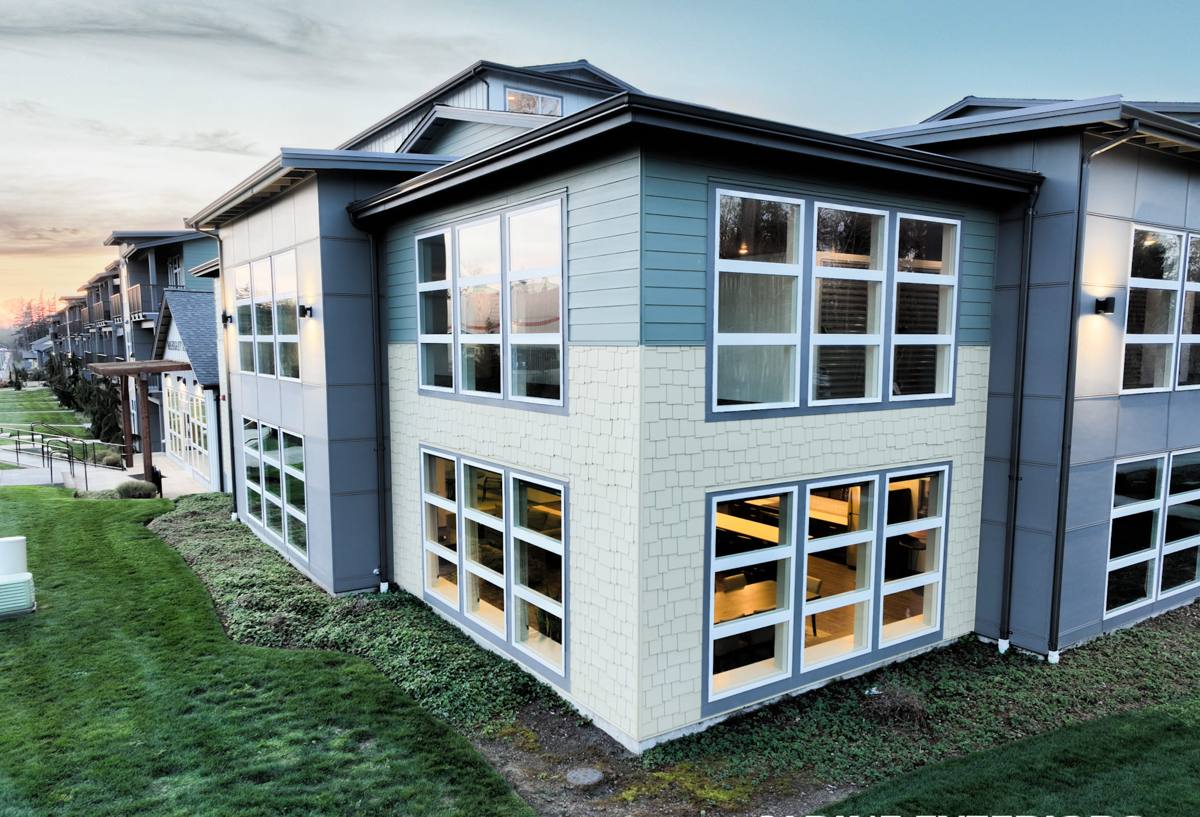
What Tampa Bay's Climate Demands From Vertical Siding
Hurricane-Force Wind Exposure
Board and batten relies on a pattern of wide boards and narrower battens fastened over the seams. Every one of those seams, and every fastener holding the pattern together, is a point that has to resist uplift and lateral wind pressure during tropical storms and hurricanes. On an island with water on all sides, wind loads are typically higher than on a comparable inland lot, and the fastening schedule and board attachment have to be engineered for that reality, not just installed to a generic minimum.
Salt Air and Humidity
Constant proximity to Tampa Bay means salt-laden moisture is in the air year-round, not just after a storm. That accelerates corrosion on the wrong fasteners and trim hardware, and it keeps humidity levels behind the siding higher than in drier parts of the county. Vertical siding has more seams and more end-grain exposure than horizontal lap siding, so any weakness in the water-resistive barrier or flashing shows up faster here than it would on a standard lap job.
Intense UV and Afternoon Storms
Florida sun is hard on any exterior finish, and Tampa's daily summer storm pattern means siding cycles between intense heat and heavy rain almost every afternoon for months at a time. A factory finish that can't handle UV fading or a substrate that swells and shrinks with moisture will telegraph that stress at the seams first, since board and batten has more linear joints per square foot of wall than lap siding does.
Where Board & Batten Goes Wrong When Installed Incorrectly
Most board and batten failures we get called out to inspect on the island trace back to a handful of repeatable mistakes, not bad luck or a bad product:
- Battens face-nailed directly through both layers without allowing for expansion, which splits boards as they move with humidity swings
- No consistent rainscreen gap behind the siding, trapping humid air against the water-resistive barrier
- Butt joints and inside corners left unflashed or sealed with caulk alone instead of proper flashing details
- Standard fasteners used instead of corrosion-resistant hardware rated for coastal exposure
- Bottom edges installed too close to grade, hardscape, or standing water after heavy rain
None of these are visible from the street when the job is finished. They show up two, five, or ten years later as staining at the seams, soft spots at the base of boards, or fastener heads bleeding rust through the paint. By the time a homeowner notices, the damage is usually already in the substrate, not just the surface.
What a Correct Board & Batten Installation Involves
Water Management First
Before any board goes up, the water-resistive barrier and flashing at windows, doors, and penetrations need to be continuous and lapped correctly, shingle-style, so water is directed out and down, never behind the plane of the wall. On an island where wind-driven rain is a regular event rather than a rare one, this step decides whether the siding performs for decades or fails quietly behind a finish that still looks fine.
Fastening and Board Layout
Boards and battens need a fastening pattern sized to the local wind exposure, not a generic schedule pulled from a national spec sheet. That means correct fastener spacing at panel edges and field, corrosion-resistant fastener material, and enough clearance for the boards to expand and contract without splitting or popping fasteners over time.
Joint and Corner Detailing
Every seam, corner, and transition to trim is a place water can find its way in if it's not detailed correctly. That means proper flashing at horizontal joints, correctly lapped inside and outside corner trim, and sealant used as a backup to good flashing, never as the only line of defense.
Clearance at the Base
The bottom edge of the siding needs consistent clearance above grade, roofing, decks, and hardscape. On low-lying island lots where standing water after a downpour is common, that clearance is the difference between siding that sheds water and siding that sits in it.
James Hardie's Board & Batten System
We install James Hardie fiber cement exclusively, and board and batten is one of the styles where that decision matters the most. Hardie's vertical siding panels and boards are engineered specifically for climates like ours through the HZ5 product line, which is formulated for high-humidity, high-moisture-cycling regions rather than a one-size-fits-all national spec.
Fiber cement doesn't expand and contract with humidity the way wood and engineered-wood products do, which matters enormously on a style built around narrow vertical seams. It's also non-combustible, holds a factory-applied ColorPlus finish that resists Florida's UV exposure far better than field-applied paint, and carries a strong transferable warranty backed by a manufacturer with decades of track record in coastal markets, not just marketing claims. We don't offer LP SmartSide, vinyl board and batten, primed wood, or cedar as alternatives, because we've seen how those products age in exactly this kind of salt-air, high-UV, high-wind environment, and we don't want to install something we'd be repairing again in a few years.
Comparing Board & Batten Material Options for This Climate
| Material | Moisture Behavior | UV / Finish Durability | Coastal Fastener Needs | Long-Term Maintenance |
|---|---|---|---|---|
| James Hardie fiber cement | Dimensionally stable, resists swelling | Factory ColorPlus finish, fade-resistant | Standard corrosion-resistant fasteners | Low — periodic cleaning and caulk checks |
| Engineered wood (LP SmartSide-type) | More prone to edge swelling if seals fail | Field-applied finish wears faster in UV | Same coastal fastener requirements | Moderate — finish touch-ups over time |
| Vinyl board and batten | Doesn't rot, but can warp/buckle in heat | Color fades and becomes brittle with UV | Standard fasteners, loose-hang design | Low, but limited repair options once faded |
| Primed wood or cedar | Absorbs moisture, prone to swelling/splitting | Requires repainting/resealing on a cycle | Corrosion-resistant fasteners essential | High — regular repainting and sealing |
This isn't a claim that every alternative product fails outright — it's why, given what this island's climate does to siding over time, fiber cement is the only material we're willing to put our name behind here.
Our Process for Davis Islands Projects
Working on the island comes with a few practical realities that shape how we plan a job. Access can be tighter than a typical suburban lot, staging materials and equipment takes more coordination, and many homes here have architectural character worth preserving rather than covering up. We also expect that some properties on the island fall under deed restrictions or architectural review requirements, so we build that check into scheduling up front rather than discovering it mid-project.
Beyond logistics, our process for a board and batten job follows the same disciplined steps on every home:
- On-site inspection of the existing wall assembly, substrate condition, and any moisture or rot already present
- Written scope covering water-resistive barrier, flashing details, fastening schedule, and product line before any work starts
- Removal of existing siding and inspection of sheathing, with repairs addressed before new material goes up
- Correct installation of the water-resistive barrier, flashing, and rainscreen detailing
- James Hardie board and batten installation to manufacturer spec, with corrosion-resistant fasteners throughout
- Final walkthrough covering caulking, trim, and touch-up finish work
Maintaining Board & Batten Siding in a Coastal Environment
Even the right product installed correctly benefits from basic upkeep, especially this close to open water. A short annual routine catches small issues before they become expensive ones:
- Rinse salt residue and grime off the siding a few times a year, especially on the sides facing open water
- Walk the base of the walls after major storms and check for standing water, debris buildup, or landscaping that's crept too close
- Inspect caulking at seams, corners, and trim annually and re-seal any joints that have cracked or pulled away
- Look for fastener heads showing rust bleed and have them addressed before the surrounding material is affected
- Keep gutters and downspouts clear so roof water is directed away from the siding instead of running down the wall face
Why a Local Crew That Knows Davis Islands Matters
Siding specs written for generic Florida conditions don't always account for what an island surrounded by bay water actually experiences: wind exposure from every direction, salt air that never really lets up, and a building stock that ranges from decades-old homes to new construction, each with its own quirks. A crew that works this island regularly has already seen how board and batten performs here over time, which corners get skipped on jobs that fail early, and which details are worth the extra time on the front end.
That local track record is also why we've standardized on one product system instead of offering a menu of siding materials with different trade-offs. We'd rather install James Hardie correctly, every time, than sell whatever a homeowner has seen advertised and hope the climate doesn't find its weak points.
If you're considering board and batten siding for a home on Davis Islands, we're glad to walk the property, look at the existing wall assembly, and talk through what a correct installation would involve for your specific home. There's no pressure and no cost to get our take — the form below is the easiest way to get a free estimate started.