 Tampa Siding
 Why Decks in Brandon Wear Out Faster Than You'd Expect
Brandon sits inland from Tampa Bay but still takes the full brunt of a Gulf Coast climate. Homeowners here often assume that being a few miles from the water buys them some protection from the weather that batters coastal decks — it doesn't, not really. Intense year-round UV breaks down wood fibers and fades or chalks finishes on almost any material. Wind-driven rain during Florida's long summer storm season finds its way into every gap, seam, and fastener hole a deck has. And when a tropical system or hurricane-force wind event comes through Hillsborough County, an aging deck structure is often the first thing to show real damage — loose railings, popped boards, or worse.
None of this means a deck can't last in Brandon. It means the deck has to be built and replaced with this climate in mind from the start, not treated like it was built somewhere with mild winters and dry summers. That's the difference between a deck that needs replacing again in eight years and one that holds up for decades.
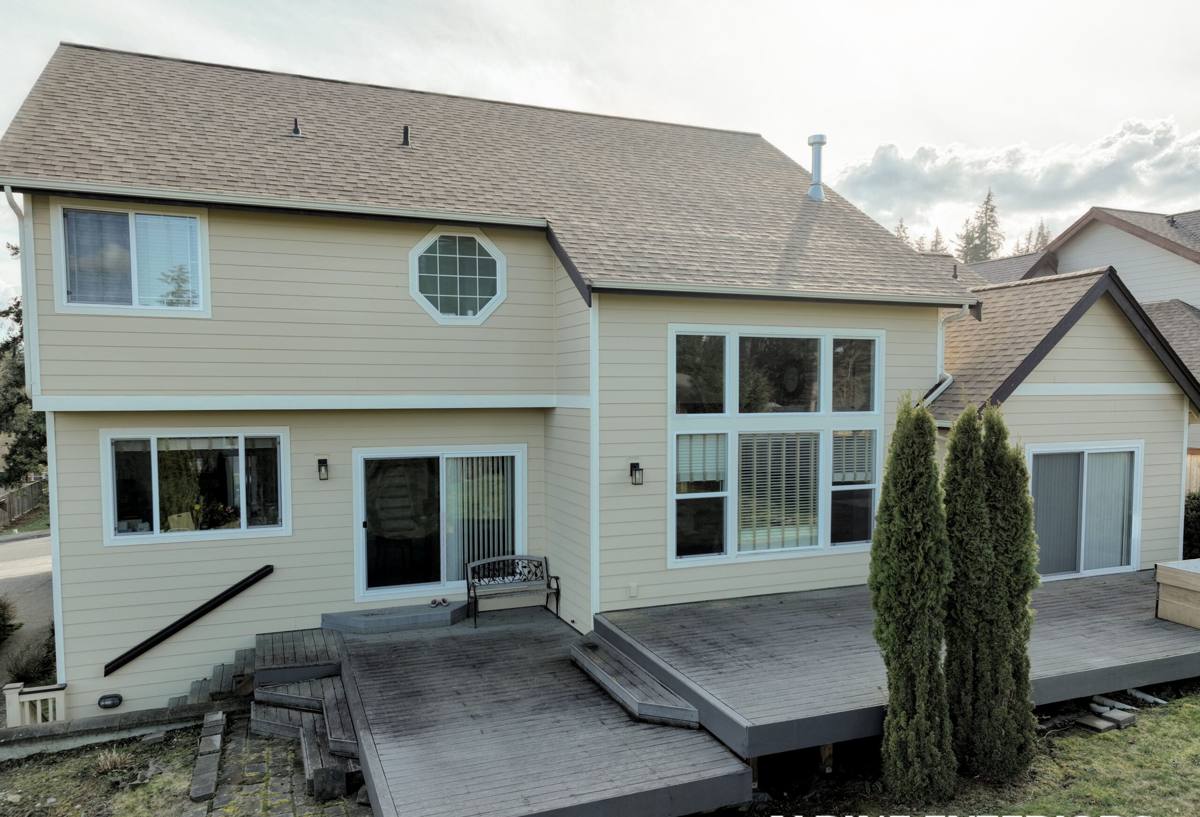
Signs Your Brandon Deck Needs Replacement, Not Just Repair
Not every tired-looking deck needs to come out entirely. But there's a point where patching individual boards or re-tightening railings is just delaying a bigger problem — and spending money that won't carry forward into the replacement anyway. A few signs tend to show up consistently on older Brandon decks:
- Soft, spongy, or spring-back boards when you walk across them, especially near the house or stair landing
- Visible rot or dark staining around fastener heads, ledger boards, or post bases
- Railings or posts that wiggle at the base, which usually means the framing underneath has weakened
- Gaps opening up between boards, or boards cupping and splitting from years of sun and moisture cycling
- Rust streaks running down from fasteners or hardware, a sign the metal itself is failing
- A structure that was never properly attached to the house with flashing, which is common on older or owner-built decks
If you're only seeing one or two of these on isolated boards, repair may be a fair option. If the framing itself is compromised, or the deck is old enough that most of the structure shows the same wear, replacement is almost always the more honest recommendation — and the safer one.
Wood vs. Composite: What Failing Looks Like
Pressure-treated wood decks tend to show trouble through soft spots, splintering, and rot at ground contact points. Composite decking fails differently — boards can swell, delaminate at the edges, or fade unevenly depending on the product and how it was installed. Either way, the underlying frame is usually the part that determines whether repair makes sense, since that's what carries the structural load regardless of what decking is on top.
Choosing Decking Material for Hillsborough County's Climate
There's no single "best" decking material for every home — it depends on budget, how much upkeep you're willing to do, and how the deck will be used. What we won't do is recommend a product that looks good in a showroom but performs poorly under Tampa-area sun and humidity. Here's an honest comparison of the materials we most commonly work with for Brandon replacements:
| Material | UV & Heat Performance | Moisture Behavior | Maintenance |
|---|---|---|---|
| Pressure-treated wood | Fades and can check/crack under intense sun without regular sealing | Absorbs water; needs proper ventilation underneath to avoid rot | Annual cleaning and re-sealing recommended |
| Capped composite | Stable color and surface, though dark colors run hot underfoot | Resists moisture absorption; core is protected by an outer cap | Occasional washing, no sealing or staining |
| Uncapped composite (older-style) | More prone to fading and surface wear over time | More susceptible to moisture intrusion at cut edges | Low, but edge sealing at cuts matters |
| PVC decking | Very stable in heat and sun, doesn't absorb UV-driven moisture the way wood-based products can | Fully moisture-resistant core | Minimal; occasional cleaning |
We'll walk through these trade-offs with you rather than pushing a single product. A lot of Brandon homeowners land on capped composite or PVC for the decking surface specifically because they don't want to think about resealing every year in this heat — but plenty of others prefer the look and feel of real wood and are fine maintaining it. Both are legitimate choices when installed correctly.
What a Correct Deck Replacement Actually Involves
The decking boards are the part everyone sees, but they're not what determines whether a deck survives its first tropical storm season or the next decade of Tampa sun. The structure underneath is where the job is won or lost.
Footings and Framing
Footings need to be sized and set to local frost-free, load-bearing standards, not guessed at. Florida's sandy and often shifting soils mean footings that are undersized or poorly compacted can settle unevenly over time, which is one of the most common causes of a deck that starts to feel "off" a few years after it was built. Framing lumber and connectors should be rated for exterior, high-moisture use — not just whatever was cheapest at the yard.
Ledger Board and Flashing
The ledger board — where the deck attaches to the house — is the single most common failure point on decks nationwide, and it's especially unforgiving in a climate with as much wind-driven rain as ours. If flashing isn't installed correctly behind and over the ledger, water works its way into the house's rim joist and framing, and you end up with hidden rot that has nothing to do with the deck itself. Correct flashing detail here isn't optional; it's the difference between a deck replacement and a future water-damage repair.
Fasteners and Hardware
Salt air reaches well inland around the Tampa Bay area, and combined with humidity, it accelerates corrosion on the wrong hardware fast. Structural connectors, joist hangers, and fasteners should be stainless steel or coated specifically for coastal/high-corrosion environments. Using standard hardware here is one of the more common shortcuts that shows up as rust stains and weakened connections within just a few years.
Railings and Code Compliance
Railing height, baluster spacing, and stair geometry all need to meet current Florida Building Code requirements — these aren't just safety guidelines, they're inspected. Replacement is also the right time to correct any old, non-compliant railing setups that may have been grandfathered in on the original build.
Permits and Inspections in Brandon
Deck replacement in unincorporated Hillsborough County — which covers Brandon — typically requires a building permit, since it involves structural work and often electrical (for outlets or lighting) as well. Permitted work means an inspector signs off on the footings, framing, and attachment to the house before it's covered up, which protects you if there's ever a question about the work later — including when you go to sell the home. We handle the permit application and coordinate inspections as part of the job, so it's not something you have to manage yourself.
Our Replacement Process
- On-site assessment — We inspect the existing deck, ledger attachment, and framing to determine actual condition, not just surface appearance.
- Honest scope and estimate — You get a clear breakdown of what's being replaced and why, in plain language, with material options and their trade-offs explained.
- Permit and code review — We pull the necessary permit and confirm the plan meets current Florida Building Code for railings, stairs, and structural connections.
- Demolition and disposal — The old deck comes out and debris is hauled off; we don't leave a job site full of old lumber.
- Framing and structural build — Footings, ledger flashing, and framing go in first, built to hold up under Florida wind and moisture loads.
- Decking, railings, and finish work — Surface material and railings are installed to spec, with attention to fastener placement and drainage.
- Final walkthrough and inspection — We review the finished deck with you and make sure it passes final inspection.
What Affects the Cost of a Brandon Deck Replacement
We won't quote a number without seeing the site, but these are the factors that most often move the price up or down on a Brandon deck replacement:
| Factor | Why It Matters |
|---|---|
| Deck size and shape | Multi-level decks or non-rectangular layouts require more framing and labor per square foot |
| Decking material | Pressure-treated wood, composite, and PVC span a wide price range and affect long-term maintenance costs too |
| Framing condition | If footings or ledger attachment need rework beyond the decking itself, structural costs increase |
| Railing style | Cable, glass, and composite railings cost more than standard baluster systems |
| Height and stairs | Elevated decks with stairs require more structural work and code-compliant guarding |
| Permit and inspection scope | Electrical additions or larger footprints can add permitting steps |
As a very general guide, straightforward pressure-treated replacements tend to sit at the lower end of the range, while larger composite or PVC decks with upgraded railings run higher. A firm number only comes from an actual site visit — anything else is a guess.
Keeping a New Deck Healthy in Tampa's Climate
Whatever material you choose, a little seasonal attention goes a long way in this climate. Here's what we recommend to every Brandon homeowner after a replacement:
- Sweep debris and standing water off the deck surface regularly, especially after summer storms
- Check that gaps between boards stay clear so water can drain instead of pooling
- Inspect railings and stair connections once or twice a year for looseness
- For wood decks, plan on cleaning and resealing on a regular schedule to manage UV fading and moisture absorption
- For composite or PVC, wash with mild soap and water to prevent mildew buildup in our humidity
- After any major storm or high-wind event, do a quick visual check of fasteners, railings, and the ledger attachment
Why It Matters That We Already Work in Brandon
A deck built to a generic national spec sheet isn't the same as one built by a crew that deals with Hillsborough County's permitting office, knows how local soil behaves under footings, and has seen firsthand what wind-driven rain and salt air do to hardware over a few Florida summers. We're not learning this climate on your project. That familiarity shows up in the details — flashing that's actually sealed right, hardware rated for the corrosion this area produces, and framing sized for the wind loads a Tampa-area storm can bring, not just what a basic building code minimum allows.
If your Brandon deck is showing its age, we're happy to take a look and give you a straightforward assessment of what it needs — repair or full replacement — along with a free, no-pressure estimate. There's no obligation, just an honest read on where things stand. Reach out using the form below to get started.