 Tampa Siding
 Riverview's Climate Puts Real Stress on Exterior Siding
Riverview sits inland from Tampa Bay but still takes the full brunt of a Gulf Coast climate: long, humid summers, intense year-round UV exposure, sudden downpours that come in sideways during a squall, and the real possibility of hurricane-force wind loads during the June-through-November storm season. Add in the salt air that drifts in off the bay on prevailing winds, and you have an environment that is genuinely hard on the outside of a house. Siding here isn't just a cosmetic layer — it's the first line of defense against wind-driven rain finding its way behind the cladding and into the wall assembly, where it can sit in Florida's humidity and cause real damage long before anyone notices a problem from the curb.
This is why we treat fiber cement siding in Riverview as a system, not a product. The material matters, but so does the flashing, the fastening, the clearances, and the sequence the crew follows on installation day. Get any one of those wrong and a well-made siding product can still fail early in this climate.
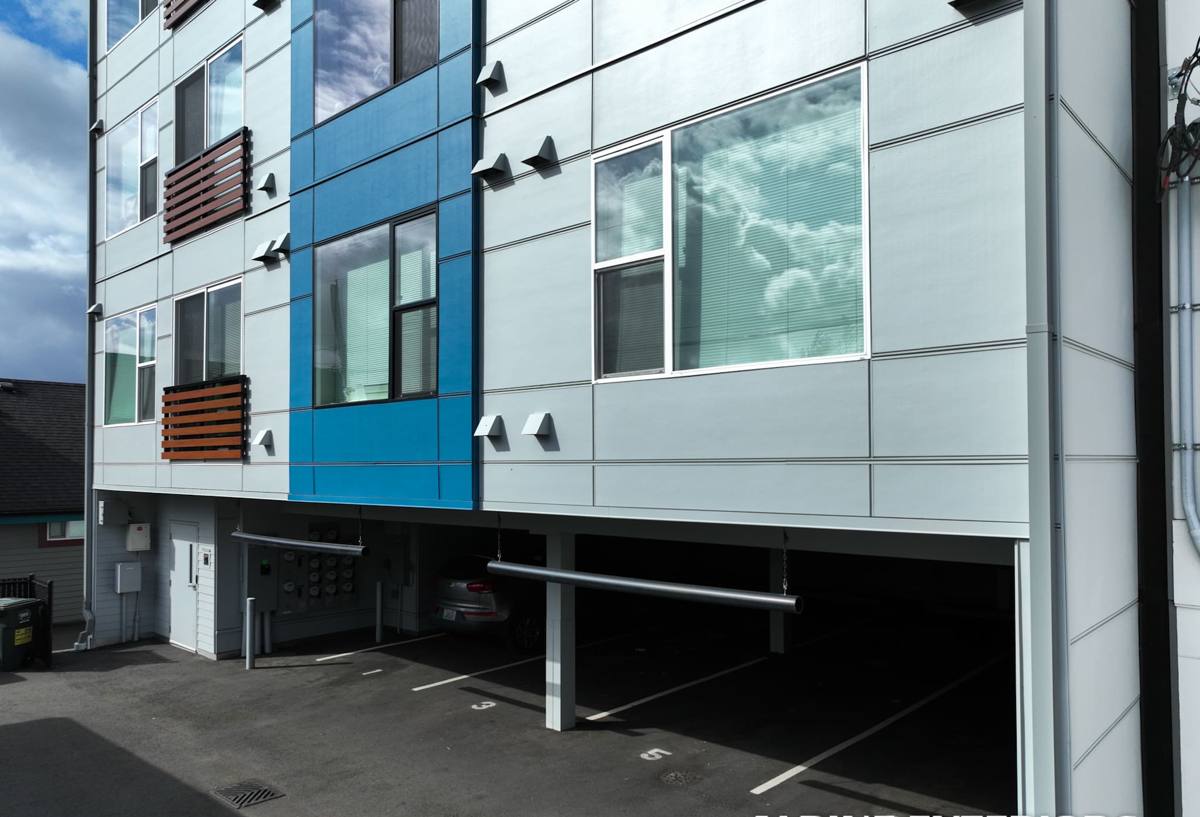
What Correct Fiber Cement Installation Actually Requires
Moisture Management Comes First
In Hillsborough County, wind-driven rain during a tropical system doesn't just fall on siding — it gets pushed sideways and upward under laps and around penetrations. Correct installation starts with a weather-resistive barrier behind the siding, properly lapped flashing at every window, door, and roofline intersection, and a drainage plane that lets any moisture that does get behind the cladding find its way back out instead of sitting against the wall sheathing. Skipping or shortcutting this layer is the single biggest reason siding jobs fail in this climate, regardless of what material sits on the outside.
Fastening and Clearances Built for Wind
James Hardie publishes specific fastener types, spacing, and embedment requirements for high-wind zones, and Riverview falls well within the range where those specs matter. Nailing patterns that would be fine in a milder climate can leave siding vulnerable to wind uplift here. We also hold the manufacturer's minimum clearances — siding kept off the roofline, decks, and grade — so that water isn't wicking up into the bottom edge of the boards during Florida's frequent heavy rain events.
Caulking and Joint Treatment
Butt joints, trim intersections, and penetrations need to be treated with a high-quality, paintable sealant rated for sustained UV and moisture exposure — not a bargain caulk that will crack and open a gap within a couple of Florida summers. Every open joint is a potential entry point for wind-driven rain.
Common Installation Checklist
- Weather-resistive barrier installed and properly lapped, shingle-style, top over bottom
- Flashing at every window head, door head, and roof-to-wall intersection
- Manufacturer-specified fasteners, driven flush (not overdriven) at correct spacing
- Minimum clearance held between siding and roofline, decking, and grade
- All factory-cut edges properly sealed or primed before installation
- Joints and penetrations sealed with a UV-stable, paintable sealant
Why We Install the HZ5 Product Line in Hillsborough County
James Hardie engineers its siding by climate zone, and Hillsborough County falls in the HZ5 zone — the product formulation designed for high humidity, heavy rainfall, and the freeze-thaw non-issue but moisture-heavy conditions of the Gulf Coast. HZ5 fiber cement is manufactured to resist moisture absorption and the swelling, cracking, and rot that wood-based and engineered-wood siding products are prone to in this kind of year-round humidity. It's also non-combustible, which matters during Florida's dry lightning-prone stretches and gives homeowners a genuine layer of fire protection that vinyl and wood-based products simply can't offer.
On top of the substrate itself, we install Hardie's ColorPlus factory-applied finish rather than field-painted siding wherever the color selection allows it. A factory finish is baked on under controlled conditions and carries its own finish warranty — a meaningful advantage in a climate where UV exposure is intense nearly twelve months a year and where a field-applied paint job is going to fade and need attention far sooner.
Fiber Cement vs. Other Siding Materials for a Riverview Home
| Factor | James Hardie Fiber Cement | Vinyl Siding | Engineered Wood / Composite |
|---|---|---|---|
| Wind resistance | Engineered and rated for high-wind zones; holds up to Florida wind loads when installed to spec | Can crack, warp, or blow off in sustained high winds | Wind rating varies widely by product; installation-sensitive |
| Moisture behavior | Does not absorb water like wood; HZ5 formulation built for humid climates | Doesn't absorb water, but seams and panels can allow water intrusion behind the material | Vulnerable to swelling and rot if moisture reaches the wood fiber core |
| UV / color retention | ColorPlus factory finish resists fading under intense Florida sun | Can fade and become brittle with prolonged UV exposure | Field-painted finishes fade faster and need more frequent repainting |
| Fire resistance | Non-combustible | Combustible | Combustible |
| Long-term maintenance | Occasional washing and caulk inspection; ColorPlus finish reduces repainting needs | Low maintenance but limited repair options if damaged | Requires more diligent moisture monitoring and repainting over time |
This is exactly why we standardized on James Hardie fiber cement as the only siding product we install. We're not going to put a product on a Riverview home that we know is going to fight the local climate — we'd rather install one system correctly and stand behind it.
Our Installation Process on Riverview Homes
- On-site assessment — we inspect the existing wall assembly, check for hidden moisture damage or rot behind current siding, and measure for material takeoff.
- Tear-off and substrate check — old siding comes off and we inspect sheathing for soft spots or prior water damage before anything new goes up.
- Weather barrier installation — a new, properly lapped weather-resistive barrier goes on before any siding, giving the wall a clean drainage plane.
- Flashing at every penetration — windows, doors, hose bibs, light fixtures, and roof intersections all get flashed before siding closes in around them.
- Siding installation to Hardie spec — correct fastener type and spacing, correct clearances, and factory-cut edge treatment throughout.
- Trim, caulking, and final detailing — joints sealed, trim installed, and touch-up work completed to match the ColorPlus finish.
- Final walkthrough — we go over the finished work with the homeowner before calling the job complete.
Common Problems We Find on Riverview Homes
Because we work in this area regularly, we see the same handful of issues come up again and again on older homes or homes with poor prior installations: siding installed with no clearance off the roofline or grade, caulk that's cracked and opened gaps around windows, fastener patterns that don't hold up to wind uplift, and, on wood or engineered-wood sided homes, soft or delaminating panels where moisture has been sitting behind the cladding for years unnoticed. Most of these problems trace back to installation shortcuts rather than a bad product — which is exactly why we're as particular about the process as we are about the material.
Maintaining Fiber Cement Siding in Tampa Bay's Climate
One of the real advantages of James Hardie siding for a Riverview home is how little upkeep it demands compared to wood-based alternatives — but "low maintenance" doesn't mean "no maintenance." A once- or twice-a-year check keeps small issues from becoming expensive ones, especially given how much rain and sun this area sees.
- Rinse siding periodically to clear salt air residue, pollen, and mildew buildup
- Inspect caulk lines at trim and window joints annually and re-caulk if you see cracking or gaps
- Walk the perimeter after major storms to check for impact damage or loosened trim
- Keep sprinklers and irrigation from spraying directly onto siding
- Trim landscaping back so siding gets airflow and isn't holding moisture against the wall
Why Local Experience in Riverview Matters
A crew that works Hillsborough County regularly knows what this climate does to an exterior over time, and that shows up in the details — how tight the flashing is around a window, how much clearance is left at the bottom course, what fastener spacing actually holds through a real storm season here versus on paper. It also means we're not guessing at permitting requirements or wind-load expectations for this area; we're working within them every time we're on a roof or a ladder in Riverview. That local familiarity is part of what separates a siding job that looks good on installation day from one that's still performing correctly five hurricane seasons later.
If you're considering new siding, a repair, or just want an honest read on the condition of what's currently on your home, we're happy to take a look. Reach out for a free, no-pressure estimate — someone will walk the property with you and give you a straight answer on what your Riverview home actually needs.