 Tampa Siding
 Why South Tampa Homes Need Siding Built for This Climate
South Tampa sits on a peninsula, wrapped by Hillsborough Bay, Old Tampa Bay, and the open water beyond. That geography is part of what makes the neighborhood desirable — and part of what makes it hard on exterior building materials. Salt-laden air drifts inland off the water and settles on everything, including your siding, hardware, and trim. Add Florida's year-round UV exposure, a hurricane season that runs June through November, and the kind of wind-driven rain that doesn't fall straight down but gets pushed sideways into wall assemblies, and you have a climate that is genuinely tough on a home's exterior.
A lot of the housing stock in South Tampa — bungalows, Mediterranean revivals, mid-century ranches, and newer infill construction — was sided with materials that were never engineered for this combination of stressors. Vinyl chalks and warps. Wood siding rots, delaminates, or feeds pests in the humidity. Even siding that looks fine from the street can be hiding moisture damage behind it if it wasn't installed with this climate in mind. Fiber cement siding, installed correctly, is one of the few exterior materials that holds up to salt air, sustained UV, and hurricane-force wind without becoming a five-year maintenance project.
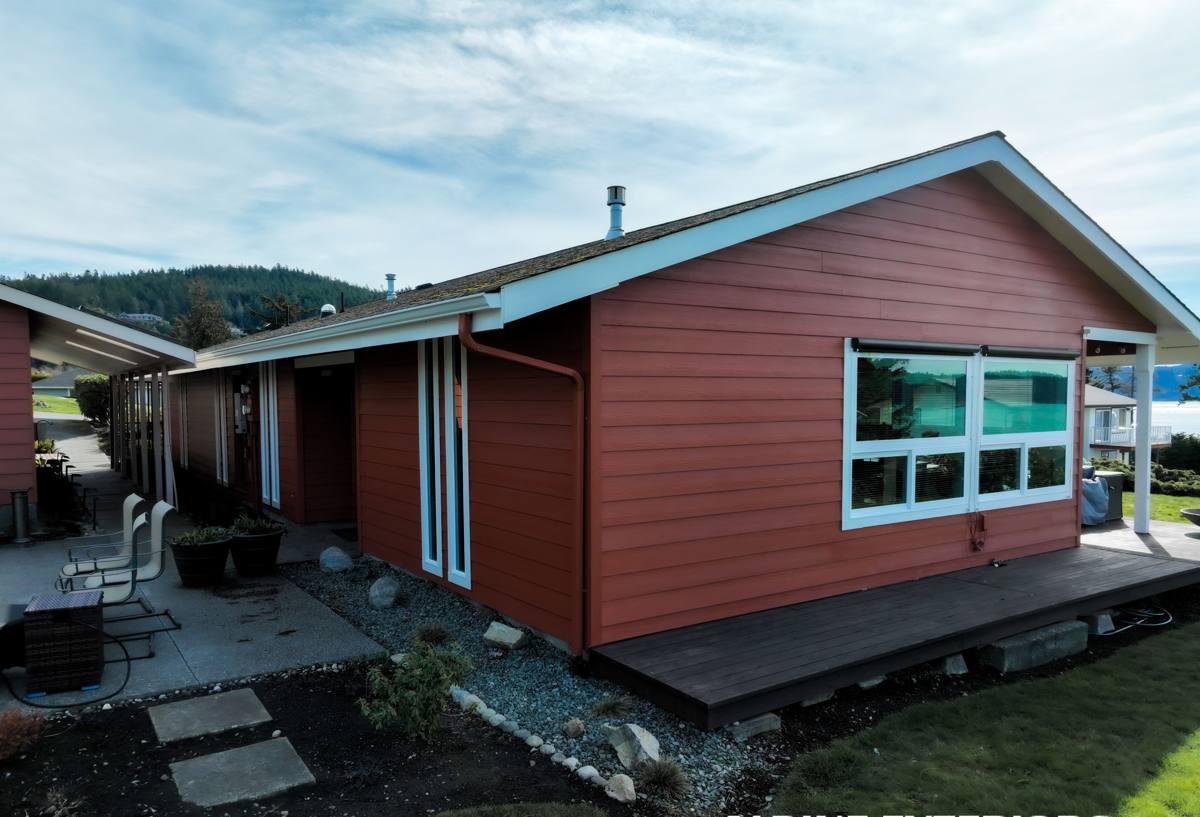
What Fiber Cement Siding Is — and Why We Only Install James Hardie
Fiber cement siding is made from a mix of cellulose fiber, sand, and portland cement, cured into a rigid, non-combustible board. It doesn't burn, it doesn't feed termites, and it doesn't expand and contract with humidity the way wood does. That's the category. Within that category, we install James Hardie products exclusively — not LP SmartSide, not vinyl, not Cemplank or Allura, not primed spruce or cedar.
Why we draw that line
Each of those alternatives has legitimate strengths, and we're not going to pretend otherwise. LP SmartSide is an engineered wood product that installs quickly and holds paint well when new, but it's still wood at its core — it relies on a factory treatment and an intact paint film to keep moisture out, and coastal humidity is unforgiving of any gap in that protection. Vinyl siding is inexpensive and low-maintenance in mild climates, but it's a thin plastic product that softens in intense heat and can crack or blow off in high wind, which is exactly the failure mode you don't want in a hurricane-prone area. Cemplank and Allura are both legitimate fiber cement manufacturers, but we've standardized on Hardie's ColorPlus factory finish system and its climate-specific engineering rather than splitting our crews' expertise, warranty paperwork, and material sourcing across competing product lines. Primed spruce and cedar are beautiful, traditional options, but raw wood siding on a home three miles from saltwater is a standing maintenance commitment — recaulking, repainting, and watching for rot are permanent line items, not one-time tasks.
We put James Hardie on homes because it's engineered specifically for climates like this one, backed by a finish warranty that doesn't require us to guess whether the manufacturer stands behind it, and because we've seen how it performs here over time when it's installed to spec.
What Correct Installation Involves in a High-Wind, High-Moisture Coastal Zone
Fiber cement siding is only as good as the installation behind it. The material itself resists rot, fire, and pests, but a sloppy install can still let water behind the wall or let a panel come loose in a windstorm. In a coastal wind zone like South Tampa's, a few details matter more than they would somewhere inland.
Fastening and wind load
Every panel has to be fastened into structural framing, not just the sheathing, with the nailing pattern and fastener spacing that James Hardie specifies for high-wind zones. We use corrosion-resistant fasteners — stainless steel or hot-dip galvanized — because standard fasteners degrade faster in salt air, and a corroded fastener is a weak point exactly where you need strength during a windstorm.
Flashing and moisture management
Behind every board is a weather-resistive barrier, and behind every window, door, and penetration is flashing that directs water back out rather than into the wall cavity. Wind-driven rain finds gaps that ordinary rain never would, so flashing details around openings and at the base of the wall (the weep screed) get extra attention on coastal jobs.
Caulking and expansion gaps
Fiber cement expands and contracts less than wood, but Florida's temperature swings still call for the gaps and sealants James Hardie specifies at butt joints, trim, and penetrations. Skipping this — or using a bargain caulk that breaks down under UV — is one of the most common ways a fiber cement job fails early.
Choosing the Right Hardie Product Line for South Tampa
James Hardie engineers its siding for different climate zones, and homes along Florida's Gulf Coast — including South Tampa — fall within the zone Hardie builds for its harshest conditions: intense humidity, heavy UV, and severe weather exposure. That matters when you're choosing a product, because it's not just about the look.
| Siding Profile | Best Suited For | Considerations |
|---|---|---|
| HardiePlank lap siding | Bungalows, ranches, most traditional South Tampa homes | Widest color and texture range; classic horizontal reveal |
| HardieShingle | Craftsman and cottage-style homes, accent gables | Staggered or straight-edge look; often paired with lap siding elsewhere on the home |
| HardiePanel (board and batten) | Mediterranean revival and modern infill homes | Vertical lines; common on gables, porches, and accent walls |
| HardieTrim | Corner boards, window and door surrounds, fascia | Pairs with any profile above for a finished, consistent look |
Color is a separate decision from profile. ColorPlus factory-applied finishes are baked on under controlled conditions and carry their own finish warranty, which holds up better against South Tampa's UV load than a field-applied paint job. We'll walk through both decisions with you based on your home's architecture and your neighborhood's character.
Our Installation Process
Every South Tampa project follows the same sequence, adjusted for the specifics of the home:
- Inspection and assessment. We look at the existing siding, sheathing, and any signs of prior moisture damage before quoting anything.
- Material and color selection. We help you choose the right profile, texture, and ColorPlus finish for your home's style and your HOA's requirements, if applicable.
- Tear-off and sheathing check. Old siding comes off and we inspect the sheathing underneath for rot or damage before anything new goes up.
- Weather barrier and flashing. A new weather-resistive barrier goes on, with flashing detailed at every window, door, and penetration.
- Siding installation. Panels go up per James Hardie's fastening specifications for our wind zone, with corrosion-resistant hardware throughout.
- Trim, caulking, and punch list. Trim is installed, joints are sealed with the correct sealant, and we walk the job with you before calling it done.
Maintenance in a Salt-Air, UV-Heavy Environment
James Hardie siding is low-maintenance compared to wood or vinyl, but "low-maintenance" isn't "no-maintenance" — especially this close to the water. A simple seasonal routine keeps it performing the way it's supposed to for decades:
- Rinse the siding with a garden hose a few times a year to clear salt residue and airborne grime — a pressure washer isn't necessary and can damage caulk lines if used carelessly.
- Walk the exterior after major storms and check for cracked panels, loose trim, or displaced fasteners.
- Inspect caulking at joints, windows, and trim annually; UV and humidity break down sealant faster here than in drier climates.
- Keep irrigation heads and sprinklers from spraying directly on the siding — constant wetting in one spot accelerates wear even on a moisture-resistant material.
- Check low areas near grade and downspouts for standing water or soil buildup against the bottom edge of the siding.
Cost Factors for a South Tampa Fiber Cement Project
Every home is different, but the same handful of factors drive most of the price variation we see on South Tampa jobs:
| Factor | Why It Affects Cost |
|---|---|
| Tear-off and sheathing repair | Older homes with hidden moisture damage need more prep work before new siding can go on |
| Home size and number of stories | More square footage and taller walls mean more material, labor, and equipment |
| Siding profile mix | Combining lap, shingle, and board-and-batten for architectural detail adds labor over a single flat profile |
| Trim and architectural detail | Bungalow and Mediterranean revival homes often have more corners, gables, and trim work than a simple ranch |
| Color selection | Factory ColorPlus finishes vary in price by color; custom field-painted finishes add labor |
We'll give you a detailed, itemized quote after we've actually looked at your home — not a ballpark figure pulled from a phone call.
Why Hire a Crew That Already Works in South Tampa
Siding work in this neighborhood comes with local wrinkles that a crew unfamiliar with the area won't anticipate. Many South Tampa neighborhoods have architectural review guidelines or HOA rules that affect color and material choices, and Hillsborough County's wind-borne debris requirements shape what fastening and product specifications a permit will actually approve. A crew that already pulls permits and passes inspections in this area knows those requirements going in, instead of learning them mid-project. We also plan around hurricane season timing, work with the mix of home styles common here — from older bungalows to newer construction — and understand how exposure varies block by block depending on proximity to the water.
If you're weighing your siding options for a South Tampa home, we're happy to take a look and talk through what your house actually needs — no pressure, no hard sell. Reach out using the form below for a free estimate.