 Tampa Siding
 Why Hyde Park Decks Take More Punishment Than Most
Hyde Park sits close enough to Tampa Bay that salt-laden air is a constant, even on days when there's no storm in the forecast. Combine that with Hillsborough County's long, intense UV season, near-daily summer humidity, and the wind-driven rain that comes with every tropical system passing through the Gulf, and you have a set of conditions that will find every weak point in a deck within a few years. Add in the mature tree canopy that shades many Hyde Park lots — nice for comfort, but it also means more standing moisture, more pollen and tannin staining, and slower drying after rain — and you start to see why a deck built the way it would be in a drier, milder climate doesn't hold up here the way homeowners expect.
A correctly built composite deck can handle all of this. A deck that was framed, fastened, or fitted without Tampa's climate in mind usually shows problems early: boards that cup or gap, hardware that streaks with rust, railings that loosen, and a substructure that stays damp long after the surface looks dry. This page is about what it actually takes to get a composite deck right in Hyde Park specifically, not a generic overview of the material.
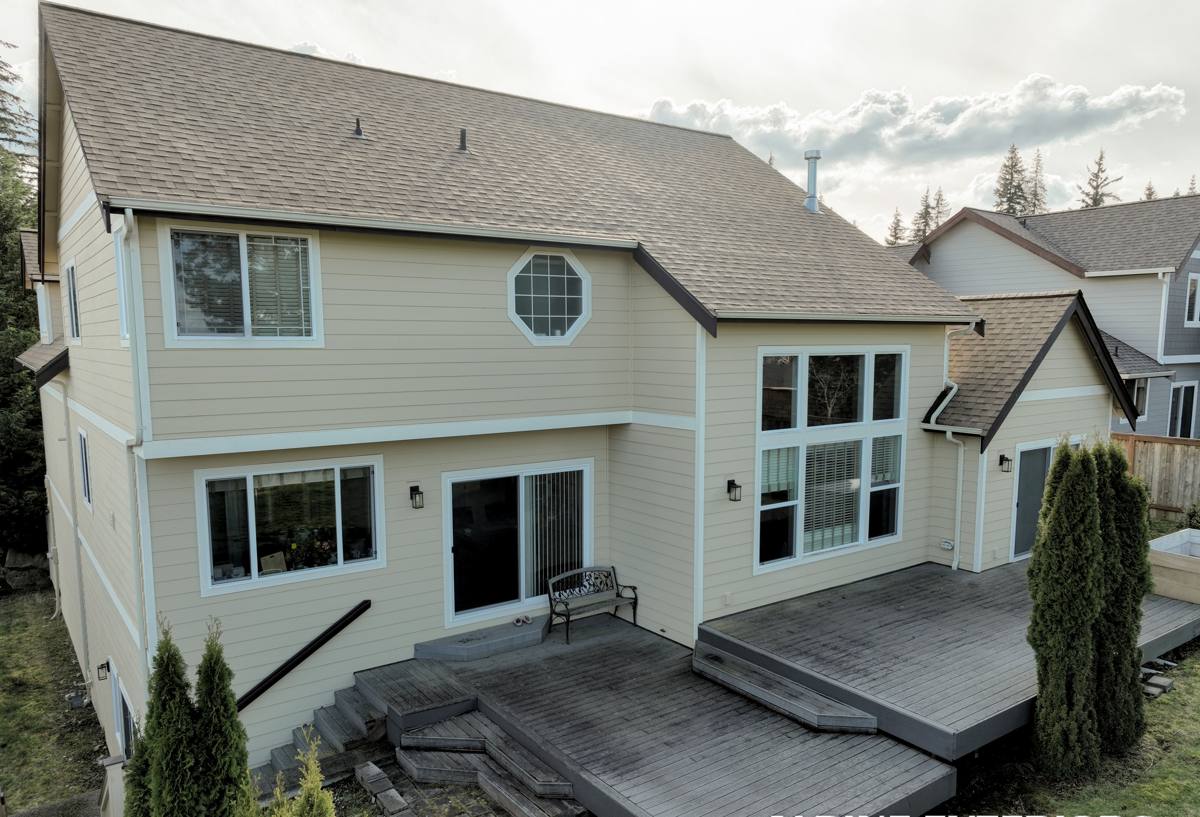
What "Composite Decking" Actually Covers
Composite decking is a broad category, and the differences between products matter more in a coastal, high-UV climate than they do inland. Most composite boards are a blend of wood fiber and plastic, and they fall into two general types:
Capped Composite
These boards have a shell — usually a polymer layer — wrapped around a wood-plastic composite core. The cap is what resists moisture absorption, staining, and UV fading. In a climate with this much sun and humidity, an uncapped or lightly capped board is going to fade, stain, and take on moisture faster than a fully capped one.
Capped Polymer (PVC-Based) Boards
These use little or no wood fiber, relying on polymer through the core as well as the cap. They tend to handle constant moisture exposure and salt air the best of the composite family, though they usually cost more up front and can feel different underfoot than a wood-fiber composite.
We don't push one specific brand as "the" answer for every project. The right board depends on the homeowner's budget, how much direct sun and rain exposure the deck gets, and how the deck ties into the house. What we won't do is install a board that isn't rated for the moisture and UV load it's actually going to see — that's a maintenance headache we'd rather avoid selling in the first place.
What a Correct Build Looks Like in This Climate
The decking boards themselves get most of the attention, but in a climate like Tampa's, the substructure and fastening decide whether the deck lasts. This is where a lot of the corner-cutting happens on lower-bid jobs.
Framing, Flashing, and Fasteners
Any ledger board attaching the deck to the house needs proper flashing so wind-driven rain can't work its way behind the siding or into the rim joist. We use fasteners and hardware rated for coastal, high-moisture exposure — standard hardware store hardware will corrode and streak within a season or two this close to the bay. Composite boards also expand and contract with heat more than wood, so spacing and fastener choice have to account for Tampa's summer deck surface temperatures, not just the manufacturer's generic install sheet.
Drainage and Airflow Underneath
A deck that traps moisture underneath is a deck that stays damp, breeds mildew, and stresses its framing over time. Joist spacing, board gapping, and ventilation under the deck all need to be planned so water actually gets away from the structure instead of sitting under it — especially important on shaded Hyde Park lots where the ground underneath a deck may rarely see direct sun.
Wind Considerations
Elevated decks, railings, and any attached pergola or roof structure need to be built with real wind uplift in mind, not just vertical load. This matters more for a deck that takes the brunt of a storm than it does for, say, interior flooring.
Boards and Color Choices That Fit Hyde Park
Hyde Park's older, closely built homes and tree-lined streets tend to favor decking that reads as classic rather than trendy — muted wood-tone composites and simple railing profiles generally fit the neighborhood's character better than bright or heavily textured options. That said, color matters functionally here too: darker boards absorb more heat and can get uncomfortably hot underfoot during a Tampa summer afternoon, so we'll talk through how a color choice affects both looks and comfort before ordering material.
Our Installation Process
- Site visit and assessment — we look at sun exposure, drainage, existing structure (if replacing a deck), and how the new deck will tie into the house.
- Permit check — most attached decks in the City of Tampa or unincorporated Hillsborough County require a permit; we handle that step rather than leaving it to the homeowner.
- Removal of the old deck, if applicable, including an honest look at the ledger board and framing underneath for rot or prior water damage.
- Framing with corrosion-resistant hardware, proper ledger flashing, and footings sized for the deck's height and local wind requirements.
- Composite board installation using hidden or manufacturer-approved fastening, with expansion gaps set for our climate.
- Railing, stairs, and trim installed and checked for level and secure attachment.
- Final walkthrough with the homeowner before we consider the job done.
Maintenance That Actually Matters Here
Composite decking is sold on being low-maintenance, and compared to wood it is — but "low-maintenance" doesn't mean "no maintenance" in a humid, salt-air climate. A short seasonal routine goes a long way:
- Rinse the deck surface periodically to clear salt residue, pollen, and tannin buildup from nearby trees before it stains the boards.
- Keep gutters and downspouts clear so runoff isn't dumping extra water directly onto or under the deck.
- Check railing posts and stair connections for looseness once or twice a year, especially after named storms.
- Avoid high-pressure power washing directly on composite boards — it can damage the cap layer on some products; a soft wash with a mild cleaner is safer.
- Look underneath the deck occasionally for standing water, blocked drainage, or early mildew — problems are far cheaper to fix before they reach the framing.
Composite vs. Wood vs. PVC: Honest Trade-offs
There's no single "best" decking material for every budget and situation. Here's how the three most common options actually compare for a Tampa-area installation:
| Material | Upfront Cost | Ongoing Maintenance | Behavior in Sun, Humidity & Salt Air |
|---|---|---|---|
| Pressure-treated wood | Lowest | Highest — regular sealing/staining needed | Prone to warping, splintering, and mildew without diligent upkeep |
| Capped composite | Moderate to high | Low — occasional cleaning | Good UV and moisture resistance; quality varies by cap thickness |
| Capped polymer (PVC-based) | Highest | Lowest | Best resistance to constant moisture and salt exposure; can run hotter underfoot in direct sun |
For most Hyde Park homeowners, a well-capped composite board is the practical middle ground — durable enough for the climate without the top-tier price of full PVC. Homes with heavy direct sun exposure or decks very close to the water's salt influence are where we'll usually recommend stepping up to a PVC-based product.
Permits, Wind Requirements, and Insurance in Hillsborough County
Attached decks generally require a building permit, and inspectors will check ledger attachment, footing depth, and railing height and spacing. Homeowners insurance carriers in this region are also paying closer attention to elevated structures and attachment methods after storm seasons — a properly permitted, correctly attached deck is documentation you may want on hand if you ever file a claim. We pull permits as a normal part of the job rather than treating it as optional.
Why Local Experience in Hyde Park Matters
A crew that already works in Hyde Park has usually already dealt with the practical realities of the neighborhood: older homes with ledger conditions that need extra attention, tight lots with limited equipment access, mature trees that affect drainage and staining, and Hillsborough County's permitting process for this specific type of work. That familiarity shows up less in what gets said during the estimate and more in what doesn't go wrong six months after the job is finished — flashing that was actually sealed correctly, hardware that doesn't streak with rust, and a deck that drains the way it was designed to.
If you're weighing a new composite deck or replacing one that's showing its age, we're happy to come take a look and give you a straightforward, no-pressure estimate — just fill out the form below.