 Tampa Siding
 Windows Built for Hyde Park's Climate, Not Just Its Curb Appeal
Hyde Park is one of Tampa's older, more established neighborhoods, and that history shows up in its housing stock. You've got a mix of historic bungalows and Craftsman-era homes alongside newer infill construction, many sitting close to Tampa Bay and the Hillsborough River. That proximity to water means your windows work harder here than they would inland. Salt-laden air corrodes hardware and frames faster, intense year-round UV breaks down seals and vinyl over time, and wind-driven rain during summer storms and hurricane season finds every gap a poorly installed window leaves behind.
Window installation isn't just about picking a style and setting it in the opening. In this part of Hillsborough County, it's a system: the window unit itself, the flashing and moisture barrier around it, the sealant, and the fasteners all have to work together to keep water out and hold up against wind pressure. Get any one piece wrong and you end up with a window that looks fine for a year or two, then starts leaking, fogging, or letting drafts through.
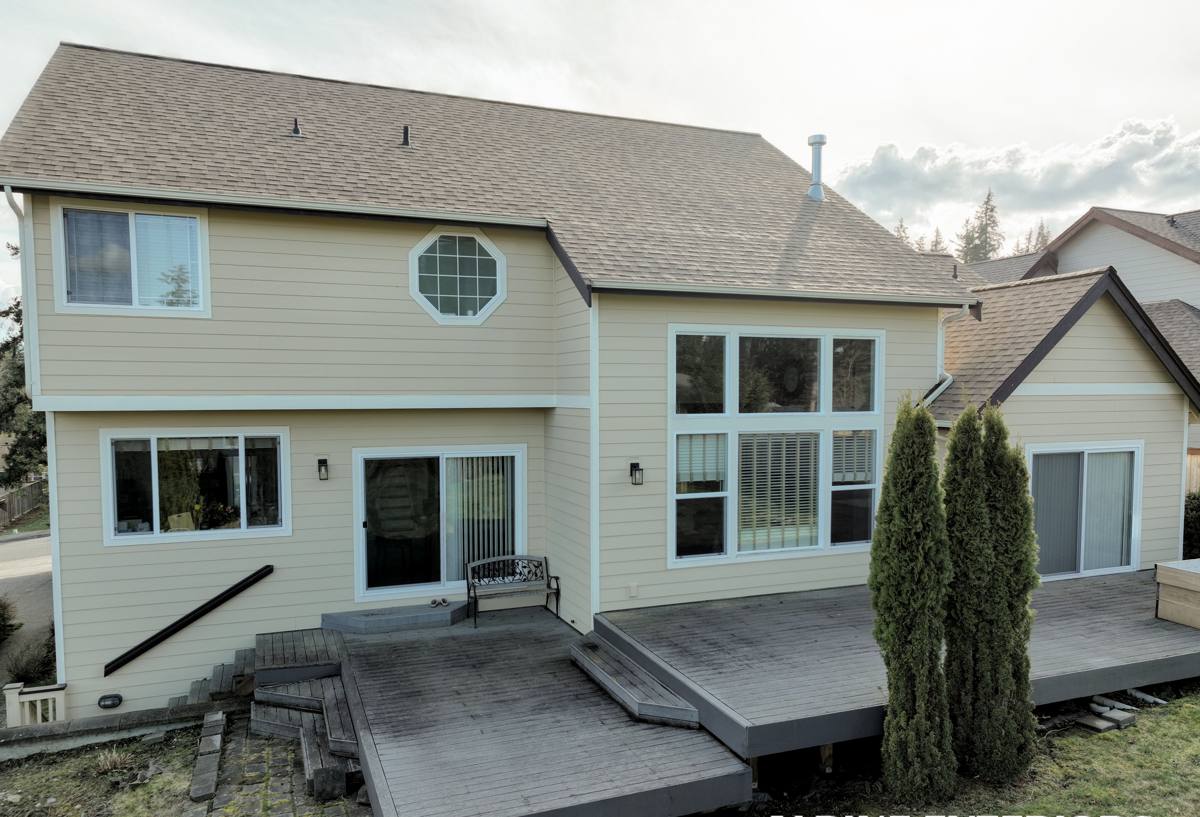
Signs Your Hyde Park Home's Windows Need Attention
Because of the coastal exposure and sun load in this area, window failure often shows up earlier than homeowners expect, especially on older homes that still have original or first-generation replacement windows. Common signs we see on service calls in this part of Tampa include:
- Fogging or condensation between panes on double-glazed units (a sign the seal has failed)
- Visible gaps, soft or discolored wood, or bubbling paint/drywall around the frame
- Windows that are difficult to open, close, or lock — frames can warp from heat and moisture cycling
- A noticeable draft or outside noise that wasn't there a few years ago
- Chalky, pitted, or corroded hardware and frames from salt air exposure
- Rising cooling bills without an obvious cause
Any one of these can be a minor fix. Several together, especially on an older home, usually means the windows are past the point where caulk and weatherstripping will solve the problem.
What a Correct Installation Actually Involves
It Starts With the Opening, Not the Window
A lot of installation problems trace back to what happens before the new window ever goes in. The old unit has to come out cleanly, the rough opening has to be inspected for rot, pest damage, or settling, and the sheathing and framing need to be sound before anything new gets installed. Skipping this step to save time is one of the most common shortcuts in the trade, and it's the one that causes the most expensive callbacks.
Flashing and Moisture Management
In a climate that sees wind-driven rain as often as Tampa does, the flashing details around a window matter as much as the window itself. Proper installation means integrating flashing tape or pan flashing with the home's existing water-resistive barrier so water is directed out and down, never behind the siding or into the wall cavity. This is invisible once the job is done, which is exactly why it's the step some installers rush or skip.
Sealing, Shimming, and Fastening
Windows need to be shimmed level and plumb, fastened according to the manufacturer's schedule (not just "enough screws to hold it"), and sealed with the correct sealant on both the exterior and interior sides. Too little sealant and you get leaks; sealing the wrong spot and you can trap moisture inside the wall instead of letting it escape.
| Installation Step | Done Correctly | Common Shortcut |
|---|---|---|
| Opening prep | Old window fully removed, framing inspected and repaired if needed | New window installed over hidden rot or damage |
| Flashing | Integrated with existing water barrier, directs water outward | Caulk used alone as the only water defense |
| Fastening | Manufacturer-specified pattern and anchor type for the wind zone | Minimal fasteners, wrong anchor for the wall type |
| Sealing | Correct sealant, applied at the right layer, weep paths left open | Over-sealed, trapping moisture inside the frame |
| Finish check | Operation, level, and drainage tested before crew leaves | Visual check only |
Choosing the Right Window for a Hyde Park Home
Not every window sold in a big-box store is built for this environment. A few things matter more here than they would in a drier, inland climate:
Frame Material
Vinyl frames hold up well against salt air and don't corrode, and modern vinyl formulations resist UV degradation far better than older versions. Aluminum is strong and slim-profile but conducts heat and can corrode near the coast unless it's properly coated. Wood offers a traditional look that suits some of Hyde Park's older architecture, but it demands more upkeep in a humid, salt-exposed climate — that's a maintenance trade-off worth going in with eyes open, not a reason to rule it out on a historic home where the look matters.
Glass and Coatings
Low-E (low-emissivity) coated, double-pane glass is the practical baseline for this climate — it cuts down heat gain from Florida's intense sun without darkening the room. On homes where energy costs or west-facing exposure are a concern, a Low-E variant tuned for solar heat gain reduction is usually worth the modest upcharge.
Impact Resistance
Hillsborough County sits within Florida's wind-borne debris region, which means impact-rated glass or approved storm protection may be required by code depending on your specific location, wind zone, and how close you are to the water. Impact-rated windows also carry a real day-to-day benefit beyond storm prep: added security and noise reduction, since the laminated glass resists both forced entry and sound transmission.
How the Process Works
- On-site assessment. We look at your current windows, the condition of the openings, and how your home is oriented to sun and prevailing wind before recommending anything.
- Product selection. We walk through frame material, glass package, and whether impact-rated units make sense for your specific address and budget — no upselling products your home doesn't need.
- Permitting. Window replacement in Tampa typically requires a permit, and impact-rated or code-driven installations especially so. We handle the paperwork and scheduling for inspection.
- Removal and prep. Old units come out, openings get inspected, and any framing or moisture issues are addressed before the new window goes in.
- Installation. Windows are set, shimmed, flashed, fastened, and sealed to manufacturer specification and local code.
- Final check and cleanup. Every window is tested for smooth operation and a clean seal, and the work area is cleaned up before we call it done.
Permits and Working Near Hyde Park's Historic Character
Because parts of Hyde Park include historic and historically-influenced properties, window replacement on street-facing elevations can sometimes involve additional review around style, sightlines, or materials, on top of the standard building permit. This isn't universal to every property in the area, and it depends on your specific home and its designation, but it's worth checking before you commit to a window style. A crew that's worked in the neighborhood before knows to ask this question up front instead of discovering it mid-project.
What Drives Cost
Pricing varies enough by home and product that we won't quote a number without seeing the job, but the factors that move the price are consistent:
| Factor | Why It Matters |
|---|---|
| Impact-rated vs. standard glass | Impact glass costs more upfront but can reduce or eliminate the need for separate storm protection |
| Frame material | Vinyl is typically the most cost-effective for this climate; wood and premium aluminum cost more |
| Window count and size | Larger openings and full-home replacements have per-unit efficiencies over one-off jobs |
| Condition of existing openings | Rot, prior water damage, or out-of-square framing add labor before the new window even goes in |
| Historic or design review requirements | Approved styles or materials can narrow product options on some properties |
| Access and home height | Second-story or hard-to-reach windows take more time and equipment |
Why It Matters That We Already Work in Hyde Park
A crew that's installed windows elsewhere in Tampa but hasn't worked this specific neighborhood is starting from zero on things that matter: how the historic review process tends to go, what the older framing in this part of the city typically looks like once you open a wall, and how much extra corrosion protection makes sense given how close many of these homes sit to the water. None of that is guesswork when you've done the work here before. It's also easier to stand behind a workmanship warranty when we're a short drive away, not working out of a different part of the county.
Maintaining Your Windows After Installation
A correctly installed window still needs basic upkeep to get its full lifespan in this climate:
- Rinse frames and tracks periodically to clear salt residue, especially on homes closer to the water
- Inspect exterior caulk lines yearly and touch up any that have cracked or pulled away
- Keep weep holes (the small drainage openings along the bottom of the frame) clear of debris and dirt
- Lubricate locks and hardware if they start to feel stiff — a sign salt or grit has gotten into the mechanism
- Have screens and hardware checked after major storms, even if the glass looks fine
None of this is difficult, but it's the difference between a window that performs for its full expected lifespan and one that needs early attention because small issues went unnoticed.
Get a Straightforward Look at Your Windows
If your Hyde Park home has windows that are drafty, foggy, hard to operate, or just old enough that you're wondering whether repair still makes sense, we're happy to take a look and give you an honest read on your options. There's no pressure and no obligation — just a clear assessment and a written estimate based on what your home actually needs. Use the form below to get started.