 Tampa Siding
 Siding in Land O' Lakes Has to Earn Its Keep
Land O' Lakes has grown fast, and a lot of that growth means houses that are only a decade or two old but already showing what Florida weather does to the wrong exterior. Between the long stretch of summer humidity, the afternoon thunderstorms that roll through almost daily in season, and the direct UV load this far south, siding here works harder than it does almost anywhere else in the country. Add in the occasional tropical system pushing wind-driven rain sideways into every wall, and it's easy to see why so many homes end up with cupped boards, chalky paint, soft trim, or siding that's pulling away from the wall within a handful of years.
We install James Hardie fiber cement siding exclusively. Not as a marketing angle — it's the product we trust to actually hold up to what this area throws at a house, provided it goes on correctly. This page is about what that looks like specifically for Land O' Lakes homes: the climate factors at play, what a correct Hardie installation involves, and how we run the job from first look to final inspection.
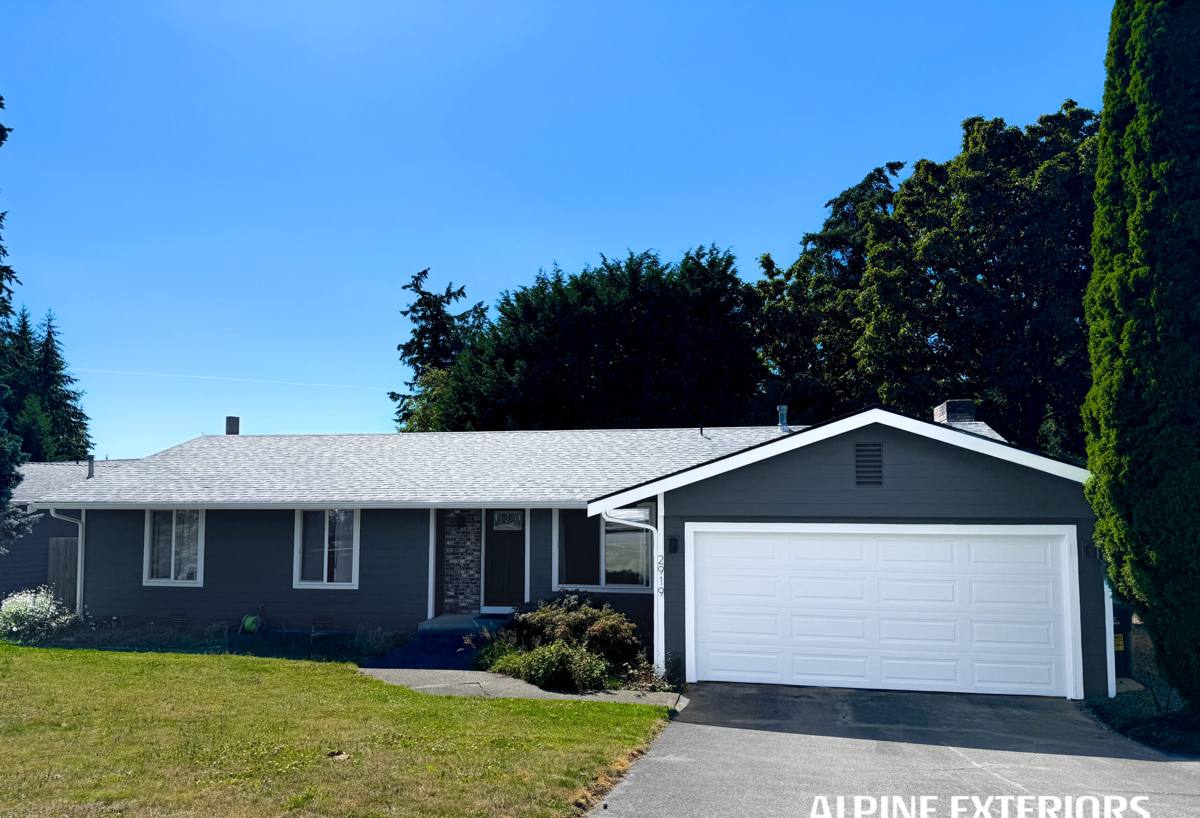
What This Climate Actually Does to Siding
Heat and UV
Land O' Lakes sees intense, close-to-direct sun for most of the year. Surface temperatures on a south- or west-facing wall can run well above ambient air temperature on a summer afternoon. Cheaper siding materials — and paint films on any siding — break down faster under that kind of sustained UV exposure. Colors fade unevenly, coatings chalk, and some materials soften or warp as they heat and cool day after day.
Humidity and Moisture Cycling
Tampa Bay humidity means siding is rarely fully dry. Materials that absorb moisture swell; when they dry back out, they shrink. Repeat that cycle for a few Florida summers and you get warping, delamination, or joints that open up and let water behind the cladding — which is where the real damage starts, in the wall assembly nobody sees until there's a problem.
Wind-Driven Rain and Storm Systems
Even without a direct hurricane hit, this area gets frequent heavy rain pushed horizontally by wind. That means water is being driven into laps, seams, and penetrations (windows, doors, hose bibs) far more often than in drier climates. Siding and flashing details that would be adequate somewhere with gentler weather aren't good enough here.
Salt-Influenced Air
Land O' Lakes sits inland relative to the Gulf beaches, but the broader Tampa Bay air carries some salt content that reaches well past the coastline, especially with onshore wind patterns. It's a lower-intensity version of what beachfront homes deal with, but it still accelerates corrosion on fasteners and wear on lesser finishes over time.
Why James Hardie Is the Product We Put on These Homes
James Hardie siding is fiber cement — sand, cement, and cellulose fiber, engineered and cured into a dense, dimensionally stable board. It doesn't absorb and release moisture the way wood-based products do, it doesn't soften in heat, and it's non-combustible, which matters in a state where wildfire risk and insurance underwriting both get more attention every year. Hardie also builds specific product formulations for different climate zones, and the HZ5 line — engineered for high-humidity, high-moisture climates like ours — is what we specify for Land O' Lakes homes.
The factory-applied ColorPlus finish is the other half of the equation. It's baked on under controlled conditions rather than rolled or sprayed on site, which gives it more consistent adhesion and UV resistance than field-applied paint. That matters directly here: less chalking, more even fade resistance, and a longer stretch before the house needs to be repainted.
How the Major Siding Options Compare Locally
| Material | Moisture Behavior Here | UV/Heat Performance | Combustibility |
|---|---|---|---|
| James Hardie fiber cement (HZ5) | Dimensionally stable, engineered for humid climates | Factory ColorPlus finish resists fading and chalking | Non-combustible |
| Vinyl | Doesn't absorb water, but can warp/deform in sustained heat | Color fades and can become brittle over time in high UV | Combustible, can melt near heat sources |
| Engineered wood (e.g., LP SmartSide) | Wood-based core is moisture-sensitive if seals or coatings fail | Field or factory coatings wear under UV; needs maintenance | Combustible |
| Cedar/primed wood | Absorbs and releases moisture readily; prone to cupping, rot | Requires regular refinishing to hold up to sun exposure | Combustible |
What a Correct James Hardie Installation Actually Involves
Hardie siding's reputation is built on the material, but a large share of the siding failures we get called out to inspect aren't a material problem — they're an installation problem. Fiber cement is forgiving of Florida weather; it's not forgiving of shortcuts.
The details that matter most in this climate
- Correct starter strip and consistent bottom clearance from grade, decks, and roof lines — too tight, and every heavy rain wicks moisture into the bottom edge of the board
- A drainable water-resistive barrier behind the siding, installed shingle-style so any moisture that does get past the cladding has a path down and out
- Proper flashing and integration at every window, door, and penetration — this is where wind-driven rain finds its way in if it's rushed
- Correct fastener type, spacing, and embedment depth — corrosion-resistant fasteners set to Hardie's specification, not just "close enough"
- Manufacturer-specified joint gaps and sealant at butt joints, sized for Florida's thermal and moisture movement
- Field-touch-up paint matched and applied only where Hardie's own procedure calls for it, to protect the ColorPlus warranty
Skip any one of these and you can end up with a house wearing the right material and still suffering the same moisture problems Hardie was chosen to avoid.
Our Process on Land O' Lakes Projects
1. On-Site Assessment
We walk the exterior, check the current siding and the condition of the sheathing and trim underneath where it's exposed, and look at drainage around the foundation, roofline, and any low-clearance areas — all common culprits for the moisture issues we see on homes in this area.
2. Removal and Substrate Check
Old siding comes off and we inspect what's underneath before anything new goes on. Hidden rot, compromised sheathing, or improper prior flashing gets addressed at this stage — not covered up.
3. Weather Barrier and Flashing
A drainable water-resistive barrier goes down first, with flashing detailed at every window, door, and penetration before a single piece of siding is hung. In a climate that drives rain sideways as often as this one does, this step decides whether the wall stays dry for the next 30 years.
4. Hardie Installation to Manufacturer Spec
Boards, panels, and trim go up following James Hardie's published installation requirements — clearances, fastening, joint treatment, and finish touch-up — so the manufacturer's warranty stays intact.
5. Final Walkthrough
We go over the finished exterior with the homeowner, check caulking and paint lines, and confirm everything meets both our standard and Hardie's.
Signs a Land O' Lakes Home May Need New Siding
- Boards that are cupping, warping, or visibly separating at the seams
- Paint that's chalking heavily or peeling in sheets rather than wearing evenly
- Soft or spongy spots when you press on siding or trim, especially near the bottom courses
- Visible gaps or dark staining around window and door trim after heavy rain
- Siding that flexes or feels hollow — often a sign of moisture damage underneath
- A noticeable jump in cooling costs, which can point to a compromised exterior wall assembly
Maintenance and Warranty
One of the practical advantages of Hardie with a ColorPlus finish is how little upkeep it asks for compared to painted wood or aging vinyl. Periodic washing to keep pollen, mildew spotting, and salt-influenced grime off the surface is generally the extent of it — no repainting cycle every few years. Hardie backs its products with a transferable limited warranty, and that warranty depends on installation meeting their published requirements, which is exactly why installation quality gets equal billing with the material itself on this page.
What Affects the Cost of a Hardie Project Here
| Factor | Why It Matters Locally |
|---|---|
| Home size and number of stories | More surface area and access complexity change labor and material needs |
| Current siding removal and substrate condition | Moisture damage from prior siding failures can add repair scope before new siding goes on |
| Product line and profile chosen | HardiePlank lap, HardiePanel vertical, and trim combinations price differently |
| Color and finish selection | Factory ColorPlus finish versus primed-for-field-paint affects both cost and long-term maintenance |
| Detail work at windows, eaves, and penetrations | More architectural detail means more flashing and trim labor, which protects against wind-driven rain intrusion |
Why Local Experience with This Product Matters
Fiber cement siding installed to spec in a dry, mild climate has a decent margin for small errors. Installed in Land O' Lakes, with regular heavy rain, sustained heat, and storm season every year, there's much less room for a rushed flashing detail or a skipped clearance gap to go unnoticed before it causes damage. A crew that installs Hardie regularly in this specific region knows where water actually tends to find its way in on Tampa Bay-area homes, and builds the job around stopping it there — not just following a generic install sheet.
If your Land O' Lakes home needs new siding, or you want a second opinion on a siding problem that keeps coming back, we're happy to take a look. Reach out for a free, no-pressure estimate using the form below.