 Tampa Siding
 Temple Terrace Homes Face a Specific Set of Climate Stresses
Temple Terrace sits inside Hillsborough County, close enough to Tampa Bay that homes here deal with the same core exposures the whole region shares: hurricane-force wind events, wind-driven rain that gets pushed sideways into wall assemblies, intense UV load nearly every day of the year, and a humid, moisture-saturated climate that never really gives siding a dry season to recover in. Salt-bearing air moves inland off the Bay during onshore flow and adds a corrosive element to that mix, even for homes that aren't waterfront.
None of that is unique to any one street or subdivision in Temple Terrace — it's the baseline for anything built in this part of Hillsborough County. What matters is that siding material and installation method both have to be chosen with that baseline in mind, not with a generic "any siding will do" approach. A product or installation detail that works fine in a mild, dry climate can fail here in a fraction of the time.
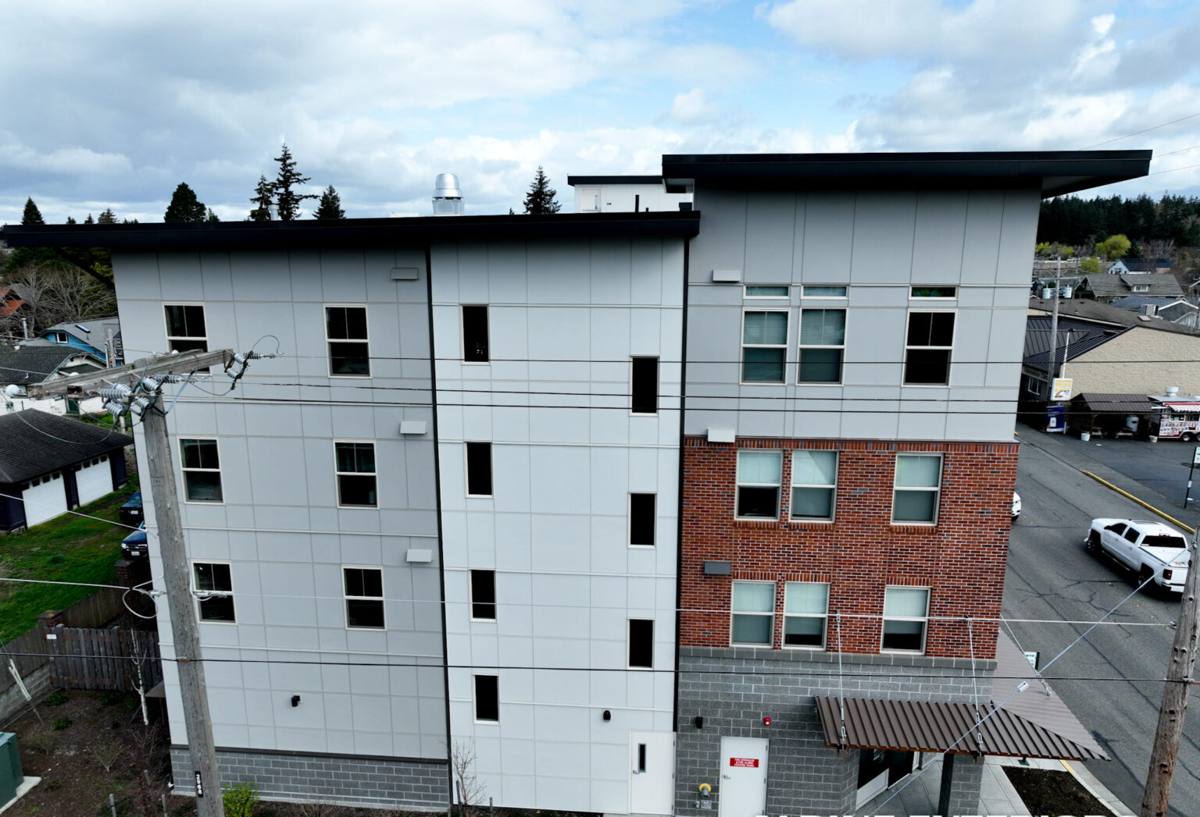
Why We Install Only James Hardie Fiber Cement
We standardized on James Hardie fiber cement siding and don't install vinyl, LP SmartSide, Cemplank, Allura, or primed wood siding. That's not a marketing position — it's a decision built around what actually holds up under Tampa-area conditions over decades, not just years.
Non-Combustible, UV-Stable, Engineered for Humid Climates
Fiber cement doesn't soften, warp, or off-gas under sustained heat the way some engineered wood and vinyl products can. James Hardie's ColorPlus factory-baked finish is formulated to resist UV fading far longer than field-applied paint, which matters enormously in a climate that delivers strong sun exposure essentially year-round. James Hardie also engineers its siding by climate zone — homes in Hillsborough County call for the company's HZ10 product line, built specifically for hot, humid, moisture-heavy regions like ours, as opposed to the HZ5 line engineered for colder, freeze-thaw climates up north.
What We're Not Installing, and Why
Vinyl siding can deform under prolonged high heat and is more vulnerable to wind uplift in storm-force gusts. LP SmartSide and other engineered wood products rely on an intact factory coating to keep moisture out — any breach at a cut edge or fastener hole becomes a slow-motion rot problem in a climate this humid. Primed cedar or spruce needs a maintenance schedule most homeowners underestimate, and that gap shows up fast under year-round UV and humidity. These aren't bad products in every context — they're products whose weak points line up too closely with what Hillsborough County weather actually does to a house.
What a Correct James Hardie Installation Requires in This Climate
Fiber cement is only as good as the installation behind it. Most of the siding failures we get called out to inspect aren't material failures — they're installation shortcuts that let water or wind exploit a gap the material itself never had a chance to compensate for.
- Proper rainscreen or drainage plane behind the siding so any moisture that gets past the surface has somewhere to go
- Correct flashing at every window, door, and roofline penetration — the single most common failure point we find on re-sides
- Manufacturer-specified fastener type, spacing, and embedment depth, not "close enough"
- Proper clearance between siding and grade, roofing, decks, and other abutting surfaces to prevent wicking
- Correctly caulked and sealed butt joints and trim intersections, using sealants rated for sustained UV and humidity exposure
- Field-cut edges sealed per Hardie's specification, since an unsealed cut edge is where moisture intrusion typically starts
Every one of those details matters more here than it would in a drier, calmer climate, because wind-driven rain actively tests every seam and gap during a storm, and sustained humidity punishes any spot where moisture gets trapped instead of drying out.
Our Process for a Temple Terrace Siding Project
1. On-Site Assessment
We start by walking the home and looking at the current siding condition, the underlying wall assembly where accessible, existing flashing details, and any trouble spots — often around windows, roof-to-wall transitions, or areas that get direct wind-driven rain exposure.
2. Scope and Product Selection
We go over which James Hardie product line and profile fits the home — lap siding, panel systems, or trim work — and make sure everything specified is rated for HZ10 conditions.
3. Prep and Removal
Old siding comes off, the substrate gets inspected for hidden moisture damage before anything new goes up, and any water-management layer (housewrap, flashing, drainage plane) gets addressed as part of the job, not skipped to save time.
4. Installation to Manufacturer Spec
Installation follows James Hardie's published fastening, clearance, and flashing requirements — not shortcuts. This is also where local wind-load requirements under the Florida Building Code come into play for fastening schedules.
5. Final Walkthrough
We walk the finished job with the homeowner, check every elevation, and confirm trim, caulking, and paint lines are clean before calling it done.
Cost Factors for a Temple Terrace Siding Project
Every home is different, but the same handful of factors drive cost on most jobs in this area. We give exact numbers only after an on-site assessment — anything else is a guess — but this table outlines what actually moves the price up or down.
| Factor | Why It Matters Here |
|---|---|
| Home size and number of stories | More surface area and access complexity, especially on two-story homes |
| Current siding removal and substrate condition | Humidity and past wind-driven rain events can leave hidden moisture damage that needs repair before new siding goes up |
| Product line and profile | HZ10-rated lap siding, panel systems, and trim carry different material costs |
| ColorPlus finish vs. field paint | Factory finish costs more up front but avoids repainting cycles under intense Florida UV |
| Window, door, and roofline detail count | Every penetration needs proper flashing, which adds labor time regardless of siding brand |
| Trim and accent work | Additional trim profiles and architectural detail add both material and install time |
Temple Terrace's Housing Stock and What It Means for Siding Work
Like much of Hillsborough County, Temple Terrace has a mix of home ages and construction styles — from established mid-century homes to newer builds. Older homes more often turn up hidden issues once old siding comes off: outdated or missing flashing, gaps in the water-resistive barrier, or wood trim that's been slowly deteriorating out of sight. Newer homes are more likely to already have a compliant drainage plane in place, but that doesn't mean the original siding installation followed every detail correctly. Either way, a proper assessment before the job starts — not after removal begins — is what keeps a re-side from turning into a surprise.
Maintenance and Long-Term Performance
One reason we standardized on James Hardie is that it asks less of homeowners over time. Fiber cement doesn't need repainting on the schedule that wood siding does, and it isn't prone to the heat deformation that can affect vinyl in direct summer sun. That said, no siding is maintenance-free in this climate. A yearly visual check for caulking that's separated, any signs of moisture staining near trim or penetrations, and general surface cleaning to keep salt air residue and organic growth from building up will keep a correctly installed Hardie system performing for decades. James Hardie backs its products with a strong transferable warranty, which matters both for current owners and for resale.
Why Hiring a Crew That Already Works This Area Matters
Siding installation isn't one-size-fits-all across Florida, let alone across the country. A crew that regularly works in Hillsborough County already knows what local wind-load requirements demand for fastening schedules, understands how wind-driven rain behaves against different home orientations in this area, and has seen firsthand what humidity does to an improperly flashed detail a few years down the road. That local track record shows up in fewer callbacks and fewer surprises — not because the material is different, but because the installation judgment behind it is grounded in what actually happens to houses here.
What to Ask Before You Hire
- Do you install James Hardie exclusively, or do you sell whatever the customer picks?
- Which HZ product line do you specify for Hillsborough County homes, and why?
- How do you handle flashing at windows, doors, and roof-to-wall transitions?
- What does your drainage plane / rainscreen detail look like behind the siding?
- Can you walk me through what happens if you find moisture damage once old siding comes off?
- What does the manufacturer warranty cover, and is it transferable if I sell the home?
If a contractor can't answer those clearly, that's worth knowing before any siding comes off your house.
If you're weighing a siding project in Temple Terrace, we're happy to take a look and give you an honest, no-pressure assessment — including what we'd expect to find once the old siding comes off. Use the form below to request a free estimate.