 Tampa Siding
 Seminole Heights is one of Tampa's older, more established neighborhoods, and that shows up in its decks as much as anything else. A lot of homes here still have their original deck framing, or a deck that was added or rebuilt decades ago under very different building standards. Between the mature oak canopy that shades so many of these lots, Tampa's humidity, and the occasional tropical storm or hurricane swinging through Hillsborough County, decks in this neighborhood take a beating that's easy to underestimate from the surface. This page covers what a proper deck replacement looks like for a Seminole Heights home, and why it's a different job than replacing a deck in a newer subdivision with no tree cover and open sun.
Why Seminole Heights Decks Fail Sooner Than You'd Expect
Deck failure is almost never sudden. It's a slow accumulation of moisture, UV exposure, and structural fatigue that eventually shows up as soft boards, loose railings, or a deck that just feels different underfoot than it used to. A few things make this especially common in Seminole Heights specifically:
Shade Is a Double-Edged Sword
The oak canopy that makes this neighborhood so pleasant also means decks here often stay damp longer after rain than a deck sitting in full sun somewhere else in Tampa. Wood, and even some composite products, need time to dry out between rain events. When a deck is shaded most of the day, that drying window shrinks, and moisture has more time to work into joints, fastener holes, and end grain. Over years, that's what turns into soft spots and rot at ledger boards, posts, and joist ends — long before the decking boards themselves look obviously bad.
Older Framing, Newer Expectations
A lot of the housing stock in Seminole Heights predates current deck-building codes. Ledger attachment, joist spacing, post footings, and railing height requirements have all been tightened up significantly over the years, largely in response to deck failures elsewhere in Florida and the Southeast. A deck that was built to the standards of its era may look fine but not actually meet what would be required if it were built today — and that gap matters when you're talking about a structure people stand, sit, and gather weight on.
Hurricane Season Is Not Optional Planning
Hillsborough County sits squarely in a hurricane-exposed part of Florida, and decks are one of the more vulnerable structures on a property during high wind events. Loose railings, undersized fasteners, and framing that's already compromised by rot are exactly the kind of thing that turns a bad storm into a bigger problem — either from wind uplift on the structure itself or from debris impact on boards that were already weakened.
What Correct Deck Replacement Actually Involves
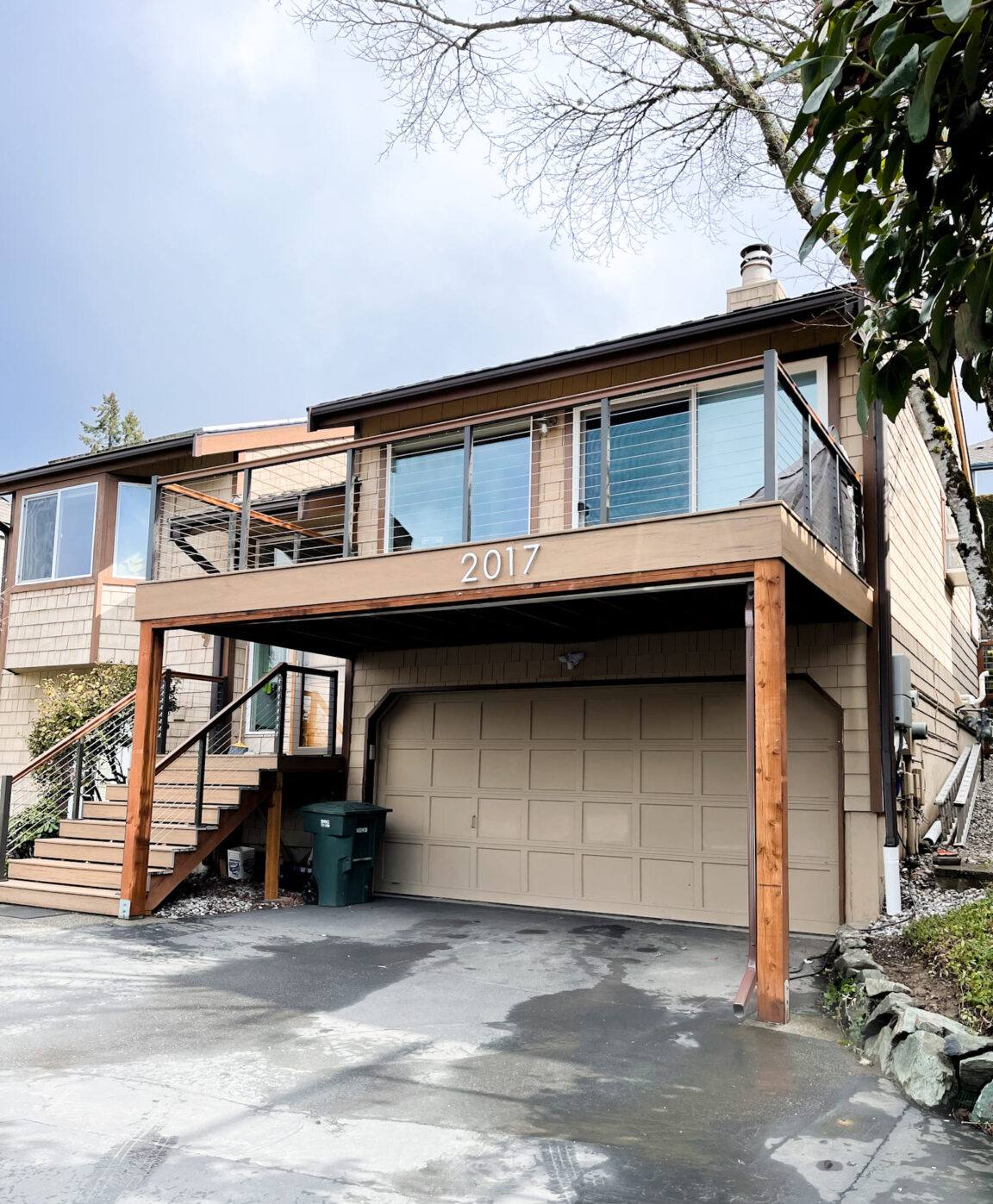
Deck replacement isn't just pulling up old boards and screwing down new ones. Done correctly, it's a structural project with a finish layer on top. The framing underneath is what determines whether the deck lasts 10 years or 25.
- Ledger board and house connection: Where the deck attaches to the house is the single most important connection on the structure, and it's also the most common place for hidden rot to develop. This gets fully inspected, and the flashing and fasteners get done to current code, not just matched to whatever was there before.
- Footings and posts: Undersized or shifted footings are common on older decks. We check depth, condition, and whether they're adequate for the deck's actual size and load, not just whatever got poured originally.
- Joists and beams: Spacing, span, and hardware (proper joist hangers, corrosion-resistant fasteners) get brought up to current standard, which is especially important given Florida's humidity and how hard it is on unprotected metal.
- Railings and guards: Height, baluster spacing, and attachment strength are code items, not style choices, and they're a leading cause of deck-related injuries when they're wrong.
- Decking surface: The material homeowners actually see and feel — this is where wood, composite, or PVC decisions come in, covered below.
Skipping straight to new boards on old framing is how a deck ends up looking replaced without actually being safe. We treat the framing as the real project and the decking as the finish work.
Choosing a Decking Material for Tampa's Climate
There's no single "best" decking material — there's a best fit for your budget, how much upkeep you want to do, and how much sun versus shade your specific lot gets. Here's how the common options compare for a Hillsborough County home:
| Material | Upfront Cost | Maintenance | UV/Sun Resistance | Moisture Resistance | Typical Lifespan |
|---|---|---|---|---|---|
| Pressure-Treated Wood | Lowest | Regular sealing/staining needed | Fades and grays without upkeep | Moderate — prone to warping/splitting if neglected | ~10–15 years |
| Composite Decking | Moderate to higher | Low — occasional cleaning | Good, some products fade slightly over time | Good — resists rot, won't splinter | ~25–30 years |
| Capped PVC Decking | Highest | Lowest | Very good — capped layer resists fading | Excellent — fully synthetic, no wood fiber to absorb moisture | 25+ years |
Under heavy tree canopy, we lean homeowners toward composite or capped PVC more often than we would on an open, sunny lot — both shed moisture better and don't need the same upkeep discipline that wood does when it's not drying out quickly between rains. That said, plenty of Seminole Heights homeowners want the traditional look of real wood, especially on historic-style homes, and that's a legitimate choice as long as you go in understanding the maintenance commitment. We'll walk through the honest trade-offs for your specific lot rather than pushing one product line.
Our Deck Replacement Process
- On-site assessment: We inspect the existing deck's framing, footings, ledger connection, and overall condition, and check it against current code requirements for Hillsborough County.
- Demo and disposal: Full removal of the old structure down to what's being reused (usually just footings, if they're sound) or fully rebuilt from the ground up.
- Framing rebuild: New or reinforced footings, posts, beams, and joists, with corrosion-resistant hardware suited to Florida's humidity.
- Ledger and flashing: Proper attachment and flashing at the house connection to keep water from working its way behind the siding or into the rim joist.
- Decking and railings: Installation of your chosen decking material and code-compliant railing system.
- Final walkthrough: We go over the finished deck with you, including what maintenance (if any) your material choice needs going forward.
Permits and Code in Hillsborough County
Deck replacement in Tampa and unincorporated Hillsborough County generally requires a building permit, and inspections along the way for framing and final completion. This isn't paperwork for its own sake — it's the mechanism that catches undersized footings, wrong fastener types, or railing heights that don't meet code before they become a safety issue down the line. We handle the permitting process as part of the job, so you're not left figuring out county requirements on your own. If a contractor tells you a full deck replacement doesn't need a permit, that's worth asking more questions about.
Signs Your Deck Needs Replacing, Not Just Repairing
Not every deck problem means a full replacement — sometimes a board swap or hardware upgrade is genuinely enough. But there's a point where patching stops making sense structurally or financially. Signs worth taking seriously:
- Soft, spongy, or bouncy spots in the decking or framing underfoot
- Visible rot or dark staining at the ledger board, posts, or joist ends
- Rusted, corroded, or missing fasteners and joist hangers
- Railings or stairs that feel loose or wobble under normal weight
- Gaps or separation where the deck meets the house
- A deck that's more than 15–20 years old and has never had the framing inspected
- Wood that splinters easily or crumbles when probed with a screwdriver
If you're seeing two or more of these, it's worth getting a professional structural look before deciding whether repair or replacement is the right call.
Maintenance After Replacement
Whatever material you choose, a little routine attention keeps a new deck performing the way it should for its full lifespan:
Wood Decks
Plan on cleaning and re-sealing every one to two years in this climate — Tampa's UV exposure and rain cycles are harder on unprotected wood than most of the country. Skipping this is the single biggest reason wood decks age faster here than elsewhere.
Composite and PVC Decks
Maintenance is mostly limited to periodic washing to keep pollen, mold, and debris (especially under tree canopy) from building up on the surface. No sealing or staining is needed, which is a big part of why these products cost more upfront.
All Decks
Keep gutters and downspouts directed away from the deck footings, trim back vegetation that holds moisture against the structure, and do a quick visual check after major storms for loose railings or hardware.
Why a Crew That Already Works Seminole Heights Matters
A deck replacement is a structural project on an older home, in a neighborhood with its own quirks — mature trees close to the structure, older framing conventions, and homes where the deck attachment point may not match what you'd find on newer construction. A crew that's already worked this neighborhood knows what to expect before pulling up the first board: where rot tends to hide under shade, how existing framing here was typically built, and what Hillsborough County inspectors are going to want to see. That familiarity translates into fewer surprises mid-project and a more accurate estimate from the start, instead of discovering structural issues after the contract is already signed.
If your Seminole Heights deck is showing its age, we're happy to come take an honest look and tell you straight whether it needs repair or full replacement — no pressure, no upsell. Use the form below to request a free estimate.