 Tampa Siding
 Fiber Cement Siding Built for Temple Terrace's Climate
Temple Terrace sits inland from Tampa Bay but still lives with everything Hillsborough County's subtropical climate throws at a house: long stretches of triple-digit heat index summers, sudden downpours that arrive almost daily in the wet season, and the occasional direct hit or near-miss from a tropical system moving up the Gulf. Add in the area's mature tree canopy, which means more shade but also more moisture held against exterior walls after a storm, and you have a set of conditions that punishes the wrong siding choice fast.
Homes in this part of Hillsborough County are older on average than many newer Tampa-area subdivisions, which means a lot of original siding, past re-siding jobs, and DIY patch work is reaching the end of its useful life at the same time. When we get called out to Temple Terrace, we're usually looking at one of three things: sun-baked and cracked vinyl, water-damaged wood siding around window trim and lower wall sections, or an older fiber cement job that was never finished to manufacturer spec. All three are fixable, and all three point back to the same lesson — siding is only as good as the material and the installation working together.
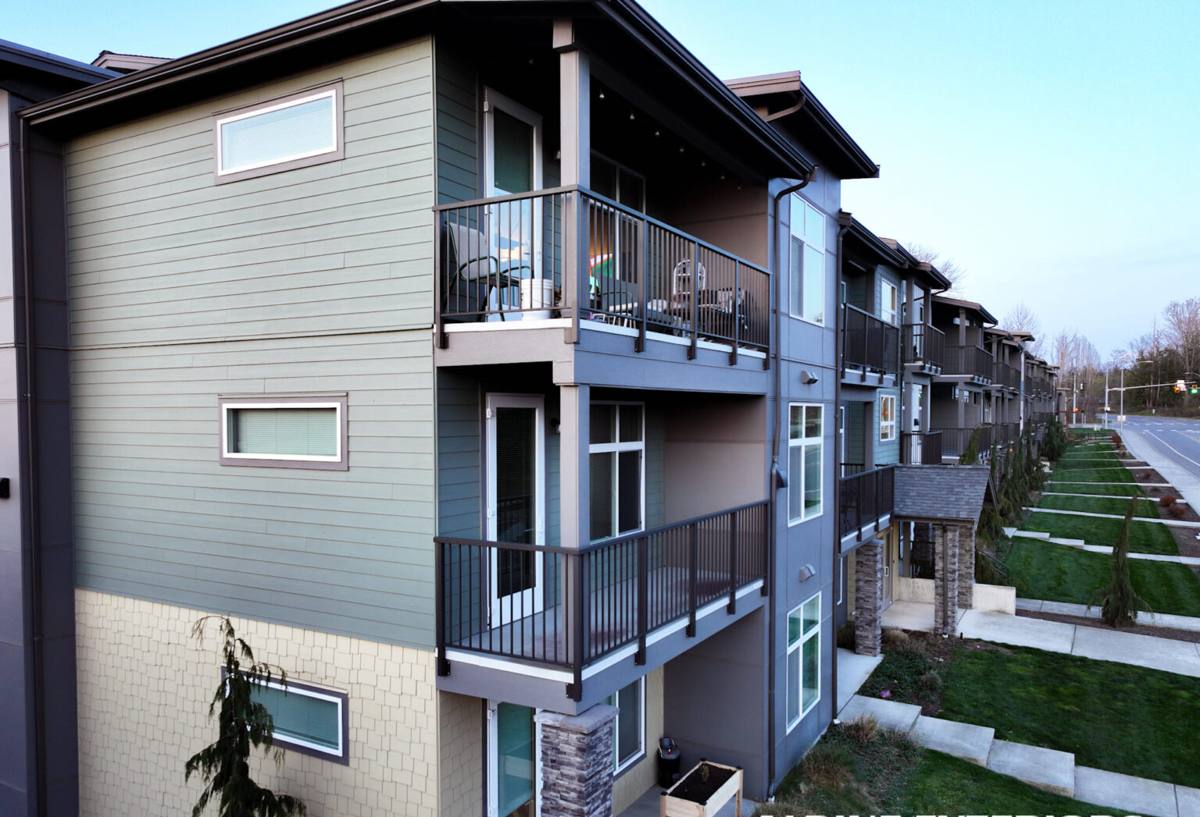
Why We Only Install James Hardie Fiber Cement
We install James Hardie products exclusively. Not vinyl, not LP SmartSide, not cedar, not off-brand fiber cement boards. That's not a marketing angle — it's a decision based on what actually holds up on Hillsborough County homes over the long haul.
Fiber cement itself is a cement, sand, and cellulose fiber composite. It doesn't melt, warp, or soften in direct sun the way vinyl can, and it doesn't feed termites or absorb water the way untreated wood does. James Hardie has been refining this formula and manufacturing process longer than most competitors have existed, and their ColorPlus factory-applied finish is baked on and cured under controlled conditions — a level of consistency you can't replicate with field-applied paint. That finish is also backed by a real, transferable limited warranty, which matters if you ever sell the house.
What This Means Day to Day
- No softening or bowing under direct summer sun exposure on west- and south-facing walls
- Rated to resist wind-driven rain intrusion when installed with correct flashing and clearances
- Non-combustible core, which some insurers factor into premiums
- Factory finish holds color longer than field-painted alternatives, reducing repaint cycles
- Resistant to pests that target cellulose-based wood siding products
HZ5 Versus HZ10: Which Line Fits a Temple Terrace Home
James Hardie engineers its siding by climate zone, and Hillsborough County falls into their higher-humidity, higher-moisture-exposure category. That's an important detail, because a board engineered for a dry climate and one engineered for the Gulf Coast are not interchangeable, even though they can look identical on a shelf.
| Factor | HZ5 Zone Product | HZ10 Zone Product |
|---|---|---|
| Designed For | Moderate humidity, freeze-thaw regions | High humidity, coastal/subtropical regions like Tampa Bay |
| Moisture Resistance | Standard engineered formulation | Formulated for sustained humidity and wind-driven rain exposure |
| Typical Use in Florida | Not the standard specification | Standard specification for Hillsborough County installs |
| Why It Matters | Can underperform in year-round humidity | Matched to the moisture load Temple Terrace homes actually see |
We spec the product line to match the zone a home actually sits in, not whatever happens to be on the truck. That's a basic step, but it's one that gets skipped often enough that it's worth confirming with any contractor you talk to.
What a Correct Fiber Cement Installation Actually Involves
The material is only half the equation. Fiber cement siding fails prematurely almost exclusively because of installation mistakes, not because the product itself gave out. In a climate that delivers wind-driven rain on a regular basis, every seam, fastener, and clearance gap is a potential entry point for water if it's not done to spec.
The Details That Separate a Correct Install From a Problem Waiting to Happen
- Proper weather-resistive barrier installed and lapped correctly behind every board
- Rain-screen or drainage plane where the wall assembly calls for it, so any moisture that gets behind the siding has somewhere to go
- Correct fastener type, spacing, and penetration depth — Hardie specifies these precisely, and shortcuts here are invisible until years later
- Minimum clearance maintained between the bottom edge of siding and roofing, decks, and grade
- Flashing integrated correctly at windows, doors, and any wall penetration
- Factory-cut edges sealed per manufacturer instruction where field cuts are unavoidable
Skip any one of these and you can end up with water intrusion, board swelling at cut edges, or fastener corrosion — all of which show up as cosmetic issues at first and structural ones later. This is exactly why we don't treat installation as an afterthought to the sale.
Salt Air, Humidity, and Why Fastener Choice Matters More Here Than Inland
Temple Terrace isn't beachfront, but Tampa Bay's salt-influenced air moves inland further than most people assume, especially with onshore wind patterns common through the warmer months. Combined with the humidity that sits over this part of Florida most of the year, that means corrosion-resistant fasteners and hardware aren't optional upgrades — they're the baseline for a job that's supposed to last decades, not years.
We use fastener and flashing specifications suited to this environment as standard practice, not as an add-on. It's a small line item in the scope of a full siding job, and it's one of the cheapest ways to avoid a callback five years down the road.
Our Process for Temple Terrace Siding Projects
We keep the process straightforward because siding replacement is disruptive enough without added confusion.
- On-site assessment — we look at current siding condition, underlying sheathing where accessible, moisture history, and any problem areas around windows, trim, and lower walls
- Written scope and product spec — you get a clear plan showing exactly which Hardie product line, profile, and color are being used and why
- Prep and removal — old siding comes off, and we check the wall assembly underneath before anything new goes up, since covering up hidden damage never ends well
- Installation to manufacturer spec — barrier, flashing, fastening, and clearances done to the standard this climate requires
- Final walk-through — we go over the finished work with you before calling the job done
Why Hiring Local Experience Matters for This Job
Siding contractors who only occasionally work in Hillsborough County tend to default to generic specs — whatever climate zone product and installation method they use most often elsewhere. A crew that regularly works Temple Terrace and the surrounding Tampa area already knows which product line the humidity and storm exposure here call for, already accounts for the tree cover and moisture patterns typical of the neighborhood's older housing stock, and isn't guessing at flashing details after the fact.
That local familiarity also shows up in smaller, practical ways — knowing what permitting looks like in this jurisdiction, understanding how mature landscaping affects access and drying time during a job, and having a realistic sense of how long a project actually takes here versus a generic national estimate.
Cost Factors for a Temple Terrace Siding Project
Every home is different, so we won't quote a number without seeing the job, but the main variables that move a fiber cement project's cost are consistent:
| Factor | Why It Affects Cost |
|---|---|
| Home size and wall complexity | More corners, gables, and dormers mean more cutting and labor |
| Current siding removal | Multiple existing layers or damaged sheathing add prep work |
| Product line and profile | Lap, shingle, and panel styles vary in material and install cost |
| Trim and accessory scope | Fascia, soffit, and trim replacement alongside siding adds scope |
| Access and site conditions | Mature trees, fencing, and tight lot lines affect labor time |
Signs Your Temple Terrace Home May Need Attention Now
- Visible cracking, warping, or bubbling on current siding, especially on sun-exposed walls
- Soft spots or discoloration near the bottom of walls or below windows
- Paint that's peeling or chalking faster than it used to
- Any siding that's buckled or separated after a recent storm
- Rising cooling bills that could point to a compromised wall assembly
If you're seeing any of these on a Temple Terrace home, it's worth getting an honest look before the next storm season adds to the damage. We're happy to come out, walk the exterior with you, and give you a straight assessment — no pressure, no upsell, just what we'd actually recommend if it were our own house. Reach out for a free estimate whenever you're ready.