 Tampa Siding
 Roofing in Town 'n' Country Isn't a Generic Job
Town 'n' Country sits close enough to Tampa Bay and the Gulf that its roofs take a different kind of beating than roofs forty miles inland. The combination of hurricane-force wind gusts, wind-driven rain that finds every weak seam, salt-laden air moving off the water, and some of the most intense year-round UV exposure in the continental United States means an asphalt shingle roof here has to be built to a higher standard than the same roof in a milder climate. A shingle system that would be perfectly adequate in Ohio or Oregon can fail early in Hillsborough County if it isn't installed with this specific climate in mind.
This page is about one job, done right, in one area: asphalt shingle roofing for homes in Town 'n' Country. Not a general overview of roofing services — the specific decisions, materials, and installation details that matter for this neighborhood's exposure.
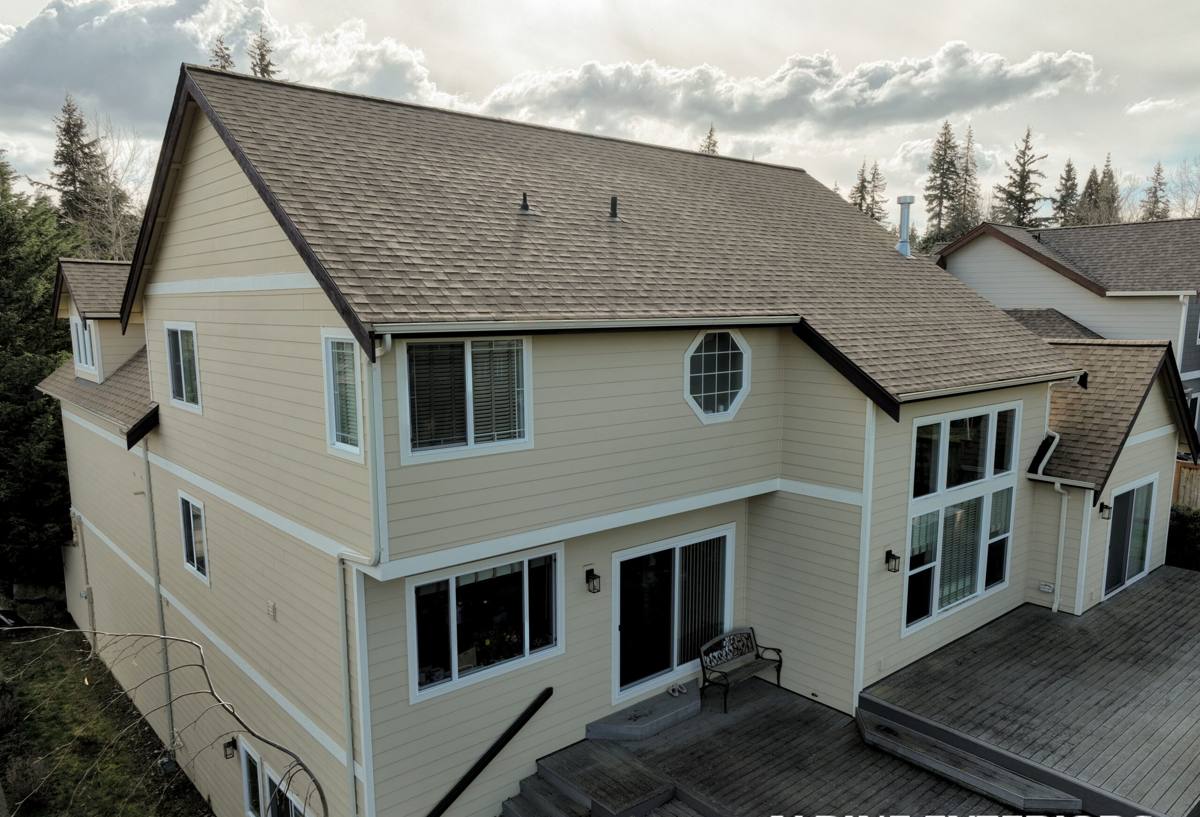
What Tampa's Climate Actually Does to a Shingle Roof
Wind
Hillsborough County sits inside Florida's wind-borne debris region, which means the Florida Building Code requires roofing materials and installation methods rated for high wind uplift, not just the minimum nailing pattern you'd see used in lower-wind states. Every hurricane season, we see the same failure pattern on older or improperly installed roofs: wind gets under a shingle tab at the edge or ridge, and once one shingle lifts, the ones around it go with it. The starting point of almost every wind failure we inspect is a shingle that wasn't sealed or fastened correctly to begin with.
UV and Heat
Florida sun is relentless on a roof deck. UV breaks down asphalt oils over time, which is what eventually makes shingles brittle, curled, and prone to granule loss. Attic heat compounds this — a poorly ventilated attic can push roof deck temperatures high enough to accelerate that aging from underneath as well as above.
Wind-Driven Rain
Straight-down rain is easy for any roof to shed. Wind-driven rain, the kind that comes in sideways during a tropical system or a strong afternoon storm, tests every flashing detail, every valley, and every penetration around vents and chimneys. This is where cut corners show up first — not as an immediate leak, but as a slow one that shows up months later as a stain on a ceiling.
Salt Air
Town 'n' Country isn't oceanfront, but it's close enough to Tampa Bay that salt-laden moisture in the air is a real factor over the life of a roof. Salt accelerates corrosion on any exposed metal — nails, flashing, vent stacks — which is why fastener and flashing material choice matters more here than it would further inland.
What a Correctly Installed Asphalt Shingle Roof Includes
A roof that's built to hold up to this climate isn't just shingles nailed to plywood. Every layer underneath the shingles does real work, and skipping or shortcutting any one of them is where premature failures come from.
- Deck inspection and repair — any soft, delaminated, or water-damaged plywood gets replaced before a single shingle goes down, not covered over
- Self-adhering underlayment at eaves and valleys — a secondary water barrier in the spots most likely to see wind-driven rain intrusion
- Synthetic or felt underlayment across the field — the roof's backup layer if a shingle is ever damaged or lifted
- Corrosion-resistant flashing at all walls, chimneys, skylights, and roof-to-wall transitions
- Proper nailing pattern and fastener count matched to the shingle manufacturer's high-wind installation instructions, not the minimum code allowance
- Balanced intake and exhaust ventilation so the attic isn't trapping heat and moisture against the deck
- Sealed and reinforced hip and ridge lines, which take the most direct wind load on the roof
Wind Rating and Nailing: The Detail That Actually Prevents Storm Damage
Homeowners often ask about shingle brand first, but the nailing pattern and fastener count matter just as much, if not more, to how a roof performs in wind. Florida Building Code requires roofing contractors in wind-borne debris regions like Hillsborough County to install shingles according to their manufacturer's high-wind rated instructions — typically six nails per shingle rather than four, placed in the manufacturer's specified nail line. A four-nail install might pass a casual glance, but it's the single most common reason we find shingles missing after a storm that left neighboring, properly-nailed roofs intact.
We also check that starter strip shingles are installed correctly at the eaves and rakes. Skipping a proper starter course, or reusing cut-up field shingles as starters, is a shortcut that leaves the roof's most vulnerable edge undersealed.
Wind Mitigation and Insurance
A correctly installed, code-compliant shingle roof can also affect your homeowners insurance premium through Florida's wind mitigation credit program. After a re-roof, it's worth having a wind mitigation inspection done — the documentation of your new roof's compliant installation can qualify you for discounts that partially offset the cost of the job over time.
Choosing the Right Shingle for This Area
Not every asphalt shingle product is equally suited to Tampa's combination of sun, wind, and humidity. We walk homeowners through the real trade-offs rather than pushing one product line.
| Shingle Type | Wind Performance | Best For |
|---|---|---|
| 3-tab shingle | Lower wind rating, lighter weight | Budget-conscious re-roofs on homes with simpler rooflines |
| Architectural (laminate) shingle | Higher wind rating, layered construction resists uplift better | Most Town 'n' Country homes — the standard choice for this climate |
| Impact-resistant (Class 3/4) shingle | Highest wind and impact rating, reinforced mat | Homeowners prioritizing storm resilience and potential insurance credit |
We also recommend shingles with algae-resistant granules. Florida's humidity is a near-ideal environment for the blue-green algae that causes those dark streaks on north-facing roof slopes, and algae-resistant granules (copper-infused, in most manufacturer lines) slow that staining considerably compared to standard granules.
Our Process for a Town 'n' Country Roofing Job
- On-site inspection — we get on the roof, not just look from the ground, and check the deck, flashing, ventilation, and current shingle condition
- Honest assessment — repair versus full replacement, explained in plain terms with the reasoning behind the recommendation
- Written estimate — materials, labor, and timeline spelled out before any work starts
- Permitting — pulled through the appropriate local building department before work begins, as required for re-roofs in this area
- Tear-off and deck repair — old material removed, deck inspected and repaired as needed, not roofed over
- Underlayment and flashing installation — the layers that do the real waterproofing work
- Shingle installation — installed to the manufacturer's high-wind specification, not the bare code minimum
- Final inspection and cleanup — magnetic sweep for stray nails, full site cleanup, and a final walk-through
Maintenance That Actually Extends a Shingle Roof's Life Here
A well-installed roof still needs some attention in this climate. None of this is expensive or time-consuming, but skipping it is how small issues turn into deck damage.
- Clear debris and organic buildup from valleys after storms — trapped leaves hold moisture against shingles
- Keep gutters clear so water isn't backing up under the eave edge
- After any major wind event, do a visual check (from the ground, with binoculars if needed) for lifted or missing shingles
- Have your attic ventilation checked periodically — a hot, poorly vented attic ages shingles faster from underneath
- Watch for granule buildup in gutters, which signals accelerating shingle wear
- Address any small leak immediately — in this humidity, trapped moisture leads to rot and mold quickly
Cost Factors to Expect
| Factor | How It Affects the Job |
|---|---|
| Roof size and pitch | More square footage and steeper pitches increase labor time and material |
| Number of layers to remove | Tear-off of existing layers adds labor and disposal cost |
| Deck condition | Rotted or delaminated plywood sections require replacement before shingles go down |
| Shingle tier chosen | 3-tab, architectural, and impact-resistant products carry different material costs |
| Roof complexity | Valleys, dormers, skylights, and chimneys all add flashing and labor time |
Why Hiring a Crew That Already Works This Neighborhood Matters
Roofing looks similar from house to house, but a crew that regularly works Town 'n' Country and the surrounding Tampa area already understands the local permitting process, knows what Hillsborough County inspectors look for, and has seen firsthand how different shingle products actually hold up in this specific combination of wind, sun, and salt air over years, not just on paper. That local track record matters more than it sounds like it should — it's the difference between a roof designed for "Florida" in the abstract and one built for the conditions this specific area sees.
It also matters for accountability. A crew with a real, ongoing local presence has a reason to stand behind its work — reputation and repeat business in the same community are on the line in a way they aren't for an out-of-town outfit that won't be around if a problem shows up after the next storm season.
Signs Your Town 'n' Country Roof Needs Attention
Some warning signs are worth acting on before they become a full leak or a mid-storm failure:
- Shingles that look cupped, curled, or cracked, especially on the sun-exposed south and west slopes
- Bald spots where granules have worn away, exposing the darker asphalt underneath
- Dark streaking, which usually indicates algae growth rather than structural damage but signals it's time for a closer look
- Soft spots underfoot if you're on the roof, or sagging visible from the ground
- Daylight visible through the attic decking, or water stains on interior ceilings
- Missing or visibly lifted shingles after any significant wind event
None of these automatically mean a full replacement is needed — a lot of them can be addressed with a targeted repair if caught early. That's exactly why an honest, no-pressure inspection is worth getting before a small issue becomes a bigger one.
If you're in Town 'n' Country and want a straight answer on whether your roof needs repair or replacement, we're happy to come take a look. Use the form below to request a free estimate — no pressure, no obligation, just an honest assessment from a crew that works this area regularly.