 Tampa Siding
 Why Westchase Homes Need Siding Built for This Climate
Westchase sits inland from Tampa Bay in Hillsborough County, but "inland" in this part of Florida doesn't mean sheltered. Homes here still take the full brunt of a Gulf Coast climate: long, intense summers of direct UV exposure, humidity that never really lets up, wind-driven rain that comes in sideways during afternoon storms, and the real possibility of hurricane-force winds during the June-to-November season. Add in the salt-tinged air that carries well beyond the immediate coastline on any given day, and you have a combination that is genuinely hard on exterior building materials.
Siding in Westchase isn't just cosmetic. It's the first line of defense against moisture intrusion, wood rot in the sheathing behind it, and wind damage that can turn into a much bigger repair bill than the siding itself. Products that hold up fine in a drier, milder climate often struggle here — panels warp, seams open up, caulk joints fail early, and paint chalks and fades faster than it should. Fiber cement siding, installed correctly, is one of the few claddings engineered specifically to handle this kind of sustained environmental stress without constant upkeep.
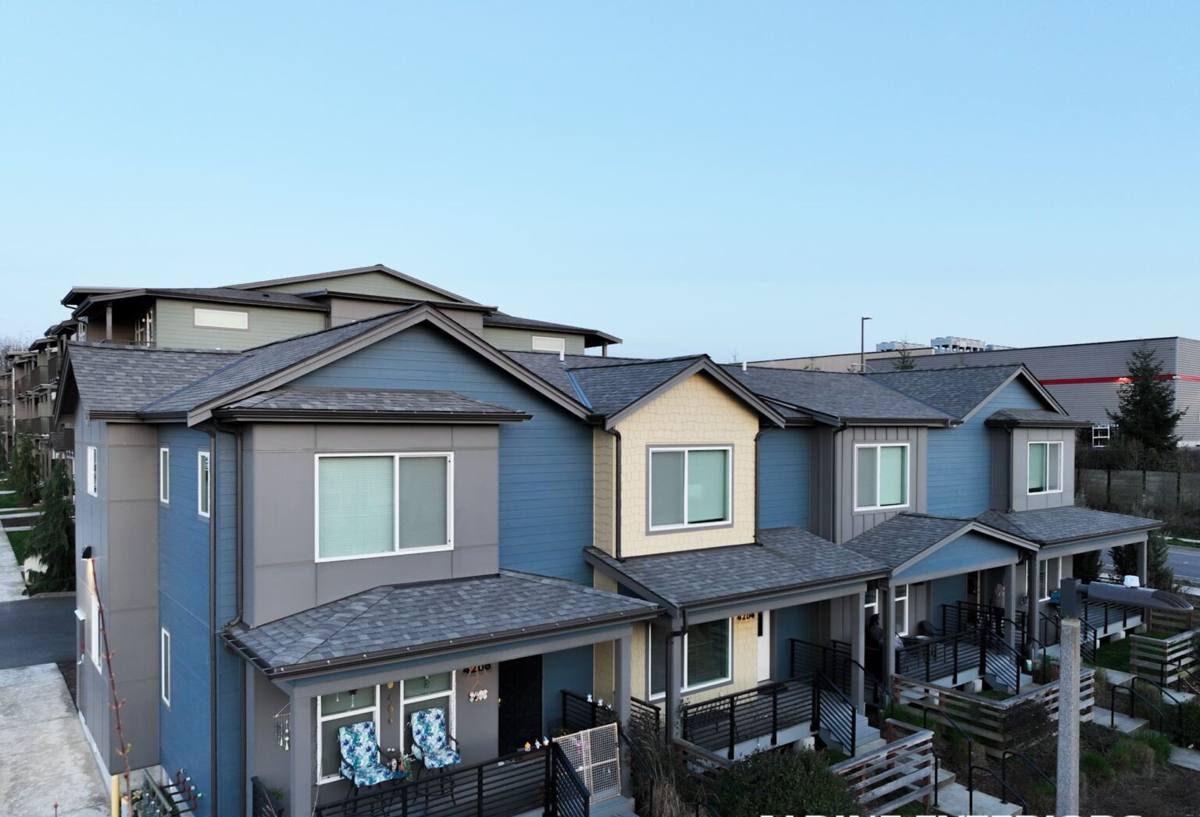
What "Correct" Fiber Cement Installation Actually Involves
Fiber cement performs the way it's supposed to only when it's installed to the manufacturer's specifications. This is where a lot of siding jobs — done by crews unfamiliar with the product or rushing to close out a job — quietly go wrong. The failures usually don't show up on install day. They show up two, five, or ten years later, as buckled panels, staining, or soft spots around windows and corners.
Clearances and Fastening
Fiber cement siding needs proper clearance from rooflines, decks, and grade, and it needs to be fastened with the correct nail type, spacing, and depth. Overdriven fasteners crack the board's edge and create a path for water to get behind the siding. Butt joints need to be treated correctly, not just butted together and caulked as an afterthought.
Flashing and Moisture Management
Every window, door, and roof-to-wall transition needs flashing detailed so water sheds outward, not into the wall cavity. In a climate where wind-driven rain is a regular event rather than an occasional storm, flashing mistakes are the single most common cause of hidden moisture damage behind otherwise good-looking siding.
The Factory Finish
Job-site painted siding is more vulnerable to UV breakdown and moisture uptake at cut edges than siding with a baked-on factory finish. A correctly detailed installation seals and primes every field cut, so the cladding's weather resistance isn't compromised at the one place — the cut edge — where the factory coating doesn't reach.
Why We Install Only James Hardie — Not Vinyl, LP SmartSide, or Other Fiber Cement Brands
We made a deliberate decision to standardize on James Hardie fiber cement and not offer alternatives like vinyl, LP SmartSide, or other fiber cement brands. It's not that every other product is worthless — it's that after years of installing and servicing exterior siding in this region, Hardie's combination of non-combustible composition, climate-engineered product lines (its HZ5 formulation is built specifically for humid, high-moisture climates like ours), factory-applied ColorPlus finish, and strong transferable warranty is what we're willing to put our name behind. Vinyl can warp and fade under sustained Florida UV and doesn't hold up as well in high wind events. Other fiber cement products may perform reasonably well, but we've chosen to specialize in one system so our crews install it correctly every time, rather than splitting expertise across multiple product lines with different installation requirements.
Signs Your Current Siding Is Already Failing
Because siding damage often develops behind the surface, homeowners in Westchase frequently don't realize there's a problem until it's fairly advanced. Look for these warning signs:
- Soft or spongy spots when you press on the siding, especially near the bottom edges and corners
- Visible warping, buckling, or gaps at panel seams
- Peeling or bubbling paint, particularly on south- and west-facing walls that take the most sun
- Staining or streaking below window sills and roof-to-wall joints
- A musty smell along interior walls that back up to exterior siding
- Caulk that has cracked, shrunk, or pulled away from joints
- Visible fastener heads or nail pops along the siding face
Any one of these on its own might be minor. Several at once, especially combined with a home that's due for exterior work anyway, usually means it's time for a proper inspection rather than a patch job.
Our Process for Westchase Projects
Because we already work in this part of Hillsborough County, our process for a Westchase home follows a routine we're familiar with rather than something we're figuring out on the fly.
We start with an on-site inspection to assess the current siding, sheathing condition, and any moisture issues at windows, doors, and roof transitions. If your home is part of a homeowners association — as is common in planned communities like Westchase — we account for the association's architectural and color-approval process as part of scheduling, so it doesn't become a surprise delay mid-project. Permitting is handled through the appropriate Hillsborough County or City of Tampa building department depending on your property's jurisdiction, with all work meeting current Florida Building Code wind-load requirements for this zone.
From there, the job moves through removal of the old cladding, inspection and repair of the sheathing and weather barrier underneath (this step matters as much as the siding itself), correct flashing detail work at every penetration, and installation of the Hardie boards to manufacturer fastening specs. We finish with sealed and primed cut edges, a final walkthrough, and a punch list before we consider the job complete.
What Drives the Cost of a Fiber Cement Siding Job
Every home is different, but the same handful of factors determine most of the cost variation we see on Westchase jobs:
| Cost Factor | Why It Matters |
|---|---|
| Home size and number of stories | More square footage and second-story work both increase material and labor time |
| Condition of existing sheathing | Rot or moisture damage found during tear-off requires repair before new siding goes on |
| Siding profile and plank width | Lap width, board-and-batten accents, and trim details affect material and labor |
| Number of windows, doors, and corners | Each opening and corner adds flashing and trim work |
| HOA-approved color and finish | ColorPlus finishes vary in cost by color and coating tier |
| Removal and disposal of old cladding | Type and condition of the material being removed affects labor and disposal cost |
We won't quote a job over the phone without seeing the home — too many of these factors only become clear on-site — but we're upfront about what's driving the number once we do.
Maintenance and Warranty After Installation
One of the practical advantages of James Hardie siding in this climate is how little ongoing maintenance it asks for compared to wood or vinyl. It doesn't rot, and the factory ColorPlus finish is engineered to resist Florida's UV exposure far longer than field-applied paint. That said, "low-maintenance" isn't "no-maintenance" — periodic rinsing to remove salt and pollen buildup, prompt attention to any caulk joints that show wear, and keeping an eye on areas where sprinklers or landscaping keep siding consistently wet will all extend its service life. James Hardie backs its products with a strong transferable warranty, which matters both for your own peace of mind and for resale value if you sell the home down the road.
Hiring a Siding Contractor Who Actually Works in Westchase
A contractor who regularly works in this part of Hillsborough County already understands the local permitting process, the wind-load requirements that apply here, and — where relevant — how to work with an HOA's design review without it derailing the schedule. That familiarity translates directly into fewer surprises during your project. Before hiring anyone for a fiber cement siding job, it's worth checking a few things:
- Are they a manufacturer-trained or preferred installer for the specific fiber cement product they're proposing?
- Will they inspect and repair sheathing and moisture barrier issues before re-siding, not just cover them up?
- Do they pull the proper local building permits rather than treating the job as exempt?
- Can they explain their flashing details at windows, doors, and roof transitions specifically?
- Is their warranty coverage — both labor and manufacturer — spelled out in writing?
A contractor who can answer these clearly, without hedging, is one who's done this enough times in this exact climate to know what actually matters.
If your Westchase home's siding is showing its age or you're planning ahead for a replacement, we're happy to take a look and walk you through what we find — no pressure, no obligation. Reach out using the form below for a free estimate.