 Tampa Siding
 Building a Deck That Actually Holds Up in Ybor City
Ybor City sits close enough to the water and deep enough into Tampa's subtropical climate that a deck here works harder than a deck almost anywhere else in the country. Between June and November, afternoon thunderstorms roll through on a near-daily schedule. The rest of the year, UV exposure stays intense even on mild days. Add the humidity that never really lets up and the occasional direct hit from a tropical system, and you've got conditions that will find every weak point in a deck's design, materials, or fasteners within a few seasons. We build decks for this specific environment, not a generic version of one.
A lot of deck problems we get called out to fix in older Ybor City homes trace back to decisions that would have been fine in a drier, milder climate but were never right for Hillsborough County. Undersized ledger flashing, standard carbon-steel fasteners, framing lumber rated for interior use, or a deck surface installed flat with no drainage plan — all of it eventually fails here, usually faster than homeowners expect.
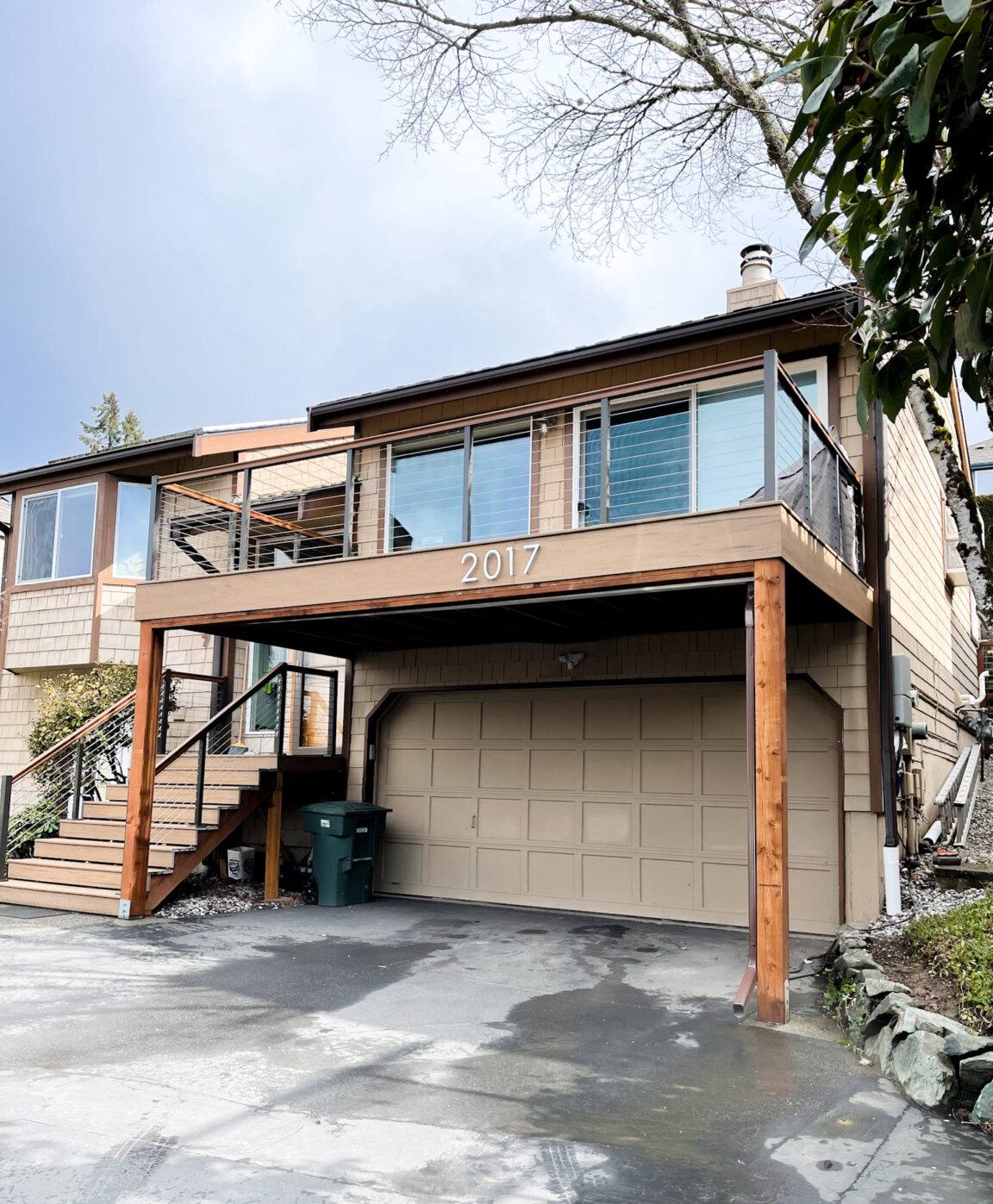
What Tampa's Climate Actually Does to a Deck
Heat and UV
Direct Florida sun breaks down wood fibers, fades composite color, and dries out the natural oils in softer wood species faster than most homeowners realize. Decking that isn't UV-stabilized will visibly gray, crack, or splinter well before it's structurally due for replacement. Metal fasteners and hardware left exposed to that heat cycle expand and contract repeatedly, which loosens connections over time if the wrong fastener type was used.
Wind-Driven Rain and Humidity
Rain in Tampa rarely falls straight down — it comes in at an angle, driven by wind, and it finds any gap in flashing, decking spacing, or ledger connections. Combined with year-round humidity, that moisture doesn't dry out quickly between storms. Wood that isn't properly treated or sealed stays damp longer, which is exactly the condition rot and mold need to take hold.
Salt Air
Ybor City isn't oceanfront, but it's close enough to Tampa Bay that salt-laden air is a real factor, especially on breezier days. Salt accelerates corrosion on standard fasteners, brackets, and any exposed metal hardware. Over a few years, that corrosion can compromise structural connections long before the visible decking shows its age.
Storm and Wind Load
Hillsborough County sees tropical storms and hurricane-force wind events on a regular enough basis that deck framing and attachment need to be engineered for uplift and lateral load, not just vertical weight. A deck that's only built to hold people and furniture, without accounting for wind, is a liability once a real storm comes through.
What a Correctly Built Deck Needs Here
- Stainless steel or heavy hot-dip galvanized fasteners and structural hardware — rated for coastal-adjacent, high-humidity exposure, not standard interior-grade coated fasteners.
- Properly flashed ledger board connection to the house, with a moisture barrier between the ledger and the structure — this is the single most common failure point we see on older decks.
- Pressure-treated or naturally rot-resistant framing lumber rated for ground contact and sustained moisture exposure, sized for both live load and regional wind uplift requirements.
- Decking material — wood or composite — chosen with UV stability and moisture behavior in mind, not just upfront cost or appearance.
- Deck boards spaced and sloped correctly so water sheds off the surface instead of pooling or wicking into end grain.
- Post footings sized and set to local frost-free depth requirements and soil conditions, with proper anchoring for wind resistance.
- Permits and inspections pulled through Hillsborough County / City of Tampa as required — this isn't optional and it protects you if there's ever a claim or a sale.
Decking Material Options for This Climate
There's no single "best" decking material for every Ybor City project — the right call depends on budget, maintenance tolerance, and how much direct sun and rain exposure the specific deck location gets. Here's how the common options actually perform under Tampa conditions.
| Material | How It Handles Tampa Climate | Maintenance | Typical Lifespan Here |
|---|---|---|---|
| Pressure-treated pine | Good rot resistance when properly treated and sealed; can warp or check under heavy UV/moisture cycling if maintenance lapses | Re-seal every 1–2 years | 10–15 years with upkeep |
| Composite decking | Strong UV and moisture resistance; no rot risk; color can fade slightly over many years of direct sun | Periodic cleaning, no sealing | 20–25+ years |
| Tropical hardwoods (e.g., ipe-type species) | Naturally dense and rot-resistant; handles humidity well but is unforgiving of poor installation and requires oiling to hold color | Annual oiling recommended | 20–30 years |
| Cedar/redwood | Naturally resists some rot but less UV-stable than treated pine or composite in intense Florida sun | Sealing every 1–2 years | 10–15 years |
We'll walk through these trade-offs honestly during the estimate — including where a lower-maintenance material saves money over the deck's life even if the upfront cost is higher.
Cost Factors for a Ybor City Deck
Every deck is priced around its own footprint, height, material choice, and site conditions, so we won't quote a number without seeing the property. What we can tell you is what actually moves the price up or down here:
| Factor | Why It Matters Locally |
|---|---|
| Deck height / elevated design | Taller decks need heavier framing and railing to meet wind and structural code, which adds material and labor |
| Ledger attachment complexity | Older homes may need extra structural work to properly flash and secure the ledger to the house |
| Decking material | Composite and hardwood cost more upfront than treated pine but reduce long-term maintenance and replacement costs |
| Footing and soil conditions | Site-specific soil and drainage can affect footing depth and cost |
| Permitting and inspection | Required for most new decks and adds administrative time, but protects the homeowner |
| Fastener and hardware grade | Corrosion-resistant hardware costs more but is not optional in this climate if you want the structure to last |
Our Process for Deck Projects in Ybor City
1. On-Site Assessment
We walk the property, look at how the deck will tie into the house, check drainage patterns, sun exposure, and any existing structure if this is a replacement. This is also where we talk through material options based on your budget and maintenance preferences.
2. Design and Engineering
We design the deck to meet Hillsborough County / City of Tampa code, including wind load and structural requirements specific to this region — not a generic national spec.
3. Permitting
We handle the permit application and inspection scheduling so the project is documented and compliant from the start. This matters if you ever sell the home or file an insurance claim down the road.
4. Framing and Structural Work
Ledger flashing, footings, framing lumber, and fastener selection are all done to the standard the local climate actually requires, not the minimum code will allow.
5. Decking, Railing, and Finish
Surface material is installed with proper spacing and slope for drainage, followed by railing, stairs, and any finish sealing the material requires.
6. Final Walkthrough and Inspection
We walk the finished deck with you, confirm everything meets code, and make sure you understand what maintenance (if any) the material needs going forward.
Why Local Experience Matters for This Job
A deck built by a crew that hasn't worked this specific climate tends to make the same handful of mistakes: standard fasteners instead of corrosion-resistant hardware, ledger flashing that's adequate for a drier region but not for wind-driven Tampa rain, or a decking material chosen without accounting for how much direct UV it'll actually take here. None of these mistakes show up on day one — they show up two or three years in, as loose railings, soft spots in the decking, or a ledger connection that's started to pull away from the house.
Working regularly in Ybor City and the surrounding Tampa area means we're not guessing at what holds up. We've seen how different materials and construction details perform after a few Florida summers and a few storm seasons, and we build accordingly from the start rather than learning it through a warranty callback.
Maintenance Checklist to Extend Your Deck's Life
- Inspect fasteners and hardware annually for corrosion, especially after storm season.
- Clean the deck surface periodically to prevent mold and mildew buildup in the humidity.
- Reseal wood decking on the schedule appropriate to the species — don't wait until it visibly fades or dries out.
- Check the ledger board connection and flashing yearly for signs of moisture intrusion.
- Clear debris from between deck boards so water can drain properly instead of pooling.
- After any major storm, walk the structure and check railings, stairs, and footings for movement.
Let's Look at Your Space
If you're planning a new deck or replacing one that's showing its age, we're happy to come take a look, talk through material options, and give you an honest, no-pressure estimate for your Ybor City property. There's a form below — reach out and we'll get you scheduled.