 Tampa Siding
 Board & Batten in Town 'n' Country: A Look With Real Demands
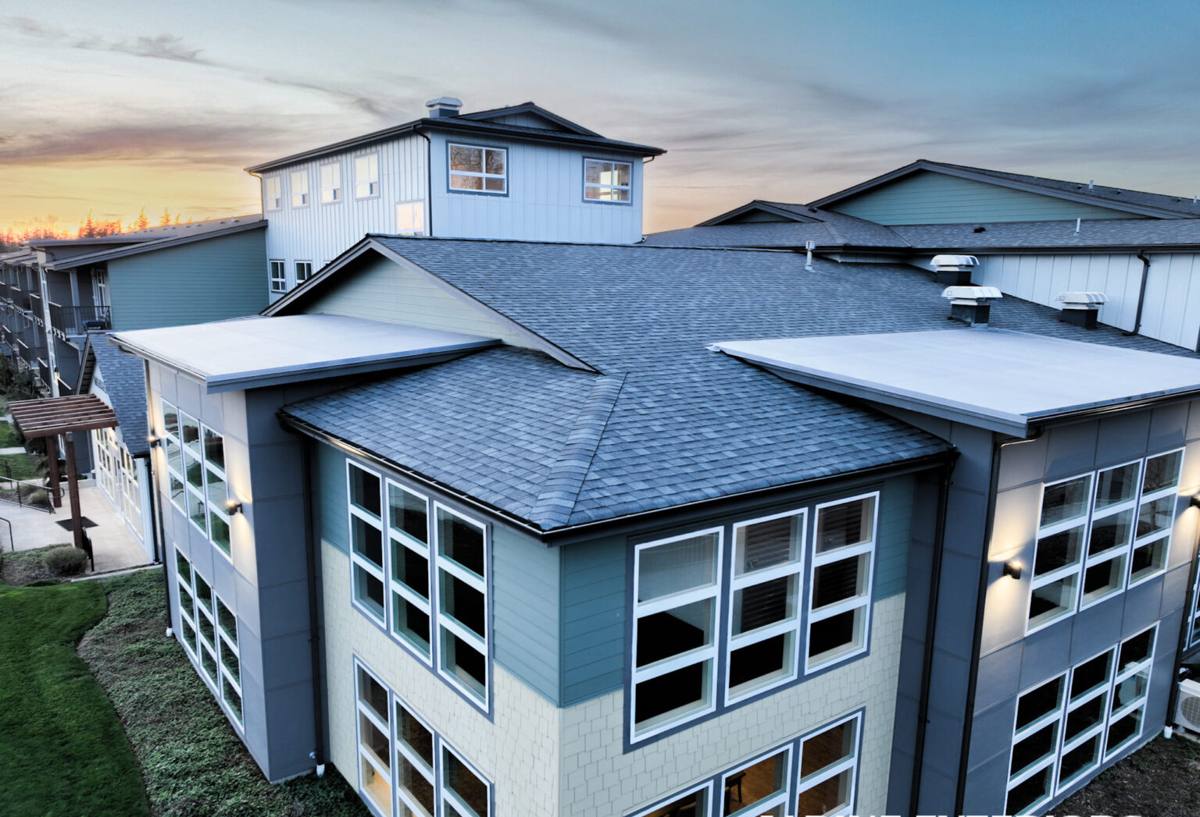
Board and batten siding has a clean, vertical profile that stands apart from the horizontal lap siding on most Tampa-area homes. Wide boards run vertically up the wall with narrow battens covering each seam, creating a shadow-line pattern that reads as more custom, more farmhouse, or more modern depending on the trim and color chosen. It shows up on accent walls, gables, porches, and increasingly on full elevations throughout Town 'n' Country and the surrounding west Hillsborough County neighborhoods.
The look is popular for good reason, but vertical siding behaves differently than horizontal lap siding once wind, rain, and sun get involved. Every vertical seam is a potential water path if it isn't detailed correctly, and every batten is a fastening point that has to hold through decades of Gulf Coast weather. Getting board and batten right in this climate is less about the aesthetic and more about what happens behind the boards.
What This Climate Does to Vertical Siding
Town 'n' Country sits inland from Tampa Bay but still takes the full brunt of what the Gulf Coast throws at exterior building materials. A handful of stressors matter more here than in most parts of the country:
- Hurricane-force wind: Tropical systems push sustained wind and gusts against exterior walls, and vertical board and batten has more individual fastening points than lap siding — meaning more places where a poor install can start to lift, rattle, or fail.
- Intense year-round UV: Florida sun is not seasonal. It bakes painted and coated surfaces twelve months a year, which accelerates fading, chalking, and coating breakdown on materials not engineered for it.
- Wind-driven rain: Storms here rarely fall straight down. Wind pushes rain sideways and upward into seams, laps, and batten joints that a calmer climate would never test.
- Salt air: Even well inland from the bay, airborne salt contributes to corrosion of fasteners, trim, and unprotected wood fiber over time.
None of these are dramatic on any single day. The damage is cumulative — a siding system that's slightly wrong at installation will show it in year five or six, not year one, which is exactly why the installation details matter more than the material choice alone.
Why Vertical Seams Are the Weak Point
On lap siding, gravity does a lot of the water-shedding work — each course overlaps the one below it. On board and batten, water management depends entirely on how the boards, battens, and underlying water-resistive barrier are layered and fastened. A batten nailed straight through both boards without accounting for expansion, or a seam that isn't backed properly, gives wind-driven rain a direct route to the sheathing. In a climate that gets both hurricanes and near-daily summer thunderstorms, that's not a theoretical risk.
What a Correct Board & Batten Installation Involves
A board and batten job that holds up in Hillsborough County weather isn't just boards and trim nailed to the wall. The details that actually determine whether it lasts include:
- Water-resistive barrier first. A continuous, properly lapped weather barrier goes on before any siding, so the wall assembly has a backup drainage plane if any water gets past the battens.
- Correct board spacing and fastening pattern. Panels need room to move with temperature and humidity swings without the fasteners working loose or the seams opening up.
- Batten placement over solid backing. Battens should land over framing or blocking, not just over the seam itself, so the fastening point is structurally sound — not just cosmetic.
- Corrosion-resistant fasteners. Salt air corrodes ordinary fasteners faster than most homeowners expect; the fastener spec matters as much as the siding spec.
- Proper clearance at grade, roofline, and trim. Siding that sits too close to the ground, roof, or driveway holds moisture against the bottom edge and invites rot or coating failure regardless of what the siding is made of.
- Caulking and flashing at every penetration. Light fixtures, hose bibs, vents, and window trim all break the plane of the siding and need to be flashed and sealed correctly, not just caulked over.
Skip any one of these and the siding might look fine at the walk-through — the failures show up years later, quietly, behind the boards.
The James Hardie Board & Batten System We Install
We install James Hardie fiber cement exclusively, and for board and batten applications that means HardiePanel vertical siding paired with Hardie trim boards used as battens. It's a non-combustible, engineered fiber cement product, not wood or a wood-composite, which changes how it behaves under Florida conditions in ways that matter for this specific siding style:
- HZ5 climate-engineered formulation. Hardie manufactures its siding in different formulations tuned to regional climate zones, and the HZ5 line is engineered for the wet, humid, storm-exposed conditions found here in west-central Florida.
- Factory-applied ColorPlus finish. The color is baked on at the factory under controlled conditions rather than field-painted, giving it stronger, more consistent UV and fade resistance than a job-site paint job — important on a material that will sit in direct Florida sun year-round.
- Non-combustible core. Fiber cement doesn't burn, feed, or fuel fire the way wood-based siding can.
- Dimensionally stable panels. Fiber cement moves far less with humidity swings than wood or wood-composite boards, which means tighter, longer-lasting seams at every batten line.
The vertical board and batten look works with any siding material. The reason it holds up here is the material underneath the look.
Board & Batten Material Comparison
| Factor | James Hardie Fiber Cement | Cedar / Wood | Vinyl | Wood-Composite (LP-Type) |
|---|---|---|---|---|
| Moisture behavior | Engineered resistance, does not rot | Absorbs moisture, prone to rot without diligent upkeep | Doesn't rot, but can trap moisture behind panels | Engineered resin coating, sensitive if coating is compromised |
| Hurricane-region wind performance | Rigid, holds fastening well when installed to spec | Adequate but fastener pull-through risk over time | Can crack, warp, or blow off in high gusts | Adequate when installed exactly to spec |
| UV / fade resistance | Factory ColorPlus finish resists fading | Requires repainting or restaining on a cycle | Can fade and become brittle in constant sun | Factory finish, moderate fade resistance |
| Salt air / coastal exposure | Engineered for coastal humidity and salt exposure | Vulnerable without frequent sealing | Generally stable but can chalk | Moderate; installation sensitivity increases risk |
| Maintenance burden | Low — periodic caulk/inspection | High — regular sealing, staining, pest checks | Low — but limited repair options once damaged | Low to moderate, installation-dependent |
| Fire behavior | Non-combustible | Combustible | Combustible, can melt/deform | Combustible |
This is why board and batten in wood or engineered wood-composite requires a level of ongoing homeowner diligence that fiber cement simply doesn't ask for in this climate.
Our Process for Town 'n' Country Homes
Every board and batten project we take on in Town 'n' Country follows the same sequence, because skipping a step is where problems get built into the wall:
- On-site assessment. We look at the existing siding, sheathing condition, wall orientation to prevailing wind and sun, and any moisture history before quoting anything.
- Tear-off and substrate check. Old siding comes off and we inspect the sheathing underneath for rot or damage before anything new goes up — covering a bad substrate is how good siding fails early.
- Water-resistive barrier installation. A continuous, correctly lapped barrier goes on the wall, integrated with window and door flashing.
- Board and batten installation to Hardie's fastening spec. Panels and battens go up following James Hardie's published installation requirements for this climate zone — not shortcuts, not generic fastening patterns.
- Trim, flashing, and sealant detailing. Every penetration, corner, and transition gets sealed and flashed properly, not just caulked as an afterthought.
- Final walkthrough. We review the finished job with the homeowner and point out anything they should know for long-term care.
Why a Local Crew Matters More Than It Sounds
Board and batten installation quality depends on judgment calls that a crew only gets right consistently once they've made them dozens of times on homes like the ones in Town 'n' Country — same building stock era, same wind exposure, same humidity load. A crew that regularly works this part of Hillsborough County already knows how local homes are typically framed and sheathed, what the area's storm exposure actually demands versus what's overkill, and how Florida Building Code wind-borne debris requirements apply to exterior wall coverings in this county. That familiarity shows up in fewer surprises during tear-off and a tighter, more consistent finished install — not in anything you'd notice from a brochure.
Maintenance Checklist for Board & Batten in This Climate
- Inspect caulk lines at trim, corners, and penetrations annually — Florida sun breaks down sealant faster than milder climates.
- Rinse siding periodically to clear salt residue and organic buildup, especially on walls facing prevailing wind.
- Walk the exterior after any major storm and look for lifted battens, cracked boards, or displaced trim.
- Keep gutters and downspouts clear so water isn't dumping directly onto siding at roof-to-wall transitions.
- Trim landscaping back from walls to maintain airflow and reduce trapped moisture at the base of the siding.
- Address any small crack or gap promptly — in this climate, small gaps become water intrusion problems faster than in drier regions.
Get a Straight Answer for Your Home
Board and batten can be a great fit for a Town 'n' Country home when it's installed with the right material and the right details for this climate. If you're weighing the look, dealing with aging or damaged siding, or just want an honest read on what your home actually needs, we're glad to take a look and walk you through it. Fill out the form below for a free, no-pressure estimate.