 Tampa Siding
 What Carrollwood's Climate Actually Does to Siding
Carrollwood sits inland from Tampa Bay, but "inland" doesn't mean sheltered. Homes here still take the full brunt of a Gulf Coast climate: hurricane-force winds during the active storm months, wind-driven rain that gets pushed sideways into walls rather than falling straight down, intense UV that runs nearly year-round instead of tapering off in winter, and salt-laden air that drifts in off the bay and works on metal fasteners and trim even miles from open water. None of these forces are dramatic on any single day. They're cumulative — a slow erosion of caulk, finish, and fastener integrity that shows up years later as cupped panels, chalky paint, rust streaks, or a soft spot where water finally found a way in.
That's the frame for this page. We're not writing generally about fiber cement siding — we're writing about what fiber cement siding needs to do, specifically, on a Carrollwood home, and what a correctly installed system looks like once you account for this neighborhood's particular mix of tree cover, humidity, and building stock.
Why Carrollwood Is a Particular Case, Not a Generic Tampa Address
Mature Tree Canopy Changes How Walls Dry
Carrollwood is known for its established tree canopy and lake-lined streets, which is part of what makes it a desirable place to live — but that same canopy changes how a house dries out after rain. Shaded exterior walls hold moisture longer than walls in full sun, which means the wet-dry cycling that siding goes through happens more slowly on shaded elevations and more abruptly on sun-exposed ones. A siding material and finish that can't handle that uneven cycling shows it first on the shaded side of the house, not the side most homeowners are watching.
Lakes and Humidity Load
The lakes that give Carrollwood its character also keep local humidity elevated, adding to the vapor load a wall assembly already deals with from Tampa's Gulf Coast climate generally. High ambient humidity slows drying time for any material that absorbs water, which is one more reason the material choice behind a Carrollwood re-side matters as much as the installation itself.
A Mix of Home Ages and Original Siding
Carrollwood includes a broad mix of home ages, from established mid-century construction to newer infill. That means we regularly work on houses with original wood or older aluminum siding that's reached the end of its service life, alongside newer homes where a previous re-side wasn't detailed correctly for this climate. Each of those starting points changes the scope of the tear-off and prep work, but the climate demands on the finished product are the same either way.
What a Correct Fiber Cement Installation Actually Involves
Fiber cement is only as good as its installation. The material itself resists the swelling, warping, and rot that wood-based products are prone to, but a poorly detailed install can still let water behind the panels and undercut all of that. A correct job in Carrollwood's climate involves several details that aren't optional here, even if they'd be less critical in a milder region:
Clearances and Fastening
Fiber cement needs proper clearance from grade, roof lines, and decks to avoid sitting in standing water or splash-back, and it needs to be fastened per the manufacturer's spec for the wind zone the house sits in. Hillsborough County's building code reflects the region's hurricane exposure, and fastener spacing and type aren't a place to cut corners on a coastal-adjacent property.
Flashing Sequenced With the Water-Resistive Barrier
Every window, door, and wall penetration needs flashing installed in the correct order relative to the house wrap, so that any water that gets past the siding is directed back out rather than trapped against the sheathing. This is invisible once the job is done, which is exactly why it's worth asking about before hiring anyone.
Sealed Cut Edges and Corrosion-Resistant Hardware
Any field-cut edge on fiber cement should be primed and sealed per manufacturer instructions, and every fastener, corner post, and piece of trim hardware should be rated for a coastal-adjacent, high-salt environment. Standard hardware corrodes faster here than it would inland in a drier climate, and a corroding fastener eventually loses its grip and opens a small gap right where you don't want one.
The James Hardie System We Install
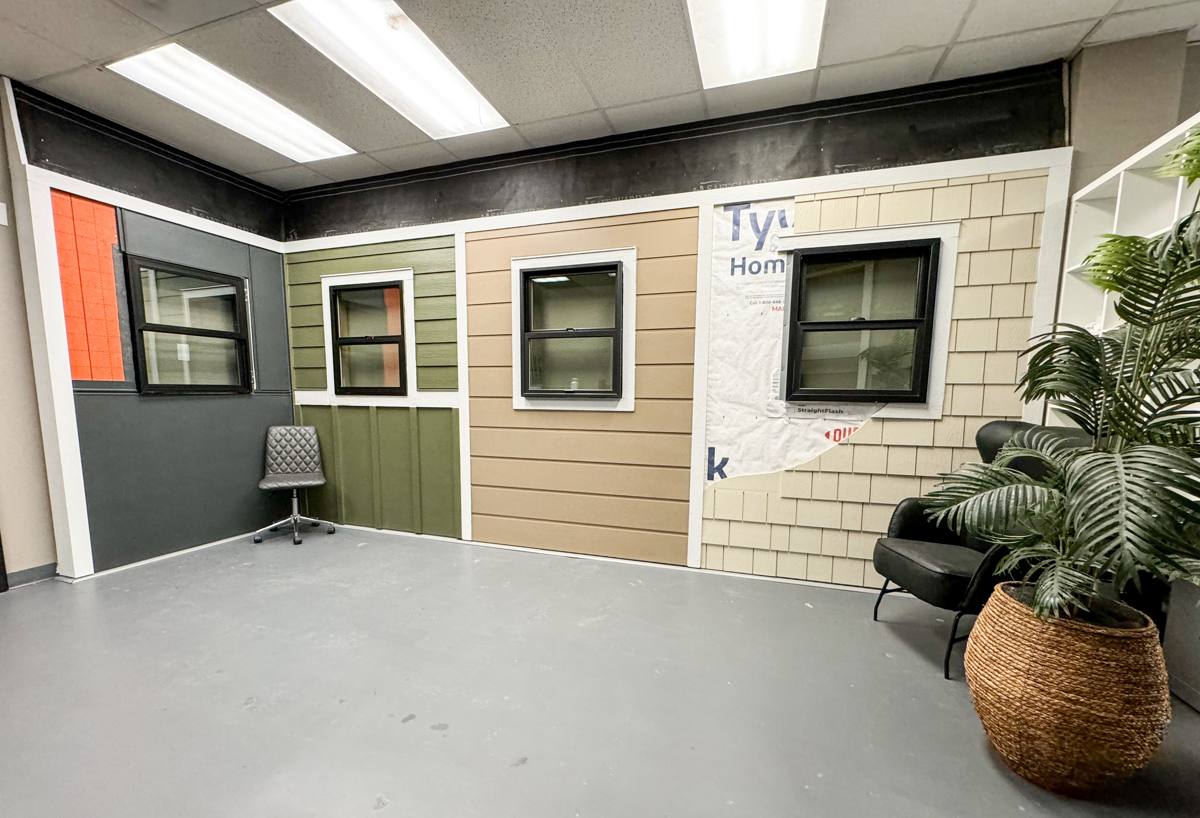
We install James Hardie fiber cement exclusively — not vinyl, not LP SmartSide, not Cemplank or Allura, not primed spruce or cedar. That's a deliberate standard, not a default. Hardie's HZ product lines are engineered for specific climate zones, and the HZ10 formulation is built for the humidity, heat, and moisture exposure of the Southeast, including the Tampa Bay area. Panels come with a factory-applied ColorPlus finish, which is baked on and cured under controlled conditions rather than brushed on at the jobsite — a meaningful difference in a climate where UV and humidity are hard on field-applied paint. James Hardie also backs its products with a strong, transferable warranty when installed to spec, which matters to a homeowner thinking about resale as well as day-to-day performance.
We won't install the alternatives, and we're upfront about why. Vinyl doesn't absorb water the way wood-based products do, but it isn't dimensionally stable under Florida's heat and direct sun, and its seams and J-channels give wind-driven rain places to collect. LP SmartSide and other engineered wood products use a wood-fiber core that can absorb moisture at cut edges and swell over repeated wet-dry cycles — a real risk given how humid Carrollwood stays under its tree canopy. Cedar and primed spruce are natural wood, full stop, and they cup, check, and lose their finish faster here than almost anywhere else in the country. None of these are bad products in every application. They're products whose trade-offs, in this specific climate, aren't ones we're willing to put our name behind.
Comparing the Options for a Carrollwood Home
| Material | How It Handles Carrollwood's Climate | Where It Struggles Locally |
|---|---|---|
| James Hardie fiber cement | Dimensionally stable, factory-cured finish resists UV and humidity | Requires precise installation detailing to get full performance |
| Vinyl siding | Doesn't absorb water into the material | Distorts under heat and direct sun; seams collect wind-driven rain |
| LP SmartSide / engineered wood | Lighter and easier to install than solid wood | Wood-fiber core swells at cut edges in sustained humidity |
| Cedar / primed spruce | Traditional appearance | Cups, checks, and loses finish fastest under intense year-round UV and moisture |
What Drives the Cost of a Carrollwood Fiber Cement Job
Every home is different, so we don't quote pricing without seeing the property, but the same handful of factors drive cost on most Carrollwood jobs:
| Factor | Why It Matters |
|---|---|
| Tear-off scope | Removing old wood, aluminum, or a previous re-side adds labor and disposal beyond a straightforward re-side |
| Home size and wall complexity | Dormers, multiple gables, and architectural detail take more cutting, fitting, and flashing than a simple rectangular elevation |
| Plank vs. panel system | HardiePlank lap siding, HardiePanel vertical siding, and trim/soffit work carry different labor and material costs |
| Substrate condition | Rotted or water-damaged sheathing found during tear-off needs to be repaired before new siding goes on |
| Color and trim package | Factory ColorPlus finishes and upgraded trim details cost more than a base package but hold up longer under Florida sun |
Our Process on a Carrollwood Job
We start with an on-site walkthrough, not a phone estimate, because the condition of the sheathing and the details of a home's flashing and clearances only show up in person. From there:
- Assessment of the existing siding, trim, and any signs of water intrusion, including areas shaded by tree canopy where moisture lingers longer
- A written scope covering tear-off, substrate repair if needed, the specific HardiePlank or HardiePanel system, trim, and color
- Careful removal of the old siding and inspection of the sheathing underneath before anything new goes up
- Installation following Hardie's fastening, clearance, and flashing specs for this wind zone and climate
- A final walkthrough with the homeowner before we consider the job done
We don't rush tear-off day, because that's the one point in the project where problems hiding behind the old siding actually become visible — and it's cheaper to address them then than to cover them back up.
Why a Crew That Already Works Carrollwood Matters
Hillsborough County's permitting and wind-load requirements apply countywide, but a crew that regularly works Carrollwood specifically has already dealt with this area's common starting points: the older wood and aluminum siding still found on many established homes, the shaded, slow-drying elevations under mature canopy, and the humidity load that comes with living near the neighborhood's lakes. That familiarity shows up in small ways — knowing what to expect when tear-off starts, having a realistic sense of how long a job takes given the tree cover and access on a typical lot, and not needing to relearn the basics of this climate on your house. It also means we're a known, findable crew if a warranty question or a follow-up need comes up down the road, rather than an out-of-area company that did one job and moved on.
What to Expect After Installation
Fiber cement is low-maintenance compared to wood, but "low-maintenance" doesn't mean "no maintenance," especially in this climate. A few habits keep a Carrollwood installation performing the way it's supposed to for the long haul:
- Rinse the siding periodically to clear salt residue, pollen, and organic buildup from tree canopy, especially on shaded elevations
- Walk the exterior after major storms and check caulk lines at trim, windows, and corners for cracking or separation
- Keep gutters clear so water isn't overflowing directly onto siding and pooling at the base of walls
- Trim back vegetation that keeps a wall section shaded and damp longer than the rest of the house
- Address any small chip or crack promptly rather than waiting, since exposed edges are where moisture problems start
- Confirm what your Hardie warranty covers and keep basic records of the install for any future claim
None of this is heavy upkeep, but a few minutes a season is what keeps a correctly installed Hardie system performing for decades rather than years.
If you're in Carrollwood and dealing with aging siding, storm damage, or just want an honest read on what your home actually needs, we're happy to take a look. Reach out below for a free, no-pressure estimate.