 Tampa Siding
 Metal Roofing in Carrollwood: Built for How Tampa Actually Weathers a Roof
Carrollwood is one of the more established residential pockets in the Tampa area, with a lot of homes now old enough that their original roofs — asphalt shingle in most cases — are due for replacement or are already past a reasonable service life. When homeowners here start comparing options, metal roofing comes up constantly, and for good reason. It's a system that, installed correctly, is built to handle exactly what Hillsborough County throws at a roof year after year: sustained UV exposure, sudden hurricane-force wind events, wind-driven rain that finds every weak seam, and the humidity and airborne salt that drift inland off Tampa Bay even in neighborhoods that aren't waterfront.
This page focuses specifically on metal roofing for Carrollwood properties — what the local climate actually demands from the system, what a correct installation looks like, and how our process works from first inspection to final walkthrough. We're not going to tell you metal is right for every house or every budget. We'll tell you honestly where it earns its cost and where it doesn't.
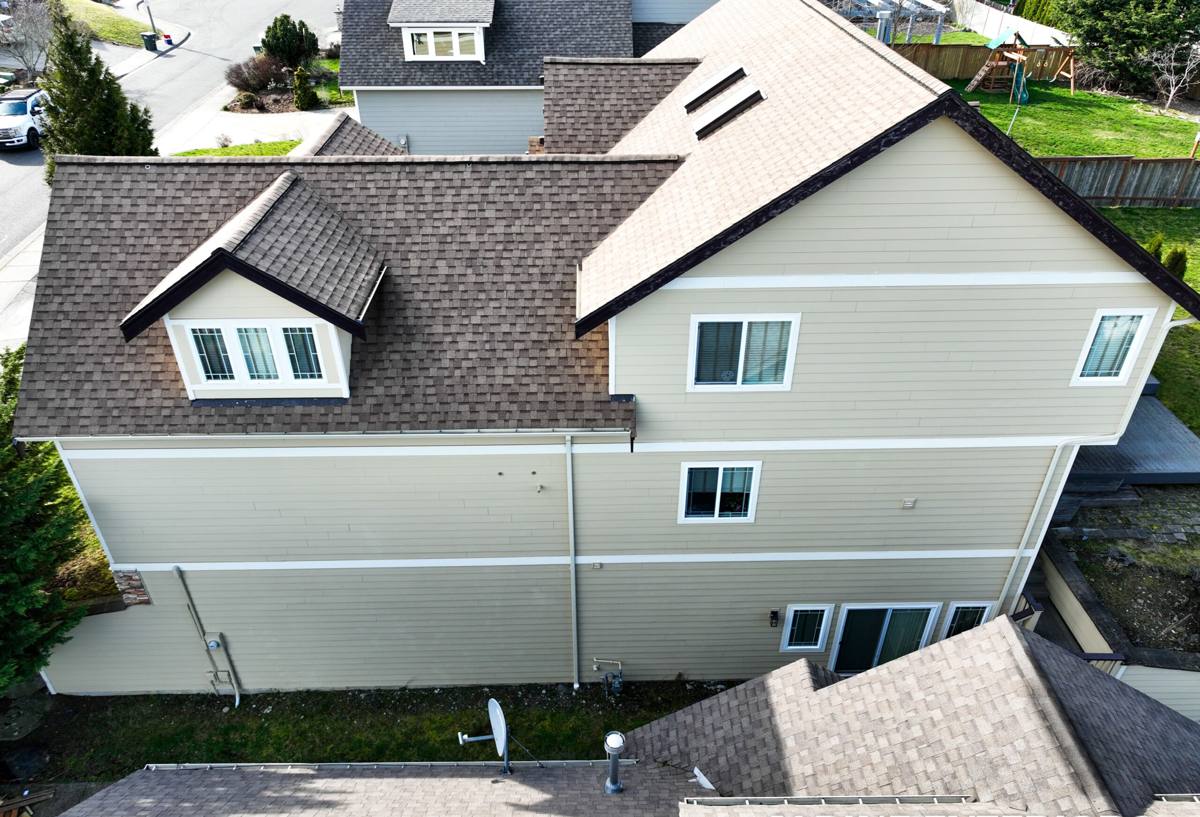
What Tampa Bay's Climate Actually Does to a Roof
It's easy to talk about "harsh weather" in the abstract. On a roof, the damage shows up in specific, predictable ways:
Wind uplift during tropical systems
Hurricane and tropical-storm-force wind doesn't push down on a roof — it pulls up on it, working at edges, ridges, and any place fasteners or seams are under-driven or under-spec'd. Roofs fail from the edges inward far more often than they fail in the middle of a field of panels.
Constant UV load
Florida's sun exposure is nearly year-round and intense. On asphalt shingles this shows up as granule loss and premature brittleness. On metal, UV is far less destructive structurally, but it does affect coatings over decades, which is why coating quality and warranty terms matter more here than in milder climates.
Wind-driven rain
Rain that comes in sideways during a storm doesn't behave like rain falling straight down. It gets pushed sideways and even upward under panel edges and around penetrations, which means underlayment quality and flashing detail matter as much as the roofing material itself.
Humidity and salt-laden air
Carrollwood sits inland from the bay, so salt exposure here is less aggressive than it is on a barrier island or waterfront lot — but it's not zero. Tampa Bay's marine air moves well inland, and combined with Florida's humidity, it accelerates corrosion on any metal component that isn't properly coated or is installed with the wrong fastener type.
Metal Panel Options We Install
"Metal roofing" isn't one product — it's a category, and the right choice depends on the home, the budget, and how long the owner plans to stay in it.
| System | How It's Fastened | Typical Fit | Trade-Offs |
|---|---|---|---|
| Standing seam | Concealed clips, no exposed fasteners | Homeowners wanting the longest service life and cleanest look | Higher upfront cost; requires a skilled crew to detail correctly |
| Exposed-fastener panel | Screws driven through the panel face | Budget-conscious projects, outbuildings, some house styles | Fastener washers age and need periodic re-tightening or replacement |
| Stone-coated steel | Concealed or semi-concealed, interlocking panels | Homeowners who want a shingle or tile look with metal's wind performance | More installation steps; cost sits between standard panel and premium standing seam |
We'll walk you through which of these actually fits your roof geometry and budget rather than defaulting to whichever is easiest to install. A steep, simple roofline opens up more options than a roof with a lot of valleys, dormers, or low-slope sections.
What a Correct Installation Actually Involves
Metal roofing has a reputation for being "bulletproof," but that reputation only holds when the installation underneath the panels is done right. Most metal roof failures we get called to inspect trace back to shortcuts taken during the parts you can't see once the job is finished.
Deck inspection and repair
Panels are only as good as the deck they're fastened to. Soft, rotted, or delaminated sheathing gets replaced before a single panel goes on — never covered over.
Underlayment
Given how much wind-driven rain this region sees, we treat underlayment as a real weatherproofing layer, not an afterthought. Self-adhering, high-temperature underlayment at eaves, valleys, and penetrations is standard practice for us, not an upsell.
Fastening pattern and clip spacing
This is where wind resistance is actually won or lost. Fastener type, spacing, and clip design need to match the wind exposure the specific roof faces — a corner or edge zone needs tighter spacing than a protected mid-field area, and we account for that rather than using one uniform pattern across the whole roof.
Flashing and penetration details
Chimneys, vents, skylights, and wall transitions are where the majority of leaks originate on any roof type. Custom-formed flashing, properly lapped and sealed, matters more than the panel choice itself.
Ventilation
A metal roof installed over a poorly ventilated attic can trap heat and moisture, undermining both energy performance and the life of the decking underneath. We check and correct attic ventilation as part of the scope, not as a separate conversation after the fact.
Our Process on Carrollwood Homes
- On-site inspection: we get on the roof (not just a photo review) and check the deck, current flashing, ventilation, and any problem areas before quoting anything.
- Honest scope and options: we lay out panel options, realistic cost ranges, and timeline — including whether a tear-off or, in limited cases, an overlay is appropriate for your situation.
- Permitting: roofing work in Hillsborough County requires permits and inspections; we handle that process rather than leaving it to the homeowner.
- Tear-off and deck prep: old roofing removed, deck inspected and repaired as needed, debris hauled same-day where possible.
- Underlayment, flashing, and panel installation: installed to the wind and moisture standards this climate actually requires, not the minimum code allows.
- Final walkthrough: we go over the finished roof with you directly and answer questions before we consider the job done.
Signs a Carrollwood Roof Needs Attention Now
Homeowners often wait until there's an active leak, but several warning signs show up well before that point:
- Streaking, staining, or dark patches on interior ceilings, especially after a heavy storm
- Visible rust at fastener heads or panel seams on an existing metal roof
- Loose, lifted, or missing shingles after wind events, even minor ones
- Granule buildup in gutters on an aging asphalt shingle roof
- Daylight visible through the attic decking or soffit areas
- Noticeably higher cooling bills without another explanation
- Soft spots underfoot when walking the roof for inspection
If any of these sound familiar, it's worth getting an inspection before storm season puts additional stress on a roof that's already compromised.
What Drives the Cost of a Metal Roof
| Factor | Why It Matters |
|---|---|
| Roof size and pitch | Steeper or more complex rooflines take longer to install and use more material |
| Panel system chosen | Standing seam costs more upfront than exposed-fastener panel, largely due to labor and material |
| Deck condition | Rotted or damaged decking found during tear-off adds material and labor not visible in an initial estimate |
| Number of penetrations | Chimneys, skylights, and multiple vents each require custom flashing work |
| Tear-off vs. overlay | A full tear-off costs more than an overlay but is almost always the more honest long-term choice |
We give real number ranges during the on-site inspection rather than a phone quote, because roof condition and complexity vary too much house to house to price accurately any other way.
Why Local Experience in Carrollwood Matters
A roofing crew that regularly works this part of Tampa knows the practical details that generic contractors miss — how Hillsborough County's permitting and inspection process actually runs, what HOA or neighborhood architectural expectations tend to look like in an established community, and how tree canopy common in this area affects gutter and valley design. That local familiarity translates into fewer surprises, fewer delays, and a roof detailed for the way storms actually move through this specific part of the county rather than a generic coastal-Florida assumption.
Maintenance and What to Expect Long-Term
Metal roofing is lower-maintenance than shingle, but "low-maintenance" doesn't mean "no maintenance." A yearly visual check — clearing debris from valleys, confirming fastener heads and sealant at penetrations are intact, and checking for any coating wear after a rough storm season — goes a long way toward getting the full service life out of the system. We're happy to walk any homeowner through a simple self-inspection routine, or handle it as part of a maintenance visit.
If you're weighing metal roofing for a Carrollwood home, we're glad to come take a look, answer your questions honestly, and put together a clear estimate — no pressure, no obligation. The form below is the fastest way to get that started.