 Tampa Siding
 Why Clearwater Roofs Wear Out Faster Than You'd Expect
Clearwater sits right on the Gulf side of the Tampa Bay area, which means homes here take on a combination of stresses that inland roofs simply don't deal with. Salt-laden air corrodes exposed fasteners, flashing, and metal drip edges years before a manufacturer's warranty assumes. Intense, near year-round UV exposure bakes shingle asphalt and dries out sealants, making them brittle and prone to cracking. Add in wind-driven rain that gets pushed sideways under standard laps and flashing, plus the occasional hurricane-force gust that lifts a corner or tears loose a ridge cap, and you have a roof that's fighting a slow, steady battle every single day it's not actively storming.
None of this means Clearwater roofs are doomed to constant problems. It means repairs here have to account for conditions a roofer working in a milder climate never has to think about. A patch that would hold up fine in a drier, calmer region can fail within a season on the Gulf coast if it's not done with the right materials and the right attention to detail.
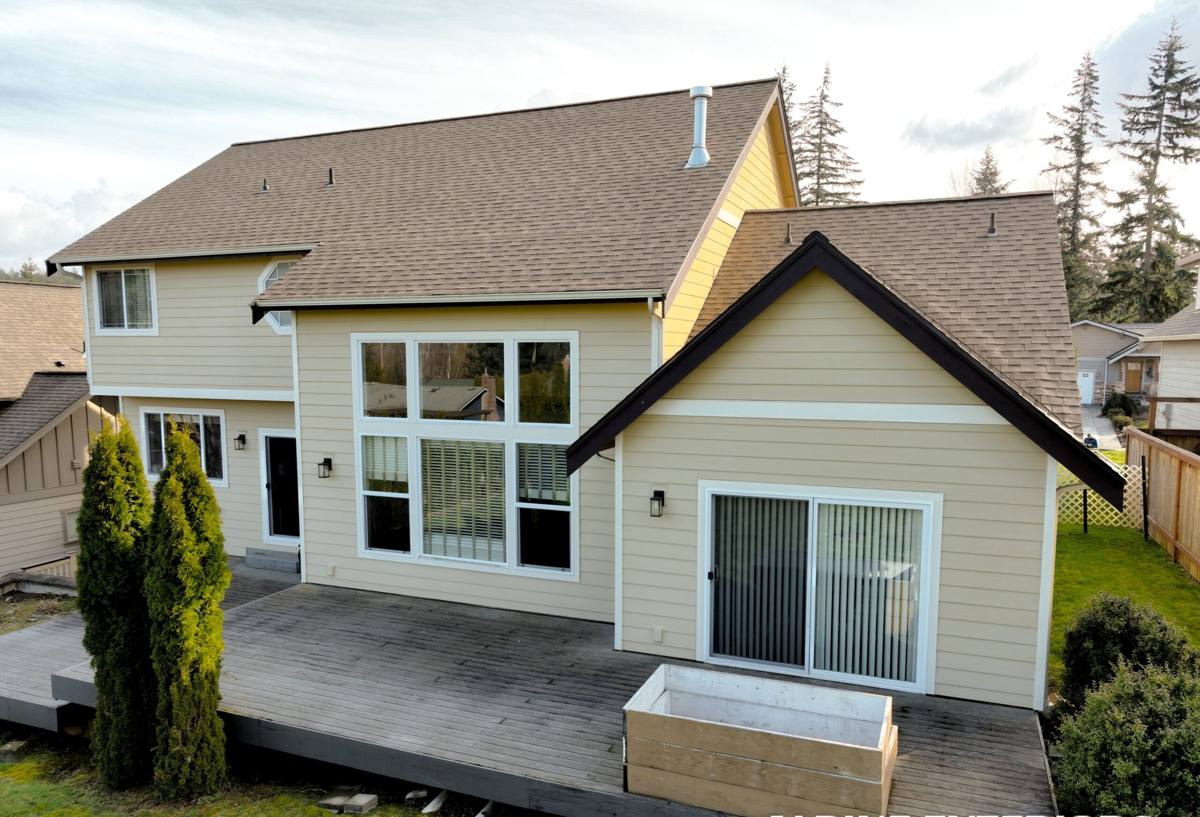
Signs Your Roof Needs Repair, Not a Full Tear-Off
Most roofs don't fail all at once — they show warning signs first. Catching these early is usually the difference between a reasonable repair bill and a full replacement.
- Missing, cracked, or curling shingles, especially after a windstorm
- Granules collecting in gutters or at downspout outlets
- Soft spots, sagging, or a visible dip anywhere on the roof deck
- Water stains on interior ceilings or in the attic, even small ones
- Rusted, lifted, or separated flashing around chimneys, skylights, and vent pipes
- Daylight visible through the roof deck from inside the attic
- Dried, cracked, or missing sealant around any roof penetration
If you're seeing one or two of these, it's very likely a repair situation rather than a replacement. We'll tell you honestly which category your roof falls into — we don't have any incentive to push a full replacement when a targeted repair will hold up just fine.
What a Correct Roof Repair Actually Involves
A Real Inspection First
Every repair starts with getting on the roof, not just looking at it from the ground. We check the full field of the roof, not only the area you called about, because wind and water damage in Clearwater rarely stays confined to one spot. A gust that lifts shingles on one slope often loosens fasteners nearby that haven't failed yet but will soon. We also check the attic side when accessible, since that's where slow leaks show up first, often well before there's a visible stain on the ceiling below.
Matching Materials, Not Guessing
A repair that doesn't match your existing roofing in type, weight, and color ages differently than the surrounding material and often fails at the seam between old and new. We source shingles, underlayment, and flashing that match what's already on your roof as closely as possible, and we're upfront when an exact match isn't available due to discontinued product lines — that's a real limitation in this trade, not something we can promise around.
Flashing and Sealant Done Properly
Most roof leaks in this region don't start in the field of the roof — they start at flashing: chimneys, skylights, plumbing vents, wall-to-roof transitions, and valleys. Wind-driven rain finds any gap in these areas and pushes water in horizontally, not just downward, which is why proper flashing technique matters more here than in calmer climates. We use sealants and flashing materials rated for high-UV, coastal conditions, since standard products dry out and crack faster under Clearwater's sun exposure.
Common Roof Repair Issues We See in Clearwater
| Issue | Typical Cause | What the Repair Involves |
|---|---|---|
| Lifted or missing shingles | Wind uplift during storms, aged or under-nailed shingles | Remove damaged shingles, inspect decking, install matched replacements with proper nailing pattern |
| Leaks around chimneys or skylights | Cracked or corroded flashing, dried sealant | Remove old flashing, replace with new metal and fresh sealant rated for UV exposure |
| Granule loss and thinning shingles | Years of intense UV exposure baking the asphalt | Assess remaining shingle life; patch localized areas or recommend a broader look if widespread |
| Soft or sagging roof deck | Long-term hidden leak that reached the plywood | Remove affected shingles, replace damaged decking, then re-flash and re-shingle the area |
| Rusted fasteners and drip edge | Salt air corrosion near the coast | Replace corroded metal components with corrosion-resistant materials |
Our Repair Process, Step by Step
- Initial inspection: We walk the roof and check the attic where possible, documenting every area of concern, not just the spot you noticed.
- Honest assessment: We tell you plainly whether you're looking at a repair, and roughly what's driving the cost, before any work starts.
- Material matching: We source shingles, flashing, and underlayment that align with your existing roof system.
- The repair itself: Damaged materials come off, the deck underneath gets checked and repaired if needed, and new materials go in with attention to proper nailing, lapping, and sealing.
- Flashing and sealant check: Since most leaks originate at penetrations and edges, we inspect and address these areas even if they weren't the original complaint.
- Final walkthrough: We show you what was done and what to keep an eye on going forward.
Repair or Replacement? How We Help You Decide
This is the question every homeowner with an aging roof eventually asks, and the honest answer depends on a few factors: how much of the roof is affected, how old the existing roofing is relative to its expected service life, whether the deck underneath is sound, and whether the damage is isolated or spread across multiple areas. A roof with one storm-damaged section and years of useful life left elsewhere is almost always a repair. A roof with widespread granule loss, multiple soft spots, and recurring leaks in different locations is telling you it's nearing the end of its service life, and continued patching starts to cost more over time than it saves.
We're not in the business of talking every customer into a full replacement — plenty of roofs we look at genuinely just need a solid repair. When replacement does make more sense, we'll explain exactly why, in plain terms, so the decision is yours to make with real information.
Materials We Use and Why
For repair work, we favor materials built for coastal, high-UV, high-wind conditions rather than the cheapest available match. That means corrosion-resistant fasteners and flashing metal instead of standard steel, sealants rated for sustained sun exposure rather than general-purpose caulk, and shingle products with wind ratings appropriate for Gulf coast storm exposure. It costs a little more upfront than a generic patch job, but a repair that fails again in eighteen months because it used the wrong materials isn't actually the cheaper option — it's just a delayed second bill.
Why Hiring a Crew That Already Works Clearwater Matters
Roof repair isn't a one-size-fits-all trade. A contractor who mostly works inland, in calmer or drier climates, doesn't have the same instinct for where wind-driven rain actually gets in, or how fast standard sealants degrade under this level of sun exposure. Crews who regularly work Clearwater and the surrounding Tampa Bay area know which flashing details tend to fail first in this environment, which fastener types actually hold up against salt air, and how to sequence a repair around our storm season rather than getting caught mid-job when weather rolls in. That local pattern recognition is the difference between a repair that's built to last in this specific climate and one that was done correctly by generic standards but wasn't built for the conditions it actually has to survive.
Simple Maintenance That Extends a Repair's Lifespan
A good repair holds up longer with a little basic upkeep. None of this requires climbing on the roof yourself — most of it is ground-level or attic-level checking.
- Clear gutters and downspouts regularly so water isn't backing up under the roof edge
- Trim back overhanging branches that can drop debris or scrape shingles in wind
- Do a visual check from the ground after any major storm for obviously missing or lifted shingles
- Have flashing and sealant around chimneys, skylights, and vents inspected every year or two, since these dry out faster in this climate than the shingles themselves
- Check the attic occasionally for any signs of moisture, staining, or daylight coming through the decking
Catching a small issue during routine maintenance is almost always cheaper and simpler than waiting for it to become a ceiling stain.
Get a Straight Answer About Your Roof
If you're dealing with a leak, storm damage, or just an aging roof you want checked out before it becomes a bigger problem, we're happy to take a look and give you an honest read on what it needs. There's no pressure and no obligation — just a clear assessment and a free estimate using the form below.