 Tampa Siding
 Clearwater sits close enough to the Gulf that salt air, wind-driven rain, and near-constant UV exposure are simply part of owning a home here. Siding on this side of the bay works harder than siding twenty miles inland, and it shows in the number of Clearwater homes we see with cupped panels, chalky paint, soft trim, and seams that have opened up years before they should have. Tampa Siding Co installs James Hardie fiber cement exclusively, and this page walks through what a proper siding replacement looks like on a Clearwater home — what the climate demands, what correct installation actually involves, and how our process runs from first call to final walkthrough.
Why Clearwater Homes Wear Out Siding Faster
Every coastal Pinellas County property deals with a combination of stressors that inland Hillsborough neighborhoods see in a milder form. Understanding these is the difference between a siding job that looks good for a season and one that holds up for decades.
Salt Air and Corrosion
Airborne salt from the Gulf and Tampa Bay settles on exterior surfaces and accelerates the breakdown of paint films, caulking, and fasteners. Siding materials that rely on surface coatings to keep moisture out are especially vulnerable — once salt-laden air gets past a compromised finish, the underlying material is exposed to a much harsher environment than the coating was designed for.
Hurricane-Force Wind and Wind-Driven Rain
Clearwater sits directly in the path of tropical systems moving through the Gulf. Wind-driven rain doesn't just fall on siding, it's forced sideways and upward into laps, seams, and butt joints under real pressure. Siding that isn't fastened correctly, flashed correctly, or rated for the wind exposure common here can fail at exactly the moment it matters most.
Intense, Year-Round UV
Florida's sun angle and the number of full-sun days per year put a steady load of UV exposure on south- and west-facing walls in particular. Paint pigments break down, some siding substrates dry out and become brittle, and colors fade unevenly across a home's elevations.
Humidity and Moisture Cycling
Between afternoon storms, high ambient humidity, and irrigation overspray common in Clearwater landscaping, siding here rarely gets a long dry stretch. Materials that absorb moisture and then dry out repeatedly are prone to swelling, warping, and eventually losing their bond with paint or factory finish.
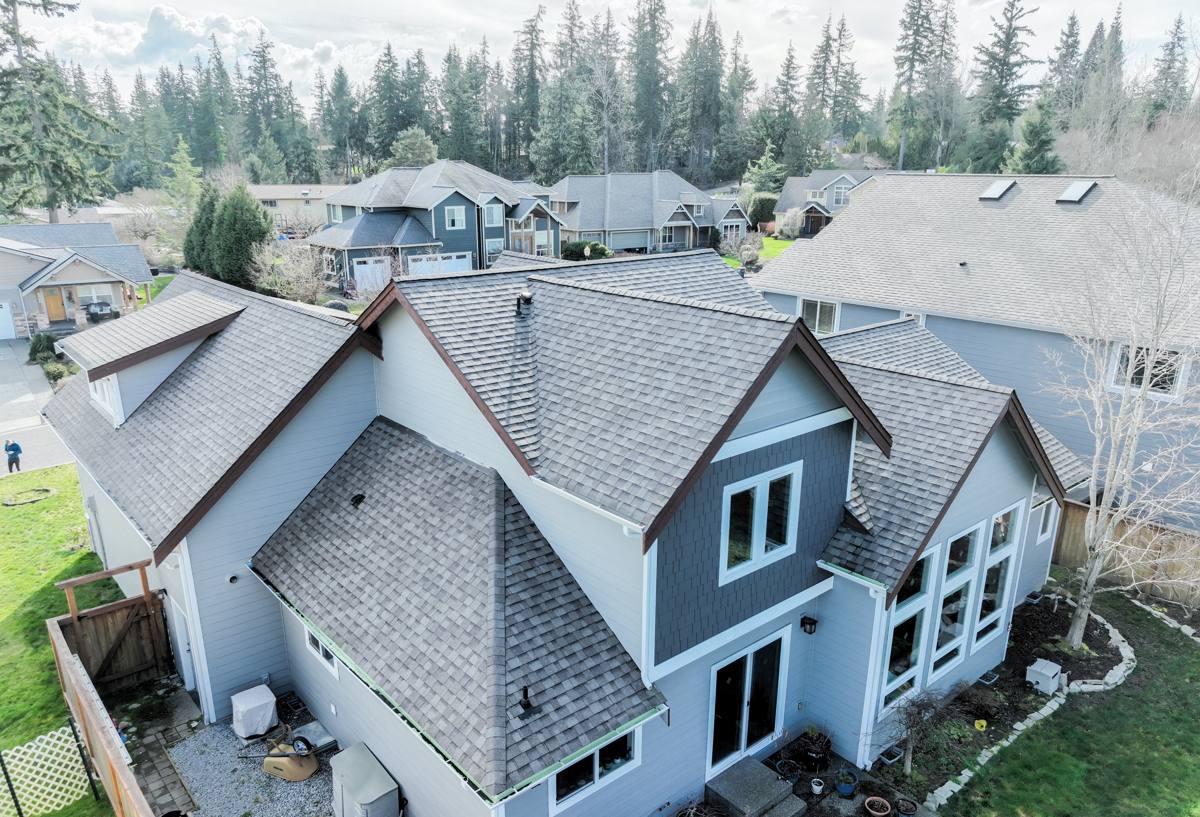
What We Install: James Hardie Fiber Cement, Exclusively
Tampa Siding Co made a deliberate decision to install only James Hardie fiber cement siding, and we don't install LP SmartSide, vinyl, Cemplank, Allura, or primed wood products. That's not a marketing position — it's a standard we hold because of what we see when we replace siding on Gulf coast homes.
Fiber cement is a non-combustible blend of cement, sand, and cellulose fibers. It doesn't soften in heat, it doesn't provide fuel in a fire, and it holds its shape and dimensional stability through Florida's humidity swings far better than wood-based or vinyl alternatives. James Hardie's ColorPlus finish is baked on at the factory using a process built specifically to resist UV fading and to hold up against coastal conditions, which matters enormously on a property this close to the water.
Hardie also engineers regional product lines — including HZ5 formulations built for climates with the kind of moisture and humidity exposure Pinellas County sees. That's a meaningful difference from a one-size-fits-all siding product: the material specified for a Clearwater home is formulated for the environment it's actually going into.
Why We Don't Install the Alternatives
| Material | Where it falls short in this climate |
|---|---|
| Vinyl siding | Can warp or distort in sustained high heat, and seams and panel edges are vulnerable to wind-driven rain intrusion during tropical storms. |
| LP SmartSide | Wood-strand substrate is more sensitive to moisture cycling than fiber cement; long-term performance depends heavily on flawless caulking and paint maintenance in a climate that's hard on both. |
| Primed spruce or cedar | Natural wood siding requires the most consistent maintenance of any option here, and humidity plus salt air shorten the window between repaints. |
| Cemplank / Allura | Also fiber cement, and reasonable products in their own right — we simply standardized on Hardie's factory finish, warranty structure, and regional product engineering. |
None of these are bad products in every setting. But for a home taking on hurricane winds, salt air, and year-round sun, we'd rather stand behind one material we trust completely than offer options we know will need more attention than a homeowner should have to give.
What a Correct Siding Replacement Involves
Replacing siding is not just removing old panels and nailing up new ones. On a Clearwater home, the work underneath the siding matters as much as the siding itself.
Tear-Off and Substrate Inspection
Once the old siding is off, we inspect the sheathing and framing for moisture damage, rot, or prior water intrusion — issues that are common on coastal homes and easy to miss until the wall is opened up. Any compromised substrate gets addressed before a single new panel goes on, because installing new siding over damaged sheathing just hides a problem that will resurface.
Weather-Resistive Barrier and Flashing
A correctly installed weather barrier and properly integrated flashing around windows, doors, and penetrations is what actually keeps wind-driven rain out of the wall assembly. This step is invisible once the siding is up, which is exactly why it's the step that separates a durable installation from one that fails quietly over a few years.
Fastening and Wind Rating
Fastener type, spacing, and placement all affect how siding performs in high wind. We install to the manufacturer's specifications for this wind exposure zone, not a generic pattern — Clearwater's storm exposure calls for it.
Joints, Caulking, and Trim Details
Butt joints, corners, and trim transitions are the most common places siding fails first. Correct detailing here — including appropriate gaps, sealant, and factory-matched trim — keeps water from tracking behind the siding at the seams.
Final Finish and Cleanup
ColorPlus panels arrive factory-finished, so there's no on-site painting required for color, which also means no wet paint schedule to work around. We complete a full walkthrough and site cleanup before calling the job done.
Our Process, Start to Finish
- Initial site visit: We inspect the current siding, look for underlying moisture or substrate issues, and measure the home.
- Product selection: We walk through Hardie's plank, panel, and shingle profiles and ColorPlus color options suited to your home's style and elevation exposure.
- Written estimate: A clear scope of work and cost breakdown, no vague allowances.
- Scheduling: We plan around Florida's wet season where possible to keep the project moving.
- Tear-off and prep: Removal of old siding, substrate inspection, and repair of any damaged sheathing.
- Weather barrier and flashing installation: The unseen work that determines long-term performance.
- Hardie siding installation: Installed to manufacturer spec for this wind exposure zone.
- Final walkthrough: We review the completed work with you before wrapping up.
What to Check Before You Hire Anyone
Siding work is highly visible and easy to get wrong in ways that don't show up for a year or two. Before hiring a contractor for a Clearwater siding replacement, it's worth confirming a few basics.
- Is the crew installing to the siding manufacturer's published specifications for this wind zone, or using a generic installation pattern?
- Are they licensed and insured to work in Pinellas County, and can they provide proof?
- Do they inspect and address substrate and moisture issues before installing new siding, or just cover what's there?
- Is the warranty a manufacturer-backed, transferable warranty, or a shorter workmanship-only guarantee?
- Have they worked on homes in this specific area, with this specific wind and moisture exposure, before?
A crew that already works Clearwater regularly has already seen how the local climate treats different products and details over time. That experience shapes decisions on flashing, fastening, and product selection that a contractor unfamiliar with Gulf coast exposure might not think to make.
Signs Your Clearwater Home May Need Siding Replacement
Siding damage on coastal homes doesn't always announce itself with a single obvious problem. It's usually a combination of smaller signs.
| Sign | What it usually means |
|---|---|
| Cupping, warping, or buckled panels | Moisture absorption or cycling has affected the material's dimensional stability. |
| Chalky, fading, or peeling paint | UV and salt exposure have broken down the surface finish faster than expected. |
| Soft spots when pressed | Possible rot or moisture intrusion behind the siding — worth inspecting before it spreads. |
| Visible gaps at seams or corners | Sealant failure or original installation gaps that allow wind-driven rain in. |
| Rising energy bills | Compromised siding and underlying weather barrier can reduce a wall assembly's insulating performance. |
What Siding Replacement Costs Depend On
We don't publish flat prices because every Clearwater home is different, but the main cost factors are consistent across projects.
- Home size and wall complexity: More corners, gables, and trim details mean more labor.
- Substrate condition: Rot or moisture damage discovered during tear-off adds repair scope.
- Siding profile and color: Lap, shingle, and panel profiles carry different material and labor costs.
- Access and site conditions: Landscaping, fencing, and setback can affect staging and labor time.
We provide a detailed written estimate after the site visit so you know exactly what you're paying for and why.
Ready for an Estimate?
If your Clearwater home's siding is showing wear from wind, sun, rain, or salt air, we're happy to take a look and give you an honest assessment — no pressure, no obligation. Fill out the form below to schedule a free estimate.