 Tampa Siding
 Building a Deck That Actually Holds Up in New Tampa
New Tampa's newer subdivisions were largely built for outdoor living — big backyards, covered lanais, and room for a deck that extends the house into the yard. But a deck here isn't just a carpentry project. It's a structure that has to survive a Florida climate that goes after wood and metal from every direction: hurricane-force wind gusts trying to lift it, intense year-round UV breaking down finishes and fibers, wind-driven rain forcing water into every joint, and humidity that never really lets lumber dry out between storms. Even well inland, air carried in off the Gulf during tropical systems brings enough salt to speed up corrosion on anything metal.
A deck built to a generic national spec, without accounting for that combination, tends to show problems early — cupped boards, rust streaks bleeding from fastener heads, soft spots around posts, railings that wiggle. None of that is inevitable. It's a sign the structure wasn't specified for this climate in the first place.
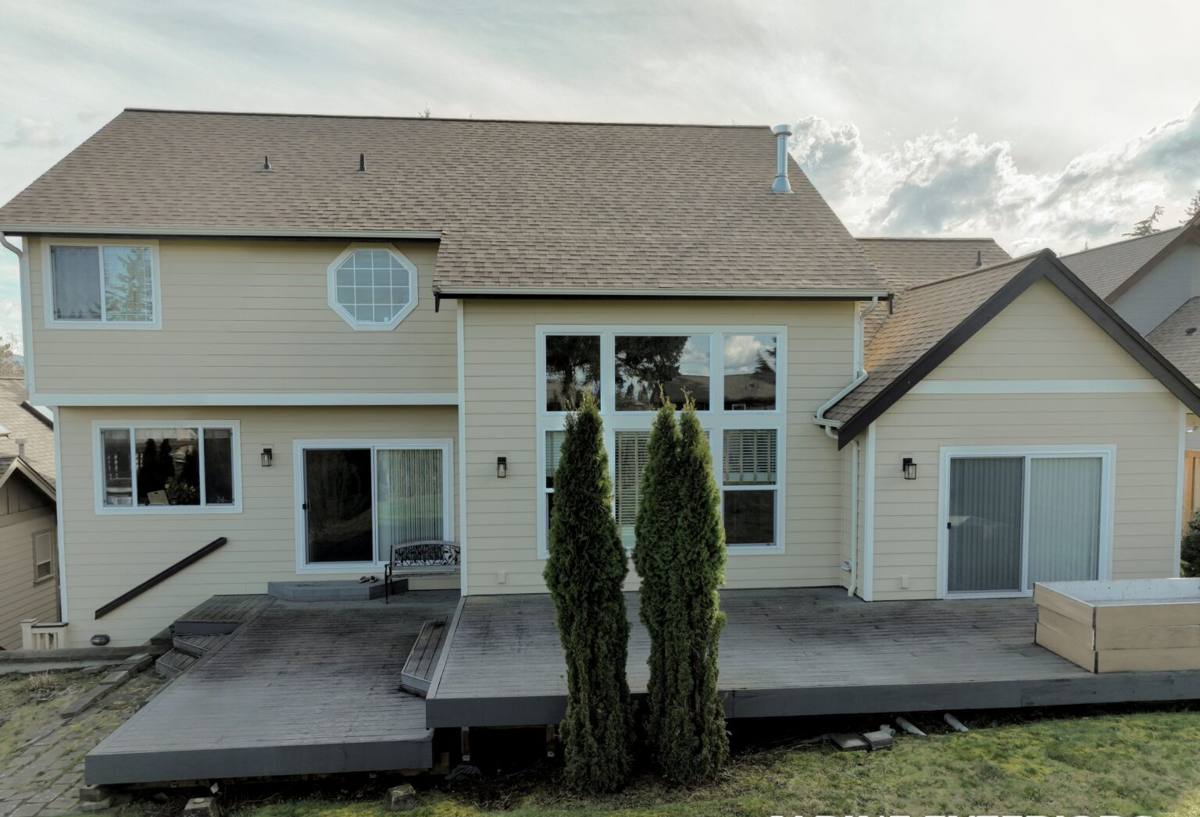
What Hillsborough County Weather Actually Does to a Deck
Wind uplift, not just wind pressure
Homeowners picture wind pushing on a deck. In practice, the more damaging force is uplift — wind curling under a deck surface or railing and trying to pull the whole assembly upward. Ledger connections, post bases, and railing posts all need hardware rated for that uplift, not just standard deck screws driven by feel.
Moisture that never fully dries
Between afternoon thunderstorms, high humidity, and wind-driven rain that gets pushed sideways under eaves and railings, decking and framing in this area spend more time damp than dry for long stretches of the year. Any detail that traps water against wood — a poorly flashed ledger, a joist end with no drip edge, decking laid tight with no drainage gap — becomes a rot starting point.
UV and heat cycling
Florida sun is harder on exposed materials than in most of the country. Finishes on wood chalk and fade faster, plastics can become brittle over years of expansion and contraction, and dark-colored composite decking runs hotter underfoot. Material choice and finish schedule both need to account for that, not just for the first year but for the life of the deck.
Choosing the Right Decking Material
There's no single "best" decking material — there's a best fit for the homeowner's budget, maintenance appetite, and how the deck will be used. We lay out the honest trade-offs rather than pushing one product line.
| Material | Upfront Cost | Maintenance | Climate Notes |
|---|---|---|---|
| Pressure-treated pine | Lowest | Annual cleaning + re-sealing recommended | Prone to cupping and checking if not sealed; needs a real maintenance schedule in this humidity |
| Tropical hardwood | High | Periodic oiling to hold color | Dense and durable, but sensitive to installation — needs pre-drilled fasteners and proper acclimation |
| Capped composite | Mid-high | Occasional washing, no sealing | Resists moisture and UV fade well; darker colors run hotter in direct summer sun |
| PVC decking | High | Lowest — soap and water | Fully moisture-proof, good for low areas or near pools, but can feel less like traditional wood underfoot |
For most New Tampa backyards, the deciding factor isn't which material is "toughest" — it's how much upkeep the homeowner actually wants to commit to over the next 15-20 years. We're honest that pressure-treated wood, done right, is a perfectly good deck; it just needs a homeowner who will keep up with sealing, where a composite or PVC deck trades a higher upfront cost for far less ongoing work.
Framing, Fasteners, and the Hardware Nobody Sees
The decking boards are what a homeowner walks on, but the framing underneath is what actually determines whether the deck survives a storm. This is where a lot of corner-cutting happens, because it's invisible once the boards go down.
Fastener grade matters more here than almost anywhere
Standard coated deck screws and nails are not built for a climate with this much humidity and periodic salt exposure. We specify stainless steel or high-grade hot-dip galvanized fasteners and structural connectors throughout — not just at the ledger, but at every joist hanger, post base, and railing bracket. Mismatched or under-rated fasteners are one of the most common reasons decks develop rust staining and loosen within a few years around here.
Ledger flashing and the house connection
The ledger board — where the deck attaches to the house — is the single most important connection on the entire structure, and also the most common source of hidden rot if flashed incorrectly. We flash it to shed water away from the house framing, not just seal it with caulk, which degrades under UV long before the deck's structural life is over.
Post bases and footings
Posts set directly in concrete, or resting on grade without a proper standoff base, stay damp at the base far longer in this climate than in drier regions. We use elevated post bases that keep the wood off wet concrete and grade, which meaningfully extends post life.
Permitting and Wind Requirements for a New Tampa Deck
Decks in Hillsborough County require a building permit, and the structure has to be engineered or designed to meet Florida Building Code wind load requirements for this region — that covers footing depth and size, post spacing, beam sizing, and the hardware rated for uplift resistance at every connection. This isn't optional paperwork; it's the same code review process that protects the rest of the house.
Skipping or shortcutting the permit process is a real liability for the homeowner, not just the contractor — an unpermitted structure can complicate a home sale, an insurance claim, or an HOA compliance review down the road. We handle the permit submission and schedule the required inspections as part of the job, so the homeowner isn't left chasing paperwork after the fact.
Our Deck Building Process
- Site visit and assessment — we look at grade, drainage, sun exposure, existing structure attachment points, and how the homeowner actually plans to use the space.
- Design and material selection — layout, decking material, railing style, and any add-ons like built-in seating or a pergola, matched to budget and maintenance preference.
- Permit submission — engineered plans submitted to the county, revisions handled on our end, not the homeowner's.
- Framing and structural inspection — footings, posts, beams, and joists built to the approved plan, inspected before decking goes down.
- Decking, railing, and finish work — boards, railings, stairs, and any trim or fascia installed and fastened per spec.
- Final walkthrough — we go over the finished deck with the homeowner, including a plain-English maintenance schedule for whatever material was chosen.
Nothing about that process is unusual — it's how a deck should be built anywhere. What changes for New Tampa is the specification at each step: hardware grade, footing depth, flashing detail, and fastener choice all get set for Hillsborough County's wind and moisture exposure rather than a generic national default.
What Actually Drives Deck Cost
Deck pricing varies enough by size, material, and site conditions that a flat per-square-foot number is misleading. The factors below move the price more than most homeowners expect.
| Cost Factor | Why It Matters |
|---|---|
| Height off grade | Taller decks need deeper footings, longer posts, and often stairs and additional railing |
| Decking material | Composite and PVC cost more upfront than pressure-treated wood but reduce long-term maintenance spend |
| Attachment method | Ledger-attached decks are typically less costly than free-standing decks, which need their own full footing set |
| Railing style | Cable, glass, or composite railing systems cost more than standard wood or aluminum baluster railing |
| Site access | Backyards with tight side-yard access or existing landscaping can add labor time for material delivery |
We walk through these factors during the estimate so the homeowner understands what's driving the number, rather than getting a single lump figure with no explanation behind it.
Maintenance by Material — What to Actually Expect
Every deck material needs some upkeep in this climate; the difference is how much and how often. Being upfront about this before the build avoids surprises later.
- Pressure-treated wood: clean and inspect yearly; re-seal every 1-2 years depending on sun exposure
- Tropical hardwood: oil periodically to maintain color, or allow it to weather naturally to gray
- Capped composite: rinse or wash occasionally; check fastener heads and railing hardware annually for corrosion
- PVC decking: wash as needed; still worth an annual check of structural fasteners underneath, since the framing beneath any decking material is still wood or metal
- All materials: inspect ledger flashing and post bases yearly, especially after hurricane season
Why It Matters That We Already Work in New Tampa
A deck crew that only shows up in this area once won't know which details tend to fail first in local conditions, how Hillsborough County's permit and inspection process typically runs, or what HOA design guidelines in New Tampa's planned communities usually require for setbacks, railing style, or fence-line decks. Working here regularly means we're not learning the local permitting office's expectations on the homeowner's job — we already know them, which keeps the timeline predictable instead of stalled on avoidable revisions.
It also means we're around after the build. If a fastener starts to show rust, a board cups, or a railing connection loosens after a storm, a local crew can get back out to look at it without the homeowner starting from scratch with someone new.
Signs an Existing Deck Needs Attention
Not every deck problem means a full rebuild, but a few signs are worth a professional look before they get worse:
- Soft or spongy spots in decking, especially near the ledger or post bases
- Rust streaking below screw heads or metal connectors
- Railing posts that flex or wiggle under hand pressure
- Visible gaps or dark staining where the deck meets the house
- Boards that have cupped, split, or pulled away from fasteners
Any of these can point to a moisture or hardware issue that's still fixable — waiting usually just narrows the options to a full rebuild instead of a repair.
If you're planning a new deck in New Tampa or want an honest look at an existing one, we're happy to walk the site and give a straightforward, no-pressure estimate — just fill out the form below.