 Tampa Siding
 Building Decks for Town 'n' Country's Climate
Town 'n' Country sits in unincorporated Hillsborough County just west of downtown Tampa, and like the rest of the Tampa Bay area, it gets the full range of what Florida weather can throw at an outdoor structure. Long, humid summers. Intense, near-daily UV exposure. Afternoon thunderstorms that dump heavy rain in short bursts. And the real possibility of hurricane-force wind during storm season. A deck built here isn't just an outdoor living space — it's a structure that has to survive conditions a lot harsher than what most national deck-building guides assume.
We build decks specifically with this in mind: the right lumber and fastener choices, the right drainage details, and framing that meets Florida Building Code wind and load requirements for this county. This page walks through what actually goes into a deck that holds up in Town 'n' Country, not a generic backyard project.
What Local Homes Need From a Deck
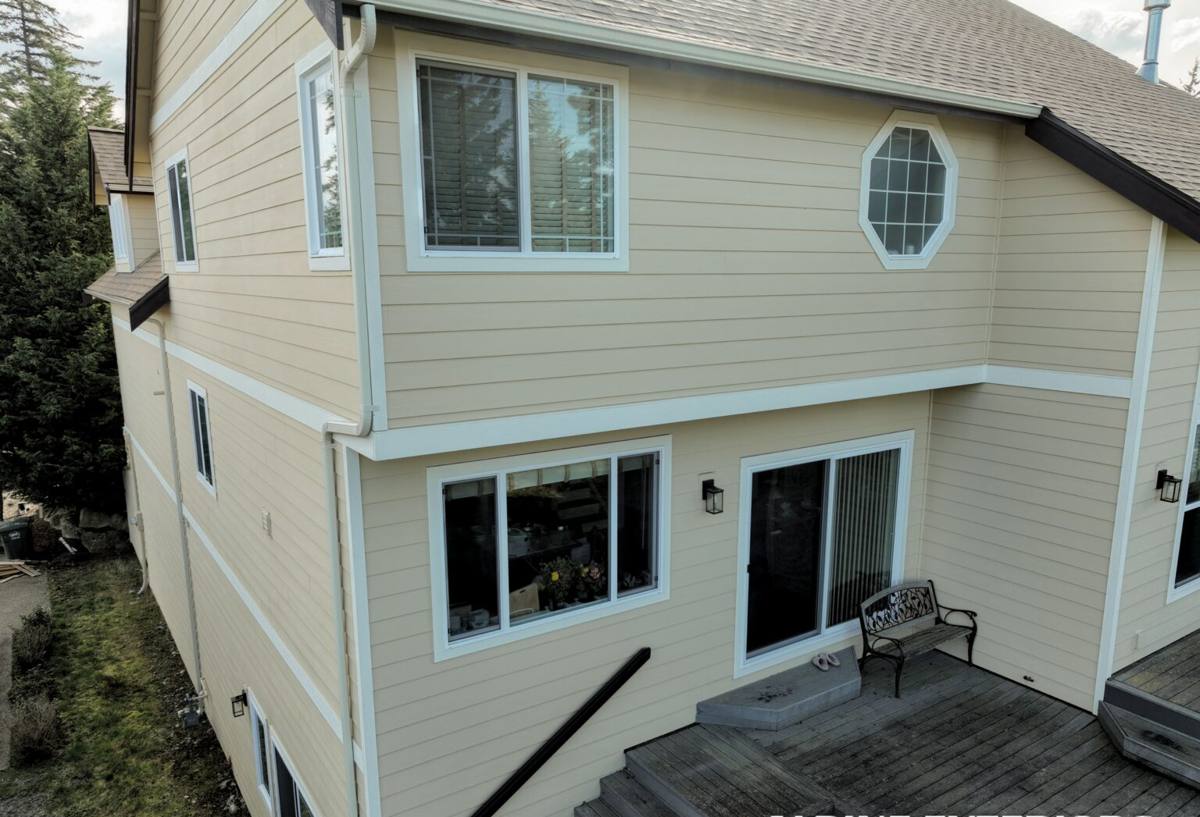
Most homes in this part of Hillsborough County are slab-on-grade with modest lot sizes, which means decks here tend to serve double duty — outdoor dining, a landing zone off a back door or lanai, or a transition space to a pool. A few things come up again and again on jobs in this area:
- Shade and sun exposure — western and southern exposures take brutal afternoon sun for most of the year, which accelerates fading and checking on unprotected wood.
- Ground moisture — Tampa's flat terrain and heavy rain events mean poor drainage under and around a deck shows up fast as rot, mold, or standing water.
- Wind uplift — any deck attached to the house needs proper ledger attachment and structural connectors rated for the wind loads this area is designated for.
- Humidity-driven wood movement — lumber that isn't properly dried or spaced will cup, twist, or split within a season or two here.
Design Considerations Specific to This Area
Orientation and Shade
Before we talk materials, we look at how the deck sits relative to the sun. A west-facing deck with no shade structure will be nearly unusable during summer afternoons and will bake any decking material faster than one with morning-only exposure. Where the layout allows, we'll talk through pergolas, shade sails, or simply orienting seating areas to take advantage of existing shade from the house or trees.
Drainage Underneath
Flat lots and clay-heavy soil in parts of Hillsborough County mean water doesn't always drain away from a house on its own. For low-to-grade decks, we grade the ground underneath away from the foundation and often add gravel or a proper drainage layer so the space under the deck doesn't turn into standing water after a summer storm. This is a detail that's easy to skip and expensive to fix later.
Attachment to the House
A deck ledger board bolted to a house wall is one of the most common failure points in wind events if it's not done correctly. We use proper lag or through-bolt fastening into rim joists or framing (never just into siding or sheathing), with flashing installed to keep water from getting behind the ledger and into the house structure — a detail that matters even more given how much rain this area sees.
Material Choices: What Holds Up Here
There's no single "correct" decking material for every project — it depends on budget, maintenance tolerance, and how the space will be used. Here's how the common options actually perform in a hot, humid, storm-prone climate like Tampa Bay's:
| Material | Sun/Heat Performance | Moisture Behavior | Maintenance |
|---|---|---|---|
| Pressure-treated pine | Fades and can check/splinter without regular sealing | Treated for rot resistance but still needs sealing to shed water well | Annual cleaning and resealing recommended |
| Composite decking | Stays cooler and more stable than wood; capped boards resist fading better | Doesn't rot or swell; handles wind-driven rain well | Occasional washing; no sealing or staining |
| Tropical hardwoods (e.g., ipe) | Naturally dense and UV-tolerant, but color fades to gray without upkeep | Excellent natural rot and insect resistance | Periodic oiling to maintain color; otherwise low |
| PVC decking | Very stable in heat, resists fading well with quality products | Fully moisture-proof, unaffected by wind-driven rain | Lowest maintenance of the group |
For most Town 'n' Country homeowners, the choice comes down to composite or PVC decking for a low-maintenance deck that handles humidity and UV without much upkeep, versus pressure-treated wood for a lower upfront cost with a commitment to annual maintenance. We'll walk through the honest tradeoffs for your specific project rather than pushing one product line.
Framing and Hardware: The Part You Don't See
The decking boards get all the attention, but the framing underneath is what determines whether a deck survives storm season for twenty years or needs repair in five. In this climate, that means:
- Hot-dip galvanized or stainless structural connectors and fasteners — standard hardware corrodes faster near the coast and in consistently humid conditions.
- Joist hangers and post bases rated for the wind exposure category applicable to the site.
- Proper post footing depth and sizing per Hillsborough County code, not just what "looks sturdy."
- Flashing and moisture barriers at every point where framing meets the house.
Salt air exposure is less of a factor this far inland than it is right on the coast, but wind-driven rain and near-constant humidity still take a toll on cheap or mismatched hardware over time. We spec connectors and fasteners rated for the conditions, not just what's cheapest at the lumber yard.
Permitting and Code in Hillsborough County
Deck construction in unincorporated Hillsborough County requires a building permit in nearly all cases, along with inspections at key stages — footings, framing, and final. Skipping this isn't just a compliance issue; it affects your homeowner's insurance and resale, since an unpermitted structure can become a problem when you go to sell. We handle the permit application and coordinate inspections as part of the job, so you're not left figuring out county requirements on your own.
Our Process, Start to Finish
- On-site assessment — we look at your lot, sun exposure, drainage, and how the deck connects to your house before recommending a layout or material.
- Design and material selection — we walk through the honest tradeoffs between wood, composite, and PVC based on your budget and maintenance preferences.
- Permitting — we prepare and submit the permit application to Hillsborough County and schedule required inspections.
- Site prep and footings — proper footing depth and placement, with attention to drainage under the structure.
- Framing — corrosion-resistant hardware, correctly attached ledger board, and joist spacing built for the decking material chosen.
- Decking and finish work — boards, railing, and any stairs installed to spec, followed by final inspection.
- Walkthrough — we go over care and maintenance specific to the material installed so it lasts as long as it should.
What a Deck Actually Costs to Build Right
Every project is different, but the biggest cost swings come from a handful of factors. This isn't a quote — it's a guide to what moves the number up or down.
| Factor | Impact on Cost |
|---|---|
| Decking material (PT wood vs. composite vs. PVC vs. hardwood) | Largest single factor; composite and PVC cost more upfront but less over time |
| Deck height and footing complexity | Elevated decks need deeper footings and more structural bracing |
| Size and shape | Multi-level or non-rectangular layouts add labor and material waste |
| Railing style | Cable, glass, or composite railing costs more than basic wood balusters |
| Site access and drainage work | Poor existing drainage may require added grading or gravel base |
Maintenance Checklist for Tampa Bay Conditions
Whatever material you choose, a few habits make a real difference in how long a deck holds up in this climate:
- Rinse off pollen, dirt, and salt residue every few months, especially after storms.
- Check fastener heads and connectors annually for corrosion or loosening.
- Reseal or re-stain wood decking at least once a year; more often on unshaded, west-facing sections.
- Clear leaves and debris from between boards so moisture doesn't sit and trap heat/humidity against the wood.
- Inspect the ledger board attachment and flashing yearly for signs of water intrusion into the house wall.
Why a Local Tampa Crew Matters
Hillsborough County's permitting requirements, typical soil conditions, and wind exposure categories aren't the same everywhere in Florida, let alone the country. A crew that already works in Town 'n' Country and the surrounding Tampa area knows the county's inspection process, understands how local lots drain, and has already worked through the material tradeoffs that hold up against this specific climate — not a generic "Florida" spec sheet. That familiarity shows up in fewer surprises during permitting, fewer callbacks for drainage or fastener issues, and a deck that's actually built for what this area experiences every summer.
If you're planning a new deck or replacing one that didn't hold up, we're happy to come take a look and talk through what makes sense for your home. Reach out for a free, no-pressure estimate using the form below.