 Tampa Siding
 Windows Built for Temple Terrace, Not Just "Florida"
Temple Terrace has a lot of established, mature neighborhoods with homes that have been standing for decades. That's part of the charm of the area, but it also means a large share of the window stock here is original or was replaced once, a long time ago, with whatever was standard at the time. Aluminum single-pane frames, old single-hung units with tired weatherstripping, and glass that was never rated for the storms this part of Hillsborough County actually sees are all common. A window that was fine in 1985 is not doing your energy bill, your comfort, or your storm protection any favors today.
This page is specifically about energy-efficient window replacement for homes in Temple Terrace — what the local climate demands, what a correct installation looks like, and what to expect from a crew that actually works this area regularly rather than treating it as a stop on the way to somewhere else.
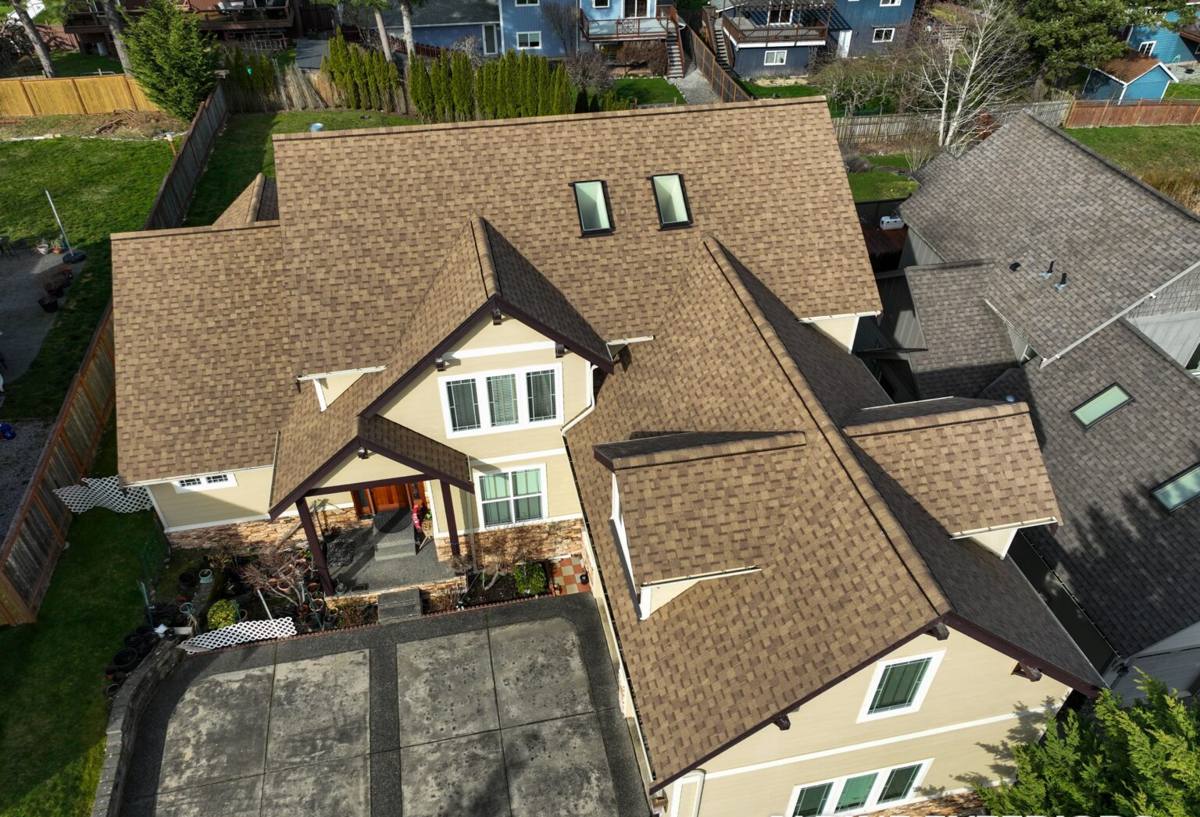
What Tampa Bay's Climate Does to Windows
Every window on a Temple Terrace home is fighting the same combination of stresses year-round:
- Intense, near-constant UV exposure — breaks down vinyl, seals, and low-quality glazing coatings faster than in most of the country.
- Hurricane-force wind loads — even homes that never take a direct hit still get pushed by tropical storms and squall lines most seasons.
- Wind-driven rain — Tampa storms don't just fall straight down; rain gets forced sideways into any gap in flashing, seals, or frame joints.
- Salt-laden, humid air — Temple Terrace isn't beachfront, but this is still a coastal air mass, and salt-heavy humidity corrodes weak hardware and fasteners over time.
A window designed for a mild inland climate simply wasn't engineered for this combination. That's why "energy-efficient" here has to mean more than a good U-factor — it has to hold up physically to what this region throws at it, or the energy performance won't last anyway.
What "Energy-Efficient" Actually Means
Energy-efficient windows work on three fronts: they block unwanted heat gain, they stop conditioned air from leaking out, and they hold that performance for the life of the product. In practice, that comes down to a short list of specs worth understanding before you buy anything.
Low-E Glass and Solar Heat Gain
Low-emissivity (Low-E) coatings are microscopically thin layers on the glass that reflect infrared heat while still letting visible light through. For a Tampa-area home, the number that matters most is SHGC (Solar Heat Gain Coefficient) — lower SHGC means less of the sun's heat makes it through the glass into your living space, which matters enormously here given how many months a year the AC is running.
U-Factor and Insulation
U-factor measures how well a window resists heat transfer overall. Lower is better. Double-pane construction with an argon or krypton gas fill between panes, paired with a Low-E coating, is the standard combination for keeping conditioned air where it belongs.
Air Infiltration
A window's rated efficiency means nothing if it's not installed and sealed correctly. Gaps around the frame let humid outside air in and cooled air out regardless of what the glass is rated for — installation quality is often the difference between a window performing as advertised and one that underperforms from day one.
Impact-Rated vs. Standard Windows in Hillsborough County
Florida Building Code requires wind-borne debris protection for homes in the wind-borne debris region, which covers Hillsborough County. That protection can be met either with impact-rated windows or with standard windows plus code-compliant shutters or panels. For most Temple Terrace homeowners doing a full window replacement, it makes sense to weigh both approaches rather than assume one is automatically right.
| Factor | Impact-Rated Windows | Standard Windows + Shutters |
|---|---|---|
| Upfront cost | Higher per window | Lower window cost, added shutter cost |
| Storm prep effort | None — always in place | Manual install/removal each storm |
| Daily UV & noise reduction | Better, even on clear days | No benefit outside of storm events |
| Appearance | Clean, no visible hardware | Shutter tracks/hardware visible |
| Insurance considerations | May help with wind mitigation credits | Depends on shutter type and rating |
Neither option is wrong, and the right call depends on your budget and how much you value not having to prep the house every time a storm is tracking toward the Bay. We'll walk you through both honestly rather than pushing whichever is more profitable for us.
Frame Materials That Hold Up Here
Frame material choice matters as much as the glass package in this climate:
Vinyl
Good insulator, low maintenance, and reasonably priced. Quality varies a lot between manufacturers — thinner, lower-grade vinyl can warp or discolor under sustained Florida UV faster than a homeowner expects. We only install vinyl products built with UV-stabilized formulations suited to this climate.
Fiberglass
More dimensionally stable than vinyl across temperature swings and generally the most durable option against long-term sun exposure, at a higher price point. A solid choice for homeowners planning to stay long-term and wanting the lowest-maintenance option.
Aluminum
Strong and slim-profile, which some Temple Terrace homeowners prefer for a more modern look, but it conducts heat more readily than vinyl or fiberglass unless it has a proper thermal break. We're selective about when we recommend it for that reason.
Signs Your Current Windows Are Working Against You
You don't need to guess about whether replacement makes sense. A few practical signs to check around your own home:
- Rooms near windows feel noticeably hotter than the rest of the house in the afternoon
- You can feel air movement at the frame edges when the AC is running and it's windy outside
- Condensation forms between panes (a sign the seal has failed and the gas fill is gone)
- Frames are chalky, cracked, or discolored from years of sun exposure
- Windows are difficult to open, close, or lock — often a sign of frame warping
- You hear more street or storm noise than seems normal for double-pane glass
Any one of these is worth a conversation. Several at once usually means the windows are past the point where caulking or weatherstripping repairs will meaningfully help.
Our Installation Process
A correct window installation in this climate has a few non-negotiable steps, regardless of which product line we're installing:
- On-site assessment — we measure every opening individually (older Temple Terrace homes are rarely perfectly square) and check for existing water damage or rot around the frames before quoting anything.
- Product selection based on the specific opening — sun exposure, wall construction, and whether the opening faces prevailing storm winds all factor into the recommendation.
- Removal and inspection — once the old window is out, we check the framing and sill for hidden moisture damage, which is common in older installs and needs to be addressed before the new unit goes in.
- Correct flashing and sealing — this is where wind-driven rain either gets stopped or gets in. We flash and seal to shed water, not just to look finished.
- Fastening to code — impact and non-impact units both have specific fastening schedules; skipping steps here is how windows fail in a storm regardless of how good the glass is.
- Final check and cleanup — every unit gets tested for smooth operation and a proper seal before we consider the job done.
What to Look for When Hiring
Whoever you hire for window replacement, a few basics protect you regardless of the brand or price point:
- Proper Florida contractor license and insurance — ask to see it, don't just take their word
- Written product specs (U-factor, SHGC, impact rating if applicable), not just a verbal promise
- A clear explanation of local permitting — window replacement in Hillsborough County typically requires a permit and inspection
- A written warranty covering both the product and the labor, not just the manufacturer's glass warranty
- Willingness to explain trade-offs between options instead of steering you to one product line automatically
Why a Crew That Works Temple Terrace Regularly Matters
Window replacement here isn't the same job as window replacement in a drier, milder climate, and it isn't identical to work done ten miles away on newer construction with different wall systems. A crew that regularly works in Temple Terrace and the surrounding Tampa area already knows what to expect from the area's older framing, understands Hillsborough County's permitting process without it slowing the job down, and has already seen what happens when flashing or fastening is done wrong in this climate — because they've been called back to fix it. That familiarity shows up in fewer surprises during the job and a longer-lasting result once it's done.
If you're weighing window replacement for a Temple Terrace home, we're happy to walk the property, look at what's there now, and lay out real options with honest cost and performance trade-offs — no pressure, no hard sell. Fill out the form below for a free estimate.