 Tampa Siding
 Roofing Built for Wesley Chapel's Weather, Not Just Any Roof
Wesley Chapel has grown fast, and a lot of that growth means roofs going up on tight construction schedules using whatever materials and labor happened to be available at the time. Some of those roofs were installed correctly. Some were not. When it's time to replace yours, the goal isn't just to get a new roof on the house — it's to get one that's actually built for what this part of Hillsborough County throws at it year after year: hurricane-force wind gusts, sun that beats down nearly every day of the year, wind-driven rain that finds every weak seam, and salt-laden air drifting inland from the Gulf. A new roof installation here is a chance to correct whatever the last roof got wrong, not just replicate it.
We install new roofs throughout Wesley Chapel and the surrounding Tampa area, and we approach every job the same way: as a system, not a single layer of shingles. The decking, the underlayment, the flashing, the ventilation, and the final roof covering all have to work together to hold up under Florida conditions. Skip or shortcut any one of those and the whole system is weaker than its weakest part.
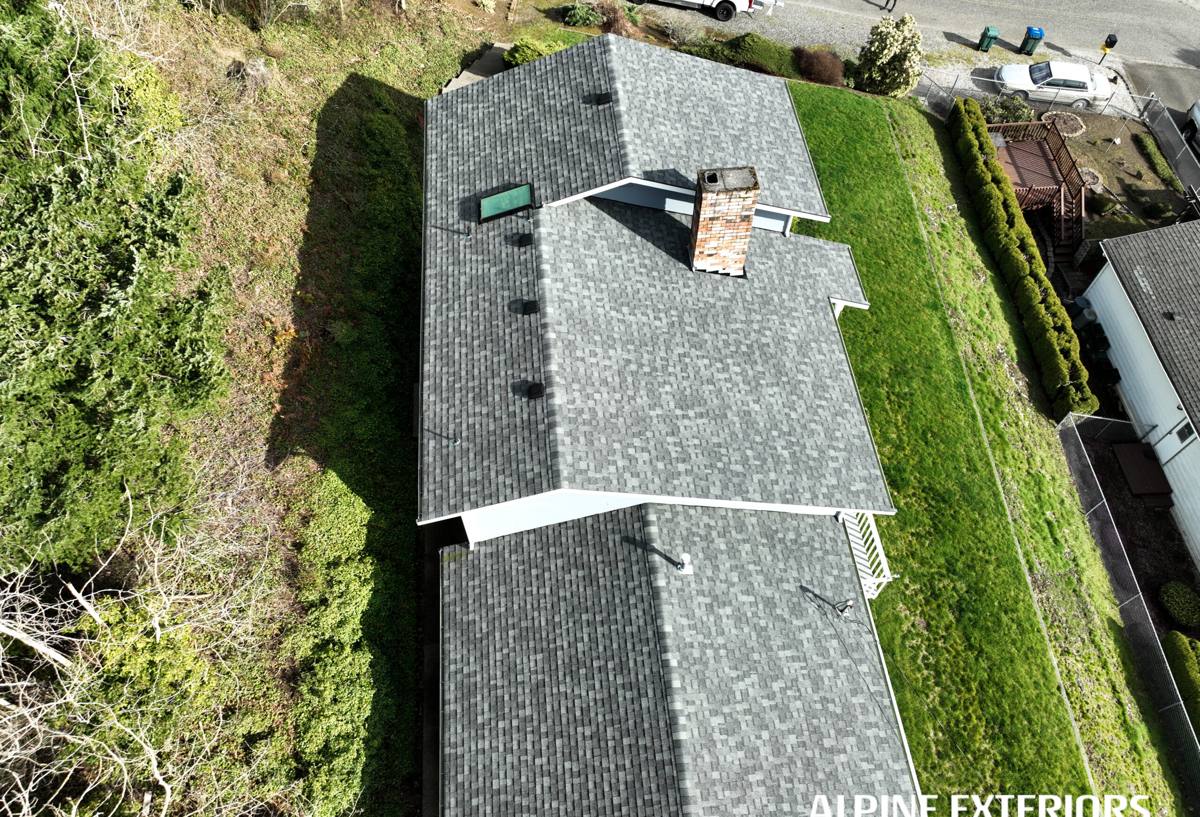
Why Wesley Chapel's Climate Demands More From a New Roof
Wind Load
Wesley Chapel sits inland from the coast, but that doesn't mean it's exempt from hurricane-force wind events. Tropical systems that track across Central Florida can still deliver sustained winds and gusts strong enough to lift improperly fastened shingles, pull flashing loose, or peel back an underlayment that wasn't sealed at the laps. A correctly installed roof accounts for wind uplift at every layer, not just at the shingle nailing pattern.
UV Exposure
Florida sun is relentless, and Wesley Chapel gets it nearly every day of the year. UV breaks down asphalt oils in shingles over time, dries out sealant strips, and accelerates aging on any roofing material that isn't rated for high-UV climates. A roof that would last three decades in a milder climate can lose years of service life here if the wrong product or a poor installation lets that UV exposure do its worst.
Wind-Driven Rain
Florida storms rarely fall straight down. Wind-driven rain gets pushed sideways and upward under shingle edges, around vent pipes, and along valleys — exactly where a lot of roof leaks actually start. This is why underlayment selection and flashing detail work matter as much as the shingles themselves. A beautiful shingle job over sloppy flashing will still leak.
Salt Air
Wesley Chapel is far enough inland that salt exposure is lighter than it is on the coast, but Tampa Bay air still carries salt content that can accelerate corrosion on exposed metal fasteners, flashing, and vent components over the life of a roof. Choosing corrosion-resistant hardware and properly coated metal isn't overkill here — it's just accounting for the environment.
What a Correct New Roof Installation Actually Involves
A roof replacement is more than tearing off old shingles and nailing down new ones. Here's what should happen on any new roof installation in this climate:
- Full tear-off and deck inspection — every layer of old roofing removed down to the deck, with the deck checked for soft spots, rot, or delamination before anything new goes down
- Deck repair or replacement — any damaged plywood or OSB sheathing replaced, not covered over
- Proper underlayment — a water-resistant or self-adhering underlayment appropriate for Florida's wind-driven rain, installed with correctly overlapped seams
- Ice-and-water-style membrane at vulnerable zones — valleys, eaves, and roof penetrations get additional sealed protection where leaks are most likely to start
- Drip edge and flashing at every transition — roof edges, valleys, walls, chimneys, and skylights all flashed correctly, not just caulked
- Correct fastening pattern for wind zone — nailing schedule that meets or exceeds what Hillsborough County's wind exposure requires
- Balanced attic ventilation — intake and exhaust ventilation sized to move heat and moisture out of the attic, which protects the deck and the shingles from beneath
- Final inspection and cleanup — magnetic sweep for stray nails, full site cleanup, and a walk-through before we call the job done
Roofing Material Options for Wesley Chapel Homes
There's no single "best" roofing material for every home — it depends on budget, roof style, HOA requirements (common in many Wesley Chapel communities), and how long you plan to stay in the home. Here's how the common options compare for this climate:
| Material | Typical Lifespan | Wind Performance | Notes for This Climate |
|---|---|---|---|
| Architectural asphalt shingles | 20-30 years | Good, with proper fastening and high-wind rated products | Most common choice; wide style and color range; budget-friendly |
| 3-tab asphalt shingles | 15-20 years | Fair | Lower upfront cost but shorter service life under intense UV; less common in new installs today |
| Metal roofing (standing seam) | 40-60 years | Excellent | Strong wind and UV performance; higher upfront cost, lower long-term maintenance |
| Tile (concrete or clay) | 40-50+ years | Excellent when properly installed | Common on higher-end Florida homes; heavier, requires structural consideration; installation quality is critical |
Whatever material fits your home and budget, the installation detail work — flashing, underlayment, ventilation, fastening — matters more to how long the roof actually performs than the brand name on the shingle wrapper.
Signs a Wesley Chapel Roof Needs Replacing, Not Patching
Not every roof problem calls for a full replacement, but there's a point where repeated patching stops making financial sense. Common signs we look for when evaluating a roof:
- Granule loss heavy enough to expose the shingle mat underneath, especially on south- and west-facing slopes
- Shingles that are curling, cupping, or cracking across multiple areas of the roof
- Soft or spongy decking felt underfoot during inspection, a sign of moisture intrusion
- Recurring leaks in different spots after previous repairs
- Visible daylight through the attic decking
- A roof approaching or past its expected service life for its material type
If your roof shows a couple of isolated issues and is otherwise sound, a repair may genuinely be the right call — we'll tell you that instead of pushing a replacement you don't need yet.
Our New Roof Installation Process
1. On-Site Evaluation
We inspect the existing roof, the attic, and the deck condition, and talk through material options based on your home, your budget, and your timeline.
2. Written Estimate
You get a clear, itemized estimate — materials, scope of work, and timeline — before any work begins. No vague allowances, no surprise change orders sprung on you mid-project.
3. Permitting
New roof installations in Hillsborough County require a permit and inspection. We handle that process as part of the job, so the work is documented and up to code.
4. Installation
Tear-off, deck repair as needed, underlayment, flashing, ventilation, and final roof covering — installed in the sequence and detail described above, not shortcut to save a day of labor.
5. Final Walk-Through and Cleanup
We walk the property with you, sweep for debris and stray fasteners, and make sure you understand your new roof's warranty coverage before we consider the job finished.
Why It Matters That We Already Work in Wesley Chapel
A crew that regularly works Wesley Chapel roofs already knows the local permitting process, has a working relationship with Hillsborough County inspectors, and has seen firsthand how different roofing systems hold up in this specific stretch of Tampa's climate over multiple storm seasons. That's different from a crew installing a Florida-spec product for the first time or one that primarily works a different climate zone. It shows up in the small decisions — which underlayment to use in a shaded valley, how much ventilation a particular attic layout actually needs, where flashing tends to fail on the roof styles common in this area — that don't show up in a sales brochure but do show up in how the roof performs five and ten years down the road.
It also matters for warranty support. If a manufacturer warranty ever needs to be invoked, having a local, established contractor of record makes that process far more straightforward than trying to track down an out-of-town crew that's moved on to the next region.
Get a Free, No-Pressure Estimate
If your Wesley Chapel roof is showing its age or you just want an honest read on its remaining life, we're happy to take a look. The estimate is free, there's no pressure to commit to anything on the spot, and you'll get a straight answer about whether you need a full replacement or something less. Fill out the form below to get started.