 Tampa Siding
 Tampa Bay Weather Puts Carrollwood Roofs to the Test
Carrollwood sits inland from Tampa Bay, but "inland" doesn't mean sheltered. Roofs here still take a beating from the same weather that hits the rest of Hillsborough County: tropical systems that bring sustained hurricane-force winds and hours of wind-driven rain, a summer stretch of near-daily afternoon thunderstorms, and UV exposure that runs strong essentially year-round. Add in the salt-laden air that drifts well inland from the Gulf and the bay on a normal breezy day, and you've got a combination that ages roofing materials faster than almost anywhere in the country.
None of that is unique to Carrollwood specifically, but it's the reality every roof in this part of Tampa has to deal with, and it's why a repair here needs to be done with that climate in mind — not with a generic patch that works fine in a milder climate but fails within a season or two in ours.
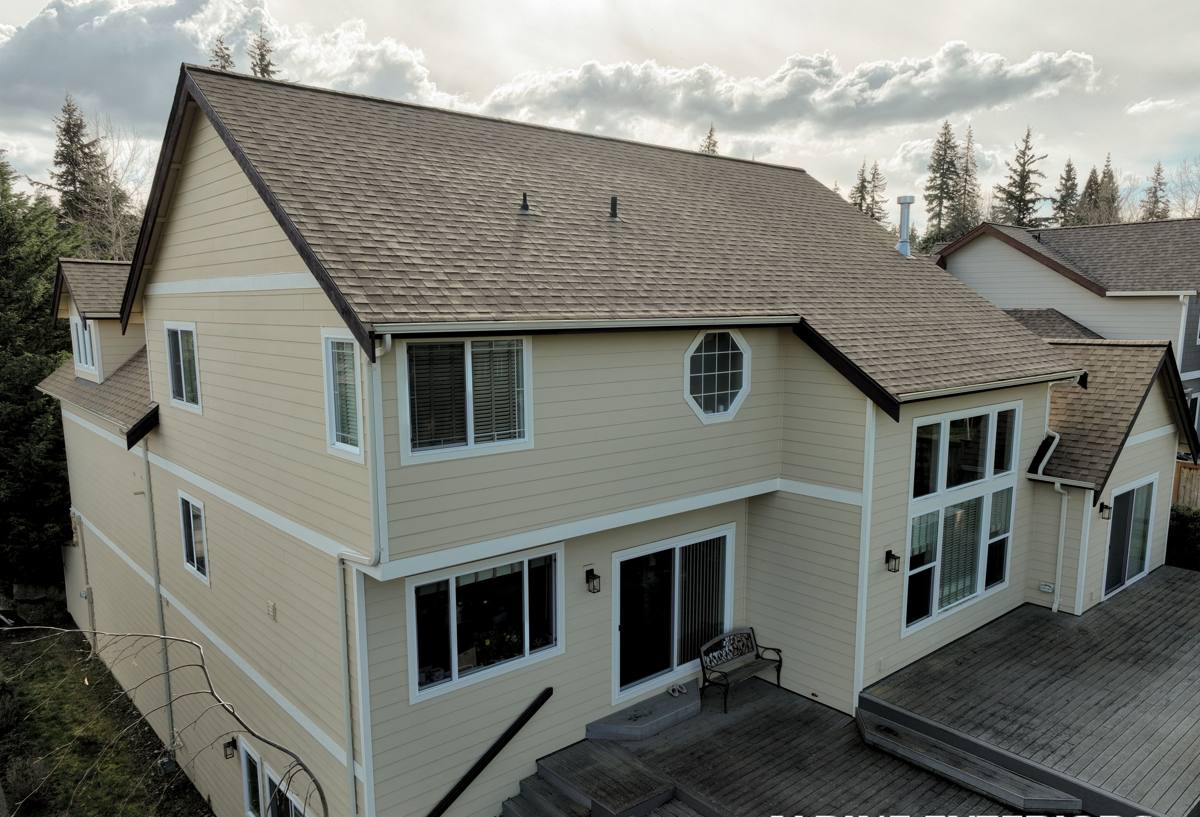
Signs Your Carrollwood Home Needs Roof Repair
Roof damage in this climate doesn't always show up as an obvious hole or missing section. More often it's subtle, and homeowners don't notice until there's a stain on a ceiling or a spike in the electric bill from heat getting into the attic. Common early signs we see on repair calls in this area include:
- Curling, cracking, or granule loss on shingles, usually worse on the sides of the roof that face the most sun
- Lifted or missing shingles after a windstorm, even if the storm wasn't severe enough to make the news
- Soft spots in the decking, often found around vent boots, chimneys, or skylights
- Rust streaks or gaps at flashing points — valleys, wall intersections, and anywhere metal meets roofing material
- Ceiling stains, especially ones that appear after a heavy rain and then seem to dry up and disappear
- Granules collecting in gutters or at the base of downspouts
- A musty smell in the attic, which usually means moisture has been getting in for a while
Any one of these on its own might be minor. Several at once, or damage that keeps recurring in the same spot, usually means there's a bigger problem underneath that a surface patch won't fix.
What a Correct Roof Repair Actually Involves
A roof repair is only as good as the diagnosis behind it. Slapping sealant on a visible crack or nailing down a lifted shingle can hide a symptom for a while, but if the underlying cause isn't addressed, the same spot fails again — usually during the next storm, which is the worst possible time to find out.
Diagnosing the Real Problem
Before any repair starts, we look at the whole system, not just the spot that's leaking or visibly damaged. Water travels. A stain on a bedroom ceiling might trace back to a flashing failure several feet away, or to wind-driven rain forcing its way under shingles that are otherwise intact. We check the roof deck for soft or delaminated sections, inspect the underlayment where it's exposed, and look at how water is actually moving across the roof and through the valleys and penetrations, not just where it's showing up inside the house.
Matching Materials and Techniques
Repairs need to match what's already on the roof — not just the shingle color and profile, but the underlying materials. Mixing incompatible products, or using a repair shingle with a different wind rating than the rest of the roof, creates a weak point that shows up the next time high winds move through. On older roofs, exact shingle matches aren't always available, and we'll tell you honestly when a repair is going to be a visible patch versus a blended fix, and when the smarter long-term move might be replacing a larger section instead of patching piecemeal.
Flashing, Ventilation, and the Details That Get Skipped
Most leaks that come back after a "repair" trace to flashing that was resealed instead of properly replaced, or to ventilation that was left alone during the fix. Flashing around chimneys, walls, skylights, and in valleys is a common failure point in wind-driven rain, and caulking over old flashing is a short-term fix at best. We also check attic ventilation as part of any repair — poor airflow bakes shingles from underneath in our summer heat and can shorten the life of an otherwise sound roof, repair or not.
Repair or Replace? How We Help You Decide
Not every roof problem needs a full replacement, and not every roof is a good candidate for another round of patching. We walk you through the honest tradeoffs rather than defaulting to whichever option is more profitable for us.
| Factor | Repair Usually Makes Sense | Replacement Is Often Smarter |
|---|---|---|
| Roof age | Under 10-12 years, especially with a light repair history | Nearing or past manufacturer's expected service life |
| Damage extent | Isolated to one section or a single cause (one storm, one flashing point) | Spread across multiple slopes or recurring in different spots |
| Decking condition | Solid, dry decking under the damaged area | Soft, delaminated, or water-stained decking in multiple areas |
| Shingle match | Matching materials still available or close enough | Discontinued product, faded roof where patches will stand out badly |
| Insurance situation | Isolated storm damage covered as a repair claim | Widespread wind or hail damage covered as a full-slope or full-roof claim |
We'll always give you our honest read on which column your roof falls into, in writing, before any work starts.
Our Process From Call to Cleanup
- Inspection: We get on the roof (and in the attic when needed) to find the actual source of the problem, not just the visible symptom.
- Written estimate: You get a clear explanation of what's wrong, what we recommend, and what it costs — no vague line items.
- Material match: We source shingles, flashing, and underlayment that match your existing roof system as closely as possible.
- The repair: Proper tear-out of the damaged area, deck repair if needed, new underlayment, correct flashing work, and shingles installed to match wind-resistance specs, not just appearance.
- Cleanup and walkthrough: Nails and debris cleared from the yard and gutters, and we walk the finished repair with you before we call the job done.
Straightforward repairs are often finished in a single day. Jobs involving deck replacement, multiple flashing points, or storm damage across more than one section of roof typically take longer, and we'll tell you a realistic timeline upfront rather than a best-case guess.
Why a Crew That Already Works Carrollwood Matters
A roof repair company that regularly works in this part of Tampa knows things a crew driving in from across the metro doesn't. That includes which permit and inspection process applies through Hillsborough County and the City of Tampa depending on where a property sits, how HOA architectural guidelines in some Carrollwood communities affect shingle color and style choices, and how quickly a temporary tarp-and-dry-in needs to happen after a storm before the next round of rain moves through the area.
It also means faster response. After a significant wind event, roofing crews get slammed with calls across the whole region. A crew already working in and around Carrollwood on a regular basis can usually get to a leak faster than one that has to route a job in from farther out — and with roof damage, the days between "small leak" and "soaked insulation and stained drywall" can be short.
Maintaining Your Roof Between Repairs
A repair fixes the immediate problem. Regular maintenance is what keeps the next repair from happening ahead of schedule. A few habits go a long way in this climate:
- Clear gutters and downspouts at least twice a year, more often if you have overhanging trees, so water isn't backing up under the roof edge
- Have the roof visually inspected after any major storm, even if you don't see obvious damage from the ground
- Trim back tree limbs that overhang or rub against the roof surface, since abrasion wears through shingles faster than sun and rain alone
- Check attic ventilation isn't blocked by insulation, which helps shingles last longer under constant sun exposure
- Address small leaks immediately rather than waiting — a $200 flashing fix now is a lot cheaper than a $2,000 deck repair after months of hidden moisture
- Keep an eye out for granule buildup in gutters, which signals a shingle surface that's wearing down
What Roof Repair Costs in the Carrollwood Area
Every repair is different, but the price generally comes down to a handful of factors. We give firm, written estimates after inspecting the actual damage rather than quoting blind over the phone.
| Cost Factor | Why It Matters |
|---|---|
| Size of the damaged area | A single lifted shingle costs far less to fix than a full section torn off in a windstorm |
| Deck condition | Rotted or soft decking has to be replaced before new shingles go down, which adds material and labor |
| Roof pitch and access | Steep or hard-to-access roofs take longer and require more safety setup |
| Material match | Discontinued or specialty shingles can cost more to source, or require a larger blended repair area |
| Flashing scope | Full flashing replacement at chimneys, walls, or valleys costs more than a simple reseal, but lasts far longer |
| Storm timing | Repairs scheduled immediately after a major regional storm may involve longer wait times industry-wide, though not necessarily higher rates |
Broad honest range: minor, isolated repairs (a section of shingles, a single flashing point) tend to run in the low hundreds to low thousands of dollars, while repairs involving deck replacement or multiple problem areas run higher. We'll never give you a number until we've actually seen the roof.
If your Carrollwood home has a roof issue you're not sure about — a stain, a missing shingle, a leak after the last storm — we're happy to take a look and give you a straight answer. Reach out below for a free, no-pressure estimate.