 Tampa Siding
 Roof Repair Built for Town 'n' Country's Climate
Town 'n' Country sits in unincorporated Hillsborough County, west of downtown Tampa, and it takes the same weather punishment as the rest of the Tampa Bay area — just with its own mix of older and newer roofs to show for it. Hurricane-force wind gusts, sideways wind-driven rain, brutal year-round UV, and a steady dose of salt-laden air moving in off the Gulf all chip away at roofing materials over time. None of that is unique to any one street or subdivision here, but it adds up differently depending on your roof's age, slope, and how it was last repaired.
A roof repair that holds up in this climate isn't just about patching the spot that's leaking. It's about understanding why that spot failed in the first place, and making sure the fix doesn't just move the problem somewhere else on the roof.
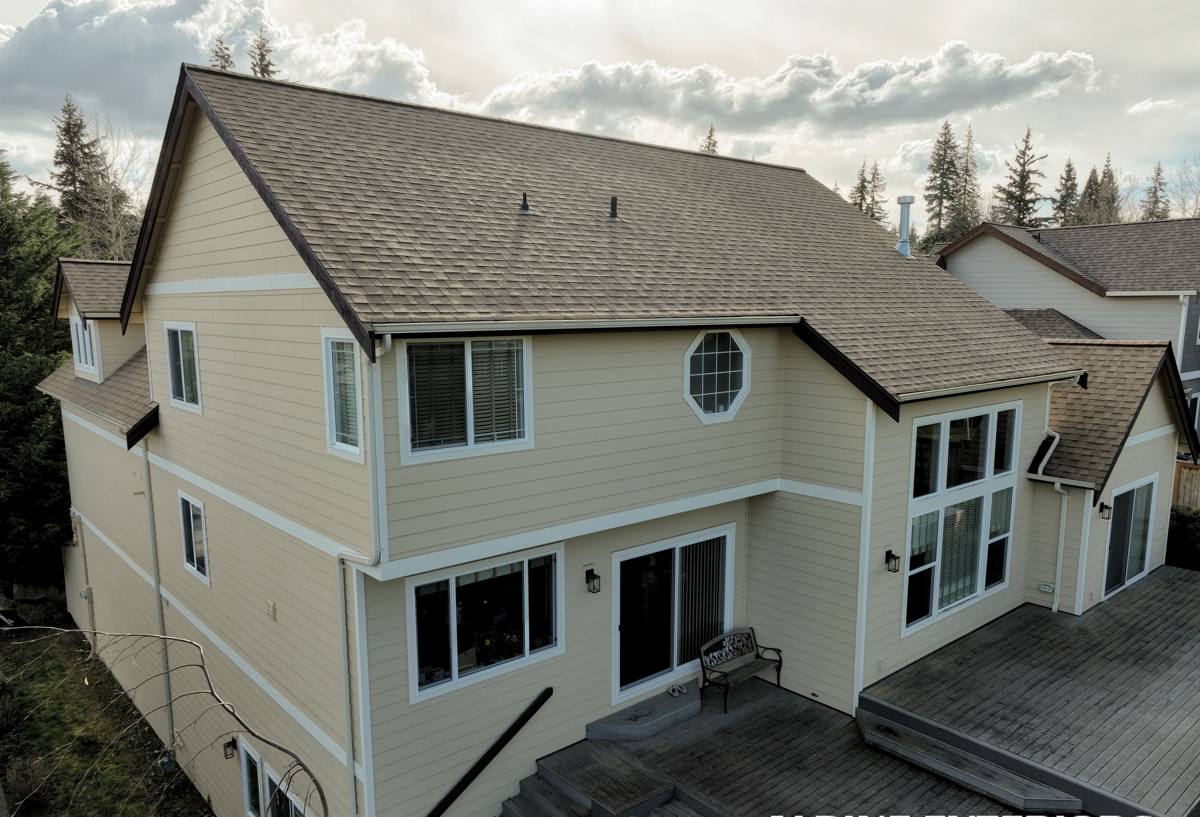
What Actually Wears Out Roofs Here
UV and Heat Cycling
Florida sun is hard on asphalt shingles and any exposed roofing membrane. UV breaks down the asphalt oils that keep shingles flexible, and the daily heat-up/cool-down cycle causes materials to expand and contract. Over years, that cycling loosens nails, cracks sealant strips, and makes shingles brittle enough to crack under foot traffic or wind uplift.
Wind-Driven Rain
Straight-down rain rarely causes leaks on a roof in good condition. The problem is rain driven sideways by wind, which finds its way under shingle tabs, around flashing, and through any gap that wouldn't matter in calmer weather. This is why so many "mystery leaks" only show up during or after a storm with real wind behind it.
Salt Air and Corrosion
Being close enough to the Gulf and Tampa Bay to catch salt in the air means metal components — flashing, fasteners, vent boots, drip edge — corrode faster here than they would further inland. Corroded flashing is one of the most common causes of a slow leak that a homeowner doesn't notice until there's a stain on the ceiling.
Storm and Wind Events
Tropical systems and seasonal thunderstorms bring wind gusts that can lift shingle edges, drive debris into the roof surface, and stress flashing at penetrations like vent pipes and chimneys. Even when a roof survives a storm without an obvious hole, it can come out of it weakened in ways that only show up as a leak weeks or months later.
What We See on Roof Repair Calls in This Area
Many homes in this part of Hillsborough County were built decades ago and have gone through at least one re-roof, sometimes more than one repair layered on top of the last. That history matters, because a repair done properly the first time behaves very differently than one that was patched over without addressing the underlying cause.
- Cracked or curling shingles from age and UV exposure, especially on south- and west-facing slopes that get the most direct sun
- Lifted or missing shingles after wind events, often clustered near roof edges and corners where uplift pressure is highest
- Corroded or improperly sealed flashing around chimneys, skylights, and roof-to-wall junctions
- Deteriorated pipe boots (the rubber collar around plumbing vents) — a very common, very fixable source of slow leaks
- Soft or spongy decking under a specific section of roof, usually from a leak that's been active longer than the homeowner realized
- Granule loss in valleys and low-slope areas where water sits or moves slowly
What a Correct Roof Repair Actually Involves
A roof repair that's done right isn't just about swapping out the shingles that look bad. It starts with figuring out where water is actually getting in — which is sometimes several feet away from where the stain shows up inside the house, since water can travel along decking or framing before it drips down.
Once we find the actual entry point, a proper repair means:
- Removing damaged shingles and underlayment back to sound material, not just covering over the problem area
- Inspecting the decking underneath for soft spots or rot, and replacing any section that won't hold a nail properly
- Correcting or replacing flashing at any nearby penetration, valley, or wall junction — flashing failure is behind more leaks than shingle failure is
- Matching shingle color and style as closely as possible so the repair doesn't stand out
- Re-sealing and re-nailing according to manufacturer specs, not just however is fastest
Skipping any of these steps is how a "repair" ends up needing a second repair a year later.
Our Roof Repair Process
1. Inspection and Diagnosis
We start by getting on the roof (weather permitting) and tracing the leak or damage to its actual source, not just its visible symptom. We'll also check the surrounding area, since one weak spot often means neighboring sections are close behind.
2. Straight Answer on Repair vs. Replacement
If a repair is the honest answer, we tell you that. If the damage is widespread enough that a repair would just be a short-term patch on a roof near the end of its service life, we'll tell you that too, along with why.
3. Written Scope and Estimate
Before any work starts, you get a clear description of what's being repaired, what materials will be used, and what it costs — no vague line items.
4. The Repair Itself
We remove damaged material back to a sound substrate, address the decking if needed, correct flashing, and install matching shingles and sealed penetrations.
5. Final Check
We walk the repair area and the surrounding roof before we consider the job done, so you're not calling us back next month for something we could have caught the first time.
Repair or Replace? How to Tell
| Situation | Repair Usually Makes Sense | Replacement Usually Makes Sense |
|---|---|---|
| Roof age | Under 12-15 years, good overall condition | Nearing or past the shingle's expected service life |
| Damage location | Isolated to one slope, valley, or penetration | Spread across multiple sections or slopes |
| Decking condition | Sound, no widespread soft spots | Rot or soft decking found in more than one area |
| Shingle condition nearby | Surrounding shingles still flexible, granules intact | Surrounding shingles brittle, curling, or balding across the roof |
| Repair history | First or second repair on this roof | Multiple past repairs in different spots — a pattern of a roof wearing out |
Materials We Use and Why
For repairs, matching what's already on the roof is usually the priority — a mismatched patch looks worse and can behave differently in wind and rain than the surrounding material. We work with standard architectural and three-tab asphalt shingles from the major manufacturers, along with proper underlayment, flashing, and pipe boot materials rated for Florida's heat and UV exposure.
We stick to manufacturer installation specs rather than shortcuts, even on a repair job. That includes correct nailing patterns, proper overlap on flashing, and using sealant products rated for sustained sun and heat rather than generic caulk that breaks down in a season or two. It costs a little more in labor time but it's the difference between a repair that lasts and one that becomes a callback.
What Affects the Cost of a Roof Repair
| Factor | Why It Matters |
|---|---|
| Size of the damaged area | A single shingle section costs far less than a multi-slope repair |
| Decking condition | Rotted decking adds material and labor beyond the surface repair |
| Roof pitch and access | Steeper roofs and harder-to-reach areas take more time and safety setup |
| Flashing involved | Chimney, skylight, and valley flashing repairs take more skill than open-field shingle work |
| Shingle match availability | Older or discontinued shingle colors can be harder to match exactly |
We won't quote a number without seeing the roof — anyone who does is guessing. What we can promise is a clear, itemized estimate before any work starts, and no pressure to turn a repair into a full replacement unless the roof genuinely calls for it.
Before You Hire a Roof Repair Contractor, Ask This
- Are you licensed and insured to do roofing work in Florida, and can you provide proof?
- Will you inspect the decking, not just replace the visible shingles?
- Do you address flashing and penetrations, or only the shingle surface?
- What's your plan for matching existing shingle color and style?
- Do you provide a written scope of work and warranty on the repair before starting?
- Have you worked in this neighborhood or on similar-age roofs before?
Why It Matters Hiring a Crew That Knows Town 'n' Country Roofs
A roof repair company that regularly works in this part of Hillsborough County has already seen the common failure patterns tied to this area's older housing stock, the way Gulf-driven storms hit from certain directions, and how salt air affects flashing and fasteners over time. That's the difference between a crew that treats every job as a guess and one that knows what to check first because they've seen the same problem three streets over.
It also means faster response when a storm rolls through and you need someone who isn't driving in from across the county. Roof leaks don't wait for a convenient time, and a local crew can usually get eyes on the damage sooner.
Get a Straight Answer on Your Roof
If you've got a leak, storm damage, or a roof that's just showing its age, we're happy to take a look and give you an honest read on what it needs — repair or otherwise. Fill out the form below for a free, no-pressure estimate.