 Tampa Siding
 Why Valrico's Climate Wears Decks Out Faster Than You'd Think
Valrico sits inland from Tampa Bay, but "inland" doesn't mean protected. Hillsborough County still gets the full weight of Florida's subtropical climate: long stretches of intense UV exposure, near-daily afternoon thunderstorms in the wet season, and the straight-line winds and heavy rain bands that come through during hurricane season from June through November. A deck built or installed without those factors in mind will show it within a few years, not a few decades.
UV breaks down wood fibers and the pigments in stains and sealers, which is why older decks fade, gray, and go brittle even when the wood itself hasn't rotted yet. Humidity keeps moisture sitting in framing lumber longer than it would in a drier climate, which speeds up rot at joints, fastener holes, and anywhere water can pool instead of drain. Wind-driven rain during storms pushes water sideways into places a deck was never designed to shed water from — under railings, behind ledger boards, into the end grain of joists. Even set back from the bay, homes here still deal with salt-laden air after storms moving in off the Gulf, which accelerates corrosion on fasteners and hardware that weren't rated for it.
None of this means a deck in Valrico is doomed. It means the materials, fasteners, and details matter more here than they do in most parts of the country — and a deck that was built to a lowest-cost spec ten or fifteen years ago is very likely past its safe service life today.
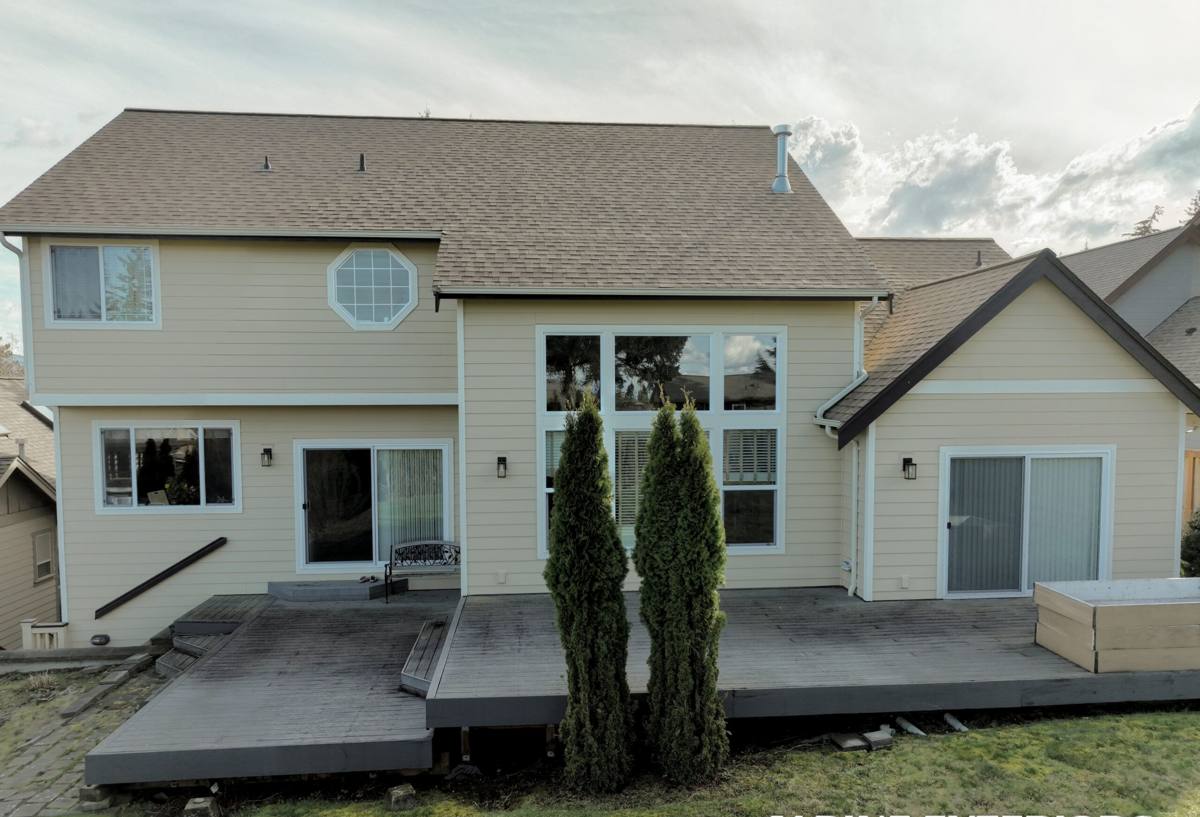
Repair or Replace? Signs to Watch For
Not every deck problem means starting over. But there's a point where patching boards and re-tightening railings is just delaying an expense — and creating a safety risk in the meantime. Signs that point toward full replacement rather than repair include:
- Soft, spongy, or spring-like decking boards, especially near the house or in shaded areas
- Rot or discoloration at the ledger board where the deck attaches to the house — this is the single most common cause of deck collapses
- Rusted, corroded, or missing fasteners, or hardware that was never rated for exterior/coastal-influenced use
- Wobbly railings or posts that move when pushed, which usually means the underlying connection has failed
- Footings that have shifted, heaved, or show visible cracking
- A deck that was never properly permitted or inspected when it was built
- Structural framing more than 15-20 years old, even if the surface boards look fine — framing failure is often invisible from above
If your deck is showing two or more of these, a repair is usually a short-term fix on a structure that's already telling you it's done.
Decking Material Options for Hillsborough County Homes
There's no single "best" decking material — there's a best fit for your budget, how much upkeep you want to do, and how the material actually performs under Florida sun and moisture. Here's how the common options compare for a Valrico climate:
| Material | Upfront Cost | Maintenance | How It Handles Our Climate |
|---|---|---|---|
| Pressure-treated pine | Lowest | Annual sealing/staining recommended | Affordable and strong, but needs consistent upkeep or UV and moisture will shorten its life |
| Composite decking | Mid to upper-mid | Occasional washing, no staining or sealing | Resists rot and doesn't need refinishing; quality varies a lot by brand, so we stick to lines with proven Florida performance |
| PVC/cellular decking | Highest | Lowest — mostly just washing | Fully synthetic, doesn't absorb moisture, very stable in heat and humidity, best long-term option for minimal upkeep |
| Tropical hardwood | High | Periodic oiling to maintain color | Naturally dense and rot-resistant, but requires disciplined maintenance to keep from graying and checking in our sun |
Whatever surface material you choose, the framing underneath matters just as much — we'll get to that next. A premium decking board over undersized or poorly protected framing is still a short-lived deck.
Why We Don't Push the Cheapest Option
We'll always tell you honestly what a lower-cost material means down the road: more frequent sealing, more sanding, more risk of cupping or splintering boards in our humidity. That's not a knock on pressure-treated wood — plenty of homeowners are happy to do the upkeep for the lower upfront cost. It's about making sure you choose with the full picture, not just the sticker price.
What a Correct Deck Replacement Involves
A deck is a structure, not a surface — and most of what determines whether it lasts is underneath the boards you walk on. A proper replacement in this climate includes:
Ledger Board and House Connection
This is where the deck attaches to your home, and it's the most common failure point in Florida decks. It needs proper flashing to keep water from tracking behind the siding and into the house structure, along with fasteners sized and spaced to code — not just toe-nailed or lag-bolted at a handful of points.
Footings and Posts
Footings need to be sized and set to depth for our soil conditions and the loads they'll carry, not eyeballed. Posts should sit on post bases that keep the wood off the concrete and out of standing water, rather than being buried or set directly on a footing where moisture collects against the end grain.
Framing and Joist Protection
Joists and beams should be rated for exterior use and, ideally, protected with a joist tape or flashing on the top edge — this single detail dramatically slows the rot that starts wherever a deck board's fasteners puncture the joist below. Spacing and spans need to match the actual decking material, since composite and PVC often require tighter joist spacing than traditional wood.
Fasteners and Hardware
Every bracket, hanger, and screw should be rated for exterior and corrosion resistance appropriate to Florida's humidity and storm-driven salt exposure — not standard interior-grade hardware that will rust and weaken within a few seasons.
Railings and Guards
Railings need to meet code height and baluster spacing requirements and be attached with hardware that can actually resist the lateral loads people put on them — leaning, kids, pets, and Florida's wind gusts during storms.
Permits and Wind Requirements in Valrico
Deck construction in unincorporated Hillsborough County, which covers Valrico, is subject to county permitting and the Florida Building Code, including wind load provisions for our region. A permitted deck gets inspected at key stages — footings, framing, and final — which is exactly the kind of independent check that catches a bad ledger connection or undersized footing before it's covered up or lived on.
Skipping permits is tempting because it's faster and cheaper up front, but it creates real problems later: unpermitted structures can complicate a home sale, cause issues with insurance claims after storm damage, and leave you with no record that the structure was actually built to code. We pull permits as a standard part of every deck replacement — it's not an upsell, it's how the job gets done right.
Our Deck Replacement Process
- On-site evaluation. We inspect the existing deck's framing, ledger connection, footings, and overall condition to confirm replacement is the right call and to understand what's driving the deterioration.
- Design and material selection. We walk through decking material options, layout, and any changes you want — different footprint, added stairs, upgraded railings — and put together a clear, written scope.
- Permitting. We handle the permit application and documentation with Hillsborough County so the project is inspected and code-compliant from the ground up.
- Demolition and disposal. The old structure comes out, including footings that aren't reusable, and debris is hauled off — we don't leave a job site half-finished.
- Framing and structural work. New footings, posts, beams, and joists go in to current code, sized for your deck's actual layout and loads.
- Decking, railings, and finish work. Surface material and railings are installed, with attention to fastener patterns, drainage, and clean edges.
- Final inspection and walkthrough. We schedule the county's final inspection and walk the finished deck with you before calling the job complete.
Cost Factors to Expect
Every deck is different, so we won't quote a number without seeing the site, but the main factors that move the price are consistent from job to job:
- Decking material choice (pressure-treated wood is the lowest upfront cost; PVC is the highest)
- Deck size and footprint, including whether stairs or multiple levels are involved
- Height off the ground, which affects footing depth, post length, and railing requirements
- Condition of the existing structure and how much demolition is required
- Railing style and any added features like built-in seating or lighting
- Site access for equipment and material delivery
We'll walk through these factors with you during the estimate so you understand what's driving the price, not just what the final number is.
Caring for Your New Deck
A well-built deck still needs some basic upkeep to get its full lifespan out of it in this climate. A simple seasonal routine goes a long way:
- Sweep off leaves, pollen, and debris regularly so moisture doesn't sit trapped against the boards
- Check railings and stair connections periodically for looseness, especially after major storms
- Reseal or restain wood decking on the schedule the product calls for — don't wait until it's visibly gray
- Wash composite or PVC decking occasionally to prevent mildew buildup in our humidity
- Keep gutters and downspouts near the deck clear so runoff isn't dumping extra water onto the structure
- After any tropical storm or hurricane, do a quick visual check of posts, railings, and the ledger connection
Why a Crew That Already Works in Valrico Matters
Deck framing that works fine in a dry, low-humidity climate isn't automatically the right spec for Hillsborough County. A contractor who builds decks across a wide range of climates may default to generic details that meet minimum code elsewhere but don't account for how much moisture and UV exposure a Valrico deck actually sees year-round. Working locally means we're already familiar with the county's permitting process and inspection expectations, we know which hardware and fastener grades actually hold up here, and we're not guessing at wind and framing requirements for the first time on your project.
It also means accountability. We're not a crew that finishes a job and disappears out of the area — we're built to be here if a question comes up after the fact.
If your deck in Valrico is showing its age, or you're just not sure whether it needs a repair or a full replacement, we're happy to take a look and give you an honest read. Fill out the form below for a free, no-pressure estimate.