 Tampa Siding
 Wesley Chapel Is Growing Fast — And a Lot of the Siding Going Up Won't Last
Wesley Chapel has been one of the fastest-growing communities north of Tampa for years now, and that growth shows up in the siding on its houses. New-construction subdivisions get built to a price point, and siding is one of the line items builders trim to hit it. That usually means the thinnest code-compliant product, minimal flashing detail, and installation crews moving fast to keep pace with the build schedule. It's not always bad work, but it's rarely built for the long haul.
Whether your home is five years old in a newer Wesley Chapel subdivision or older and further along, the siding question eventually comes down to the same thing: does what's on your walls right now actually hold up to what this area throws at it, and if not, what should replace it?
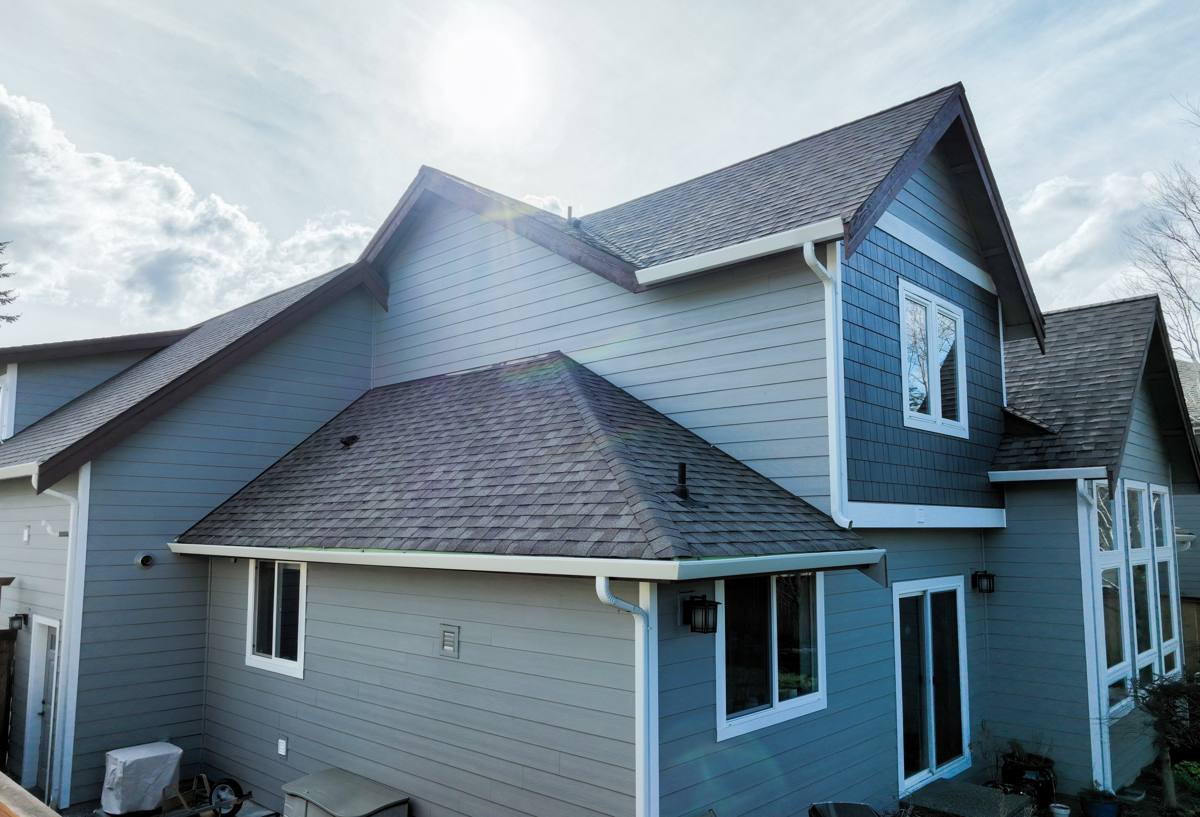
What Wesley Chapel's Climate Actually Does to Siding
Wesley Chapel sits inland from Tampa Bay, which spares it some of the direct salt exposure that coastal Hillsborough and Pinellas homes deal with — but it does not spare it from the rest of what Central Florida throws at an exterior wall year-round.
Sun and heat
Florida's UV load is intense and constant, not seasonal. Siding materials that rely on paint film or a thin factory coating chalk, fade, and lose adhesion faster here than almost anywhere else in the country. Over a decade of full sun exposure, an under-engineered finish will show it — streaking, color loss, and peeling in the sections that catch the most afternoon sun.
Wind and wind-driven rain
This part of the Tampa Bay region sees tropical storm and hurricane-force wind events on a near-annual basis. Wind doesn't just threaten to tear siding off the wall — it drives rain sideways, under laps, and into any seam or fastener point that wasn't sealed correctly. Water intrusion behind siding is one of the most common and most expensive problems we find on homes that look fine from the curb.
Humidity
Central Florida's humidity keeps wood-based and wood-adjacent siding products damp more days than not. Materials that swell, wick moisture, or support mold growth under sustained humidity are working against the climate from day one, not just during storm season.
Signs Your Wesley Chapel Home's Siding Needs Attention
Most siding failures don't announce themselves with a dramatic event — they show up as small signals that get ignored for a year or two. Walk your exterior and check for:
- Soft or spongy spots when you press on the siding, especially near the bottom courses and around windows
- Visible gaps, buckling, or panels that have pulled away from the wall
- Paint that's peeling, bubbling, or chalking heavily when you run a hand across it
- Dark streaking or persistent mildew that comes back soon after cleaning
- Swelling, delamination, or a "puffy" look at seams and corners
- Higher cooling bills than similar-sized homes nearby, which can point to compromised wall insulation behind failing siding
Any one of these on its own might be minor. Several together, especially on a home that's ten-plus years old, usually means the siding system as a whole is past the point where patching makes sense.
Why We Only Install James Hardie Fiber Cement
We standardized on James Hardie siding and don't install vinyl, LP SmartSide, or other fiber cement brands. That's a deliberate call, not a sales preference, and it comes directly out of what holds up in this climate.
James Hardie's fiber cement is non-combustible, doesn't rely on paint film alone to survive UV exposure, and is engineered in specific product lines (Hardie's HZ5 formulation) built for Gulf Coast humidity and heat rather than a generic national spec. The factory-applied ColorPlus finish is baked on under controlled conditions, which is a meaningfully different process than field-painting a wall after installation — it resists fading and chalking far longer than site-applied paint on wood or composite products.
It's also dimensionally stable. It doesn't expand, contract, and warp with humidity swings the way wood-based products can, which matters in a climate where humidity rarely takes a day off. And because it's cement-based rather than wood-based, it isn't a food source for the pests and rot organisms that Florida's warm, wet conditions favor.
None of that makes it maintenance-free or magic — no exterior product is. But it starts from a materially better position for what Wesley Chapel homes actually face, and it comes backed by a strong, transferable manufacturer warranty when installed to spec.
What a Correct Installation Actually Involves
Siding installation quality is decided in places you won't see once the job is done. A correct James Hardie install includes:
- Substrate inspection first. Any rot, water damage, or compromised sheathing behind the old siding gets identified and repaired before a single new panel goes up. Installing over a bad substrate just hides the problem.
- Weather-resistive barrier and flashing. Proper house wrap, and correctly lapped flashing at every window, door, and penetration, so wind-driven rain has nowhere to get behind the cladding.
- Manufacturer-spec fastening. Hardie publishes exact fastener type, spacing, and placement requirements. Get this wrong and you risk both performance issues and a voided warranty.
- Correct clearances. Siding needs to sit a specific distance above roof lines, decks, and grade to avoid trapping moisture — a detail that's easy to skip and hard to notice until it causes damage.
- Proper joint and seam treatment. Butt joints, corners, and penetrations sealed with the right materials, not just caulked over and hoped for.
- Factory-finish handling. ColorPlus panels are cut, handled, and touched up with Hardie-approved methods so the factory finish isn't compromised at the edges.
Skip or rush any one of these steps and the siding can still look right for a season or two before problems start — which is exactly why so much bad work goes unnoticed until it's expensive.
Our Process for Wesley Chapel Projects
1. On-site assessment
We walk the exterior, check the substrate where we can, and talk through what's actually driving the need for new siding — age, storm damage, moisture issues, or just wanting something that will genuinely last.
2. A written, itemized estimate
You get a clear scope: product line, color, what removal and substrate repair is included, and the timeline. No pressure, no vague allowances.
3. Permitting and HOA coordination
Wesley Chapel has a high concentration of HOA-governed communities, and Pasco County permitting has its own process separate from Hillsborough's. We handle both so you're not the one chasing paperwork.
4. Installation to manufacturer spec
Every step above — flashing, fastening, clearances, seam treatment — done the way Hardie specifies, not shortcuts that happen to look fine from the street.
5. Final walkthrough
We go around the finished exterior with you before calling the job done, not after.
What Affects the Cost of a Wesley Chapel Siding Job
| Factor | Why It Matters |
|---|---|
| Home size and story count | More square footage and two-story sections mean more material, more labor, and more staging/scaffolding time |
| Removal of existing siding | Full tear-off and substrate repair adds labor but is often necessary — installing over hidden rot just delays the real cost |
| Trim, gables, and architectural detail | Cut corners, angled gables, and dormers take more time per square foot than a simple rectangular wall |
| Product line and profile | Hardie's various plank, shingle, and panel styles carry different material and labor costs |
| Color selection | Standard ColorPlus colors are typically more cost-effective than custom-matched or specialty finishes |
| Access and lot conditions | Tight lots, landscaping, fencing, or limited driveway access in some Wesley Chapel subdivisions can affect staging time |
We break all of this out in the estimate itself so you know what you're paying for and why, rather than a single lump number.
Why a Crew That Already Works Wesley Chapel Matters
Siding contractors who don't work this area regularly tend to underestimate two things: the storm-driven wind and water demands on the installation itself, and the local process — permitting through Pasco County, HOA architectural review requirements common in Wesley Chapel's newer communities, and realistic timelines around Florida's wet season. A crew that's already done the paperwork and the installs here doesn't have to learn any of that on your project.
There's also a practical service side to it. When you're already established in the greater Tampa area, warranty callbacks, storm-damage follow-ups, and routine questions get a faster response than if your contractor is driving in from well outside the region for every visit.
Ready for an Honest Look at Your Siding?
If your Wesley Chapel home's siding is aging, storm-damaged, or just not holding up the way it should, we're happy to take a look and give you a straight answer — whether that's a full replacement, targeted repairs, or simply confirmation that you've got more life left in what's there. Request a free, no-pressure estimate using the form below and we'll get you scheduled.