 Tampa Siding
 Why Board & Batten Fits Westchase
Board and batten has become one of the most requested siding profiles in Westchase, and it's easy to see why. The vertical lines read as clean and a little more architectural than standard horizontal lap siding, and the style pairs well with the mix of traditional and modern-farmhouse exteriors found throughout this part of Tampa. It works as a full exterior treatment or as an accent on gables, dormers, and entry features next to lap or shake siding elsewhere on the same house.
But board and batten is also one of the least forgiving siding profiles to get wrong. The vertical battens create dozens of extra seams compared to a lap siding job, and every one of those seams is a place where water can find its way behind the cladding if the installation isn't done to spec. In Hillsborough County's climate, that's not a small detail — it's the difference between siding that looks good for decades and siding that causes hidden rot within a few years.
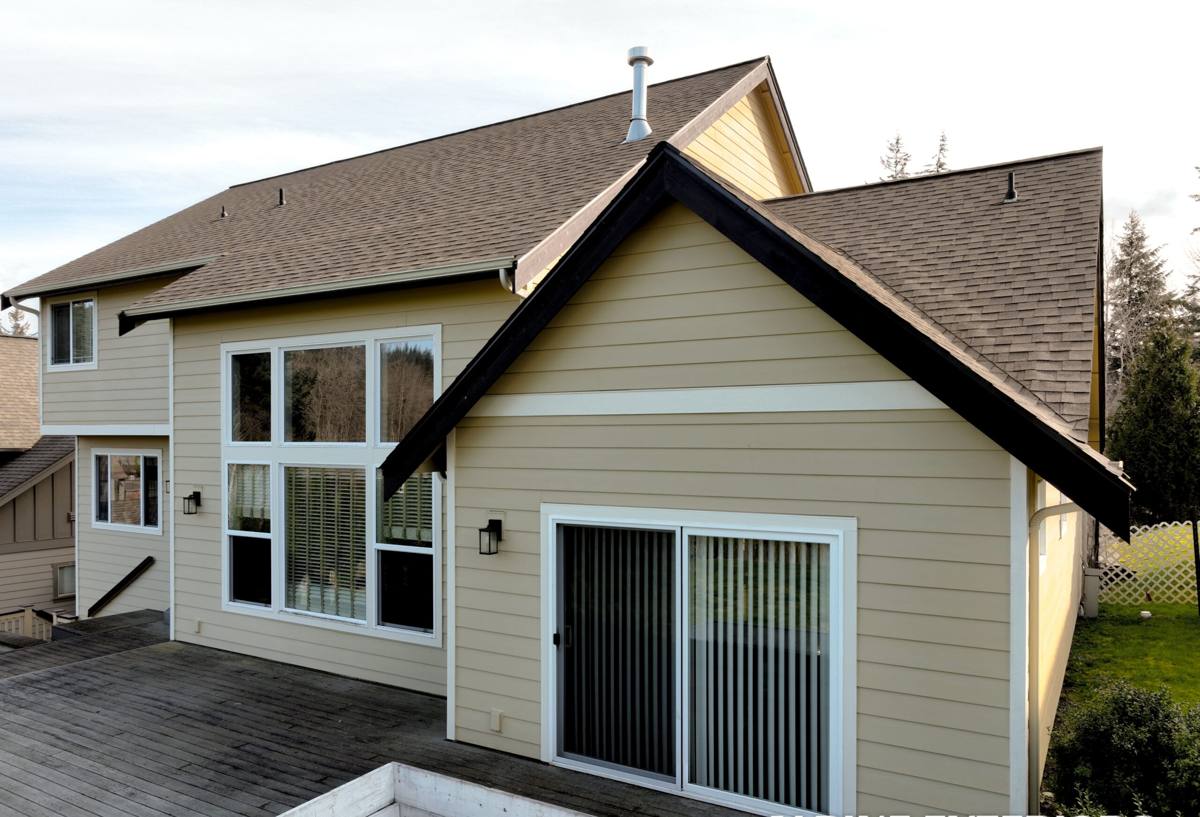
What Tampa Bay's Climate Actually Does to Vertical Siding
Westchase sits well inland from the coast, but it's still squarely in the Tampa Bay weather pattern, and that pattern is hard on exterior materials in several specific ways.
Wind-Driven Rain and the Batten Line
Summer storms in this area don't just fall straight down — they come in sideways, driven by wind, and they hit vertical siding differently than horizontal lap siding. Every batten-to-panel seam is a potential entry point if the installer didn't manage the gap, fastener pattern, and water-resistive barrier correctly underneath. On a well-built board and batten wall, water that gets behind the surface layer is directed back out; on a poorly built one, it gets trapped against the sheathing.
UV and Color Retention
Florida gets some of the most intense year-round sun exposure in the continental United States, and a south- or west-facing wall in Westchase will take a real beating over a 12-month cycle, not just in summer. Paint-grade siding and job-site-painted trim fade unevenly and start chalking years before a factory-applied finish does.
Humidity, Wood Rot, and Pest Pressure
Tampa's humidity stays high most of the year, which is exactly the environment that wood-based and wood-composite siding products struggle with. Trapped moisture behind or within the cladding doesn't just cause cosmetic damage — it invites rot and termite activity, both of which are common concerns for Hillsborough County homeowners.
Hurricane Wind Loads
Wind is the other half of the equation. Board and batten siding has more individual pieces and fasteners than lap siding, which means more opportunities for a fastener schedule to be undersized or for a panel to be under-nailed. In a hurricane-force wind event, that shows up as lifted panels, popped battens, or siding that peels away from a corner first.
Why Board & Batten Is Less Forgiving Than Lap Siding
With standard horizontal lap siding, water management is relatively simple: each course overlaps the one below it, and gravity does most of the work. Board and batten flips that logic. The battens cover the vertical seams between the base panels, but the wall still needs to shed water downward behind those battens, not just rely on the battens themselves to be watertight.
That means the batten spacing, the gap left for expansion and contraction, the fastener placement relative to the panel edge, and the flashing at every horizontal transition (window heads, roof lines, and the base of the wall) all have to be correct — not approximately correct. A crew that treats board and batten like lap siding with extra trim boards nailed on top is setting the wall up to trap water within a few storm seasons.
The James Hardie Board & Batten System We Install
We install James Hardie fiber cement exclusively — no vinyl board and batten, no engineered wood panels, no primed spruce or cedar battens. That's a deliberate standard, not a default. Fiber cement is non-combustible, it doesn't expand and contract with humidity the way wood-based products do, and it holds a factory finish far longer than anything painted on site.
Panel and Batten Specs
For a board and batten wall, we use James Hardie's vertical panel system with fiber cement battens set at engineered spacing over a properly detailed water-resistive barrier. Hardie manufactures its siding in climate-specific formulations for different regions of the country, and homes in the Gulf Coast humidity zone get the version engineered for that exposure — a meaningful difference from a one-size-fits-all product.
ColorPlus Factory Finish
Where the homeowner wants a factory finish rather than field-painted siding, Hardie's ColorPlus coating is baked on under controlled conditions and backed by its own finish warranty, which holds up better under Florida's UV load than a job-site paint job ever will. It also means fewer touch-ups and repaints over the life of the siding.
What a Correct Installation Involves
Most of what separates a board and batten job that lasts 30+ years from one that fails early happens behind the surface, where a homeowner can't see it after the crew leaves. Before we call a job finished, every one of the following has to be right:
- A continuous, properly lapped water-resistive barrier installed and inspected before any siding goes up
- Correct starter strip and base flashing at the bottom of the wall so water is directed out, not trapped against the foundation
- Panel gaps sized to Hardie's specification to allow for expansion, then covered — not caulked solid — by the battens
- Corrosion-resistant fasteners driven at the manufacturer's specified pattern and distance from panel edges
- Z-flashing or head flashing at every window, door, and horizontal trim transition
- Kick-out flashing anywhere a roofline meets a sidewall, directing runoff away from the siding instead of behind it
- Batten spacing and fastening that meets wind-load requirements for the local building code, not just a visually even layout
- Factory-cut or properly sealed field cuts, since an unsealed cut edge is one of the most common places fiber cement siding fails prematurely
Our Process for Westchase Projects
Assessment and Tear-Off Decisions
Every job starts with a walk of the exterior to look at what's actually happening behind the current siding, not just what it looks like from the driveway. Soft spots, staining under window sills, and gaps at trim lines usually mean the substrate underneath needs attention before new siding goes on — covering a rot problem with new panels doesn't fix it. We'll tell you plainly if we find that, and what it takes to correct it, before any siding decisions are made.
Permitting in Hillsborough County
Siding replacement in unincorporated Hillsborough County, where Westchase sits, requires a permit, and wind-load compliance is checked as part of that process given the county's hurricane exposure. We handle the permit application and inspections as part of the job so you're not left chasing paperwork.
HOA and Architectural Review
Westchase is a planned community, and like most planned communities in the Tampa area, exterior changes — including siding material, style, and often color — typically go through an architectural review process before work starts. We factor that timeline into scheduling and can provide the product specifications and color documentation homeowners commonly need for that submission.
Cost Factors on a Board & Batten Project
| Factor | Why It Matters |
|---|---|
| Full exterior vs. accent application | Board and batten used as a full wall treatment costs more than using it as a gable or entry accent alongside lap siding |
| Tear-off vs. installing over existing siding | Removing old siding adds labor but allows inspection and repair of the sheathing underneath — often necessary on older homes |
| Substrate repair | Any rot, water damage, or pest damage found once old siding is off needs to be corrected before new panels go up |
| Factory finish vs. field paint | ColorPlus factory-finished panels cost more up front but reduce repainting cycles over the life of the siding |
| Wall complexity | Corners, window and door openings, and roofline transitions all add flashing and cut work that flat wall area doesn't require |
| HOA-driven specifications | Approved color palettes or trim requirements in planned communities can affect material selection and lead time |
Maintenance and Warranty
One of the practical advantages of fiber cement board and batten over wood-based alternatives is how little ongoing maintenance it needs. There's no annual caulk-and-paint cycle to keep water out, and it doesn't provide the same food source for wood-boring pests that solid wood battens do. A yearly rinse and a visual check of the caulk lines around windows and trim is normally all that's needed.
James Hardie backs its fiber cement products with a long, transferable limited warranty, and ColorPlus finishes carry a separate finish warranty covering fading and chipping. Warranty coverage assumes installation to the manufacturer's specifications, which is exactly why the installation details above aren't optional extras — they're what keeps the warranty valid if you ever need it.
Why Local Installation Experience Matters
Board and batten siding done wrong doesn't usually fail in year one — it fails in year three or four, after a few hurricane seasons and a couple of summers of UV exposure have found every shortcut the crew took. A crew that already works in Westchase and similar Tampa neighborhoods knows what this climate does to a wall over time, knows the local permitting process, and has been through the HOA architectural review process before, which keeps a project from stalling on paperwork it wasn't prepared for.
If you're considering board and batten siding for a home in Westchase, we're happy to walk the exterior with you, look at what's there now, and put together a straightforward estimate — no pressure, no sales script. Fill out the form below to get started.