 Tampa Siding
 Windows Built for New Tampa's Climate
New Tampa sits in northern Hillsborough County, far enough inland to avoid direct coastal surge but still squarely inside the same weather system that shapes every exterior product decision in this part of Florida. Summers bring intense, near-constant UV exposure and daily thunderstorm cells that push rain sideways into window frames. Hurricane season adds the real test: sustained tropical-storm and hurricane-force winds, wind-driven rain measured in inches per hour, and pressure changes that stress a window's frame and glazing far more than any everyday weather does. None of that is unique to New Tampa, but it's the baseline every window installed here has to survive, year after year, not just once.
Tampa Siding Co installs and replaces windows across New Tampa and the surrounding Hillsborough County communities. We also handle siding and roofing, because windows don't function in isolation — they're one component of a wall and roofline system, and a window that isn't properly integrated with the surrounding flashing and cladding becomes the weakest point in an otherwise sound house. In a market where wind and water are the two forces that actually damage homes, that integration is what separates a window that holds up for decades from one that fails at the frame during the first serious storm.
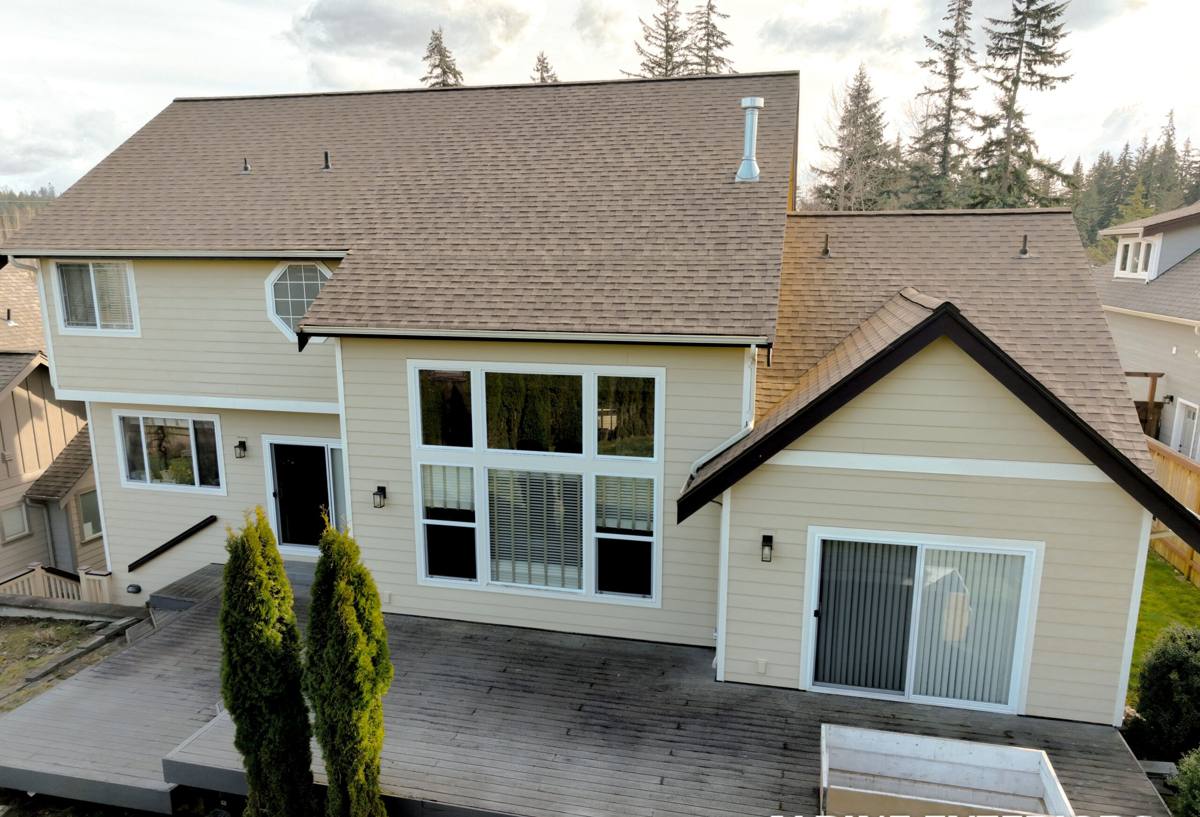
What This Climate Actually Does to Windows
Wind Load and Frame Stress
Hurricane and tropical-storm winds don't just push against glass — they flex the entire frame and test every fastener holding it to the rough opening. A window rated for lower wind pressures, or one installed with undersized or incorrectly spaced fasteners, can rack, bow, or pull away from the opening under sustained load long before the glass itself fails. This is why wind rating and installation method matter as much as the glass package on any window going into a New Tampa home.
Wind-Driven Rain Intrusion
Florida rain during a tropical system or a strong summer storm rarely falls straight down. Wind drives it horizontally into head flashing, sill pans, and the seam between the window frame and the surrounding wall. A window that's watertight in calm weather can still leak under wind-driven rain if the flashing and sill pan weren't built to shed water outward under pressure, not just gravity. Most of the water intrusion we find around older or poorly installed windows traces back to this detail, not to the window product itself.
UV Degradation
Hillsborough County gets intense, nearly year-round sun exposure. UV breaks down inferior vinyl compounds and low-grade seals over time, leading to frame discoloration, brittleness, and gasket failure well before a comparable window in a milder climate would show wear. Glass coatings matter here too — the wrong glazing package lets heat gain into the house and drives cooling costs up across a Tampa summer.
Salt Air and Coastal Influence
New Tampa is inland relative to our waterfront service areas, but Tampa Bay's influence still carries salt-tinged air well into the region, especially with onshore wind patterns. Over years, that accelerates corrosion on lower-grade window hardware, screen frames, and fasteners, particularly on windows facing prevailing wind. It's a smaller factor here than on a bayfront property, but it's not zero, and it's part of why we don't spec hardware finishes based on inland assumptions alone.
Humidity and Condensation
Florida's humidity load means any window with a failing seal shows it fast — fogging between panes, condensation on interior glass, and in persistent cases, moisture finding its way into the surrounding wall cavity. A sound seal and correctly sized, properly ventilated frame keep that humidity outside the wall assembly where it belongs.
Impact-Rated vs. Standard Windows: What New Tampa Homes Actually Need
Hillsborough County building codes require wind-borne debris protection in most areas, which typically means either impact-rated windows or a code-compliant shutter or covering system on every opening. For a full window replacement project, most homeowners in New Tampa find it makes more sense to install impact-rated windows outright rather than pairing standard windows with separate shutters that have to be deployed before every storm.
| Factor | Impact-Rated Windows | Standard Windows + Shutters |
|---|---|---|
| Storm prep required | None — always protected | Shutters must be installed or closed before every storm |
| Upfront cost | Higher per-window cost | Lower window cost, but added shutter system cost |
| Daily use | Normal windows, no visual difference | Shutters can obstruct light and views when deployed |
| Noise and UV reduction | Laminated glass typically reduces both | No added benefit unless shutters are closed |
| Insurance impact | Often qualifies for windstorm mitigation credits | May qualify with a documented, code-compliant shutter system |
| Code compliance | Meets wind-borne debris requirement on its own | Requires shutters to be functional and code-rated |
We'll walk through what your specific home's wind zone and opening protection requirements actually call for, and give you the honest cost comparison rather than defaulting to whichever option is easiest to sell.
What "Impact-Rated" Actually Means
An impact-rated window uses laminated glass, similar in principle to a windshield, bonded to an interlayer that keeps the glass intact even when struck by debris. The frame and anchoring system are engineered together with the glazing to meet a specific design pressure rating, tested under codes like Florida Building Code and, in higher-wind coastal zones, Miami-Dade / Florida Product Approval standards. The rating on the label reflects the whole assembly — frame, glass, and installation method — not just the glass. That's why an impact-rated window installed incorrectly can still underperform its rating in a real storm.
Frame Materials for a Florida Climate
| Frame Material | Heat & UV Behavior | Corrosion Resistance | Typical Maintenance |
|---|---|---|---|
| Vinyl (quality-grade) | Good; premium compounds resist warping and yellowing | Excellent; won't corrode | Low |
| Fiberglass | Very good; dimensionally stable under heat cycling | Excellent | Low |
| Aluminum | Conducts heat, can raise cooling load | Fair; needs a quality finish to resist salt-influenced air | Moderate |
| Wood, clad or painted | Attractive but vulnerable to heat and humidity cycling at joints | Poor without diligent finish maintenance | Higher |
Vinyl and fiberglass are the two materials we most often recommend for New Tampa homes, largely because they hold dimensional stability under the heat-cycling this climate delivers daily and don't give corrosion anywhere to start. Aluminum still has a place on some architectural styles, but it comes with a real trade-off in heat transfer and long-term finish maintenance that we'll walk you through honestly rather than glossing over.
Glass and Glazing: Managing Florida's Heat Load
Glass package matters as much as frame material in a climate where cooling costs run high most of the year. Low-E coatings reduce solar heat gain without darkening the glass noticeably, and insulated (double-pane) glazing is standard on any quality window installed here. For west- and south-facing openings that take the brunt of Tampa's afternoon sun, we'll often recommend a glass package with a lower solar heat gain coefficient specifically for that exposure, rather than specifying identical glass across every elevation of the house regardless of which way it faces.
Full-Frame Replacement vs. Insert Replacement
One of the first decisions on any window project is whether to do a full-frame replacement, which removes the old window down to the rough opening and rebuilds the flashing and anchoring from scratch, or an insert replacement, which fits a new window into the existing frame. Insert replacement is faster and less invasive to the surrounding siding and trim, and it can work when the existing frame is structurally sound, properly flashed, and rated for the opening protection your zone requires. Full-frame replacement costs more and takes longer, but it's the honest answer when there's already moisture damage at the sill or jambs, when the existing frame isn't rated for current wind load requirements, or when the original installation wasn't flashed correctly to begin with. We'll tell you which situation your home is actually in rather than defaulting to the cheaper option and sealing a problem up behind a new window.
Installation Details We Don't Treat as Optional
An impact-rated window is only as good as the opening it's anchored into. Most window failures we see in wind events trace back to installation shortcuts, not the product itself. On every job, that means:
- Anchoring spec and fastener spacing that match the window's tested design pressure rating, not a generic pattern
- A properly pitched sill pan that sheds wind-driven rain outward instead of letting it pool under the frame
- Head flashing integrated with the wall's water-resistive barrier, lapped correctly for water to shed downward and outward under wind pressure
- Jamb flashing tied into the surrounding wall assembly rather than relying on caulk or sealant alone
- Corrosion-resistant fasteners and hardware suited to Hillsborough County's humidity and salt-influenced air
- Proper shimming and squaring so the sash operates correctly and seals evenly for the life of the window
- Permitting and inspection through Hillsborough County or the applicable municipal building department, as required for opening protection work
None of these steps add meaningfully to the cost of a job relative to the window itself, but skipping any of them is exactly what turns a properly rated window into one that fails at the frame in a storm it was supposed to withstand.
Signs a New Tampa Home Needs Window Attention
- Visible fogging or condensation between panes, usually meaning a failed seal on a double-pane unit
- Drafts or a noticeable temperature difference near a closed window, especially during summer heat
- Rising cooling bills without a clear cause elsewhere in the home
- Difficulty opening, closing, or latching a window that used to operate smoothly
- Cracked, brittle, or discolored vinyl frames from years of UV exposure
- Visible gaps, failed caulk, or daylight around the frame from inside
- Water staining on interior wall or ceiling surfaces near a window after storms
- Windows that predate current Florida Building Code wind requirements for the area
Any one of these is worth a professional look before the next storm season. Caught early, most point to a repair or resealing job. Left alone through another hurricane season, several of them point to real risk during the next major wind event.
Repair, Reseal, or Replace? How We Help You Decide
Not every window problem calls for full replacement, and we don't default to recommending one. We look at the age and wind rating of the existing window, whether a seal failure or draft is isolated or widespread across the house, and whether the home's current windows meet the opening protection requirements for its wind zone. A single window with a failed seal on an otherwise sound, code-compliant house is often a straightforward repair or reseal. A house with aging, non-impact-rated windows throughout, or a history of leaks during storms, is more honestly addressed with a broader replacement plan, done in phases if budget requires it, rather than patching individual units one at a time. We'll explain what we find and why, and give you the real trade-offs instead of pushing toward whichever option is more profitable for us.
Why a Local Hillsborough County Crew Matters
A crew that installs windows across this county through actual hurricane seasons, not just spec sheets, sees how wind, UV, and wind-driven rain behave on real houses over years. That shows up in practical decisions: how a given wall orientation in New Tampa needs to be treated based on prevailing storm tracks and sun exposure, how a sill pan should be pitched for the wind-driven rain this area actually sees, which glass packages make sense for which elevation, and how to navigate Hillsborough County's permitting and inspection process for opening protection work without it becoming a bottleneck on your project. It also means working with someone who understands current Florida Building Code wind requirements for this zone specifically, rather than applying a generic approach borrowed from a different climate.
Beyond Windows: Siding and Roofing
Windows are a focus of our work in New Tampa, but the same wind, UV, and wind-driven rain that wears on a window wears on the rest of the exterior too. We also handle siding and roofing work, and the three are often connected in practice — a leaking window can point to a roof-to-wall transition letting water in above it, or reveal moisture damage in the surrounding siding that needs attention as part of the same project. If a window job turns up a related issue elsewhere on the exterior, we can address it as part of the same conversation instead of sending you to find a second contractor.
Get a Free, No-Pressure Estimate
If your New Tampa home has windows that are fogging, drafty, aging past their rated wind protection, or you're simply not confident they'd hold up through the next serious storm, we're glad to take a look and give you a straightforward, honest read on what it actually needs. Reach out using the form below to schedule a free estimate — no pressure, no upsell script.