 Tampa Siding
 Seminole Heights Homes Face a Different Set of Problems
Seminole Heights is one of Tampa's older, more established neighborhoods, with a housing stock that skews toward bungalow and craftsman-style homes built in the early-to-mid 20th century, alongside newer infill construction built in the decades since. That mix matters when it comes to siding. A lot of the original homes in this part of Hillsborough County started life with wood lap siding, and many have already been through one or more re-siding jobs — sometimes with materials that were never a great match for Florida's climate to begin with. Newer homes in the neighborhood often carry vinyl or engineered wood products that are showing their age faster than the marketing promised.
Whatever era your home falls into, the siding on it is doing one job: keeping wind-driven water, UV radiation, and humidity away from the wood framing underneath. In Seminole Heights specifically, mature tree canopy, closer lot spacing, and a mix of home ages mean the right siding replacement plan has to account for the specific house in front of us, not a generic template.
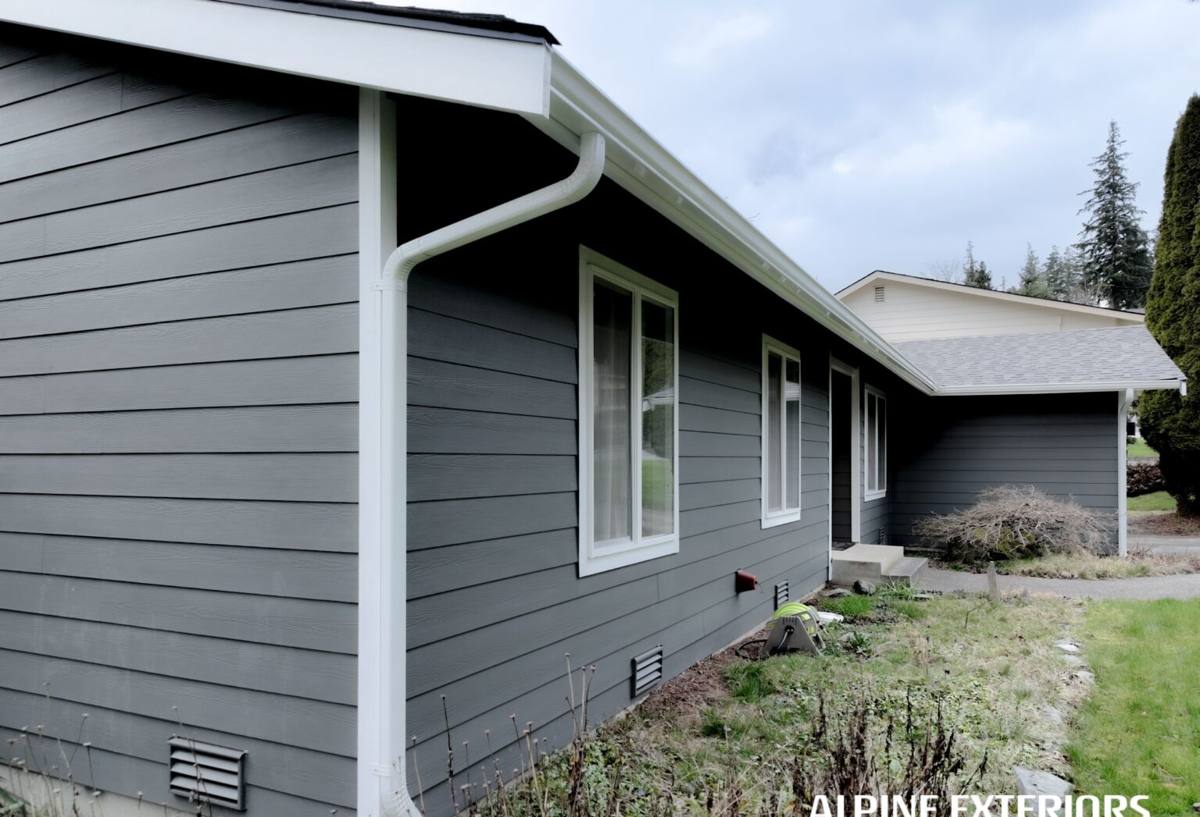
What Tampa Bay's Climate Actually Does to Siding
Hillsborough County sits in a climate that is genuinely hard on exterior building materials, and it's worth being specific about why.
- Hurricane-force wind: Even homes that never take a direct hit see repeated high-wind events over their lifespan. Siding that isn't fastened to the correct schedule, or that isn't rated for the loads involved, works itself loose over time — sometimes gradually, sometimes all at once during a storm.
- Intense, year-round UV: Tampa doesn't get a real off-season for sun exposure. UV breaks down pigments and surface coatings faster than in most of the country, which is why paint jobs and low-grade factory finishes fade, chalk, and need repainting far sooner here than up north.
- Wind-driven rain: Afternoon storms in this region rarely fall straight down. Wind pushes rain sideways into wall assemblies, which puts real pressure on seams, laps, and flashing details — the parts of a siding job that are easy to get wrong and hard to inspect once it's closed up.
- Salt air: Seminole Heights isn't beachfront, but Tampa Bay's salt-laden air travels well inland, and it accelerates corrosion of fasteners and metal trim on homes throughout the county, not just those near the water.
None of these forces are rare or occasional here — they're the baseline. A siding replacement in this neighborhood has to be specified and installed for that baseline, not for a milder climate.
Why the Original Siding on Older Seminole Heights Homes Struggles
On the neighborhood's older homes, we regularly find layers of history stacked on the wall: original wood siding, sometimes covered later by an aluminum or vinyl overlay, sometimes patched piecemeal over the years. Each layer changes how the wall breathes and drains, and not always for the better. Wood siding that hasn't been properly maintained is especially vulnerable to Tampa's humidity and rain — once moisture gets behind it, rot can spread quietly for years before it shows on the surface.
On newer homes, we see a different problem: vinyl siding that has warped or faded under sustained sun exposure, and engineered wood products with edges and cut ends that were never fully sealed, letting moisture wick in over time. Either way, the fix isn't just swapping old panels for new ones of the same type — it's an opportunity to put a genuinely climate-appropriate material on the house.
What a Correct Siding Replacement Actually Involves
Siding replacement is not just cosmetic work, and doing it right involves more than the visible panel. A proper job includes:
- Full tear-off and inspection: Removing the old siding down to the sheathing so the crew can actually see the condition of the wall — soft spots, rot, or prior water damage don't get discovered by accident, they get found because someone looked.
- Sheathing repair: Any rotted or compromised sheathing gets replaced before anything new goes on. Covering over a damaged wall with new siding just hides the problem for a few more years.
- Water-resistive barrier: A correctly installed and lapped weather barrier behind the siding is the wall's real defense against wind-driven rain — the siding itself is the first line, not the only line.
- Flashing at every penetration: Windows, doors, vents, and any other wall penetration need proper flashing so water is directed out and down, never trapped behind the cladding.
- Correct fastening for wind zone: Hillsborough County's wind requirements aren't optional guidelines — the fastener type, spacing, and pattern have to match the product manufacturer's specification for our wind zone.
- Factory-finished material, installed clean: Tight, consistent reveals and properly caulked joints aren't just about looks — sloppy joints are where water gets in first.
Skipping any one of these steps doesn't usually cause an immediate problem. It causes a problem in three to five years, after the wind, sun, and rain have had time to find the shortcut.
A Simple Pre-Estimate Checklist
Before you call anyone out, it helps to walk your own exterior and note what you see:
- Soft, spongy, or visibly warped sections of siding
- Peeling paint or finish that keeps failing no matter how often it's redone
- Gaps, cracks, or separated seams at corners and joints
- Discoloration or staining that suggests water is tracking behind the siding
- Visible fastener corrosion or streaking rust marks
- Any area that feels different in temperature or humidity from the rest of the wall when touched from inside
Why We Install Only James Hardie Fiber Cement
We don't install vinyl, LP SmartSide, Cemplank, Allura, or primed wood siding, and that's a deliberate standard, not an oversight. In a climate like Hillsborough County's, the trade-offs of those products — moisture sensitivity at cut edges, coatings that don't hold up to sustained UV, or long-term maintenance burdens — show up faster and more visibly than they would in milder parts of the country. We'd rather stand behind one product system we trust completely than offer several we'd have reservations about.
James Hardie fiber cement is non-combustible, dimensionally stable in heat and humidity, and available in HZ product lines engineered for climates like ours. Its ColorPlus factory finish is baked on and warranted against fading in a way that field-applied paint simply isn't. Installed to spec, it's built to handle exactly the conditions Seminole Heights homes deal with every year: heat, UV, wind-driven rain, and the occasional serious storm.
Our Process, Start to Finish
| Step | What Happens |
|---|---|
| 1. On-site assessment | We walk the exterior with you, check for hidden moisture or rot, and talk through what's actually driving the need for replacement. |
| 2. Written estimate | A clear scope and price — what's being removed, what's being repaired, and which James Hardie product and color fits the home. |
| 3. Permitting | We handle the Hillsborough County permit process so the job is inspected and documented correctly. |
| 4. Tear-off and sheathing check | Old material comes off, the wall gets inspected, and any repairs happen before anything new goes up. |
| 5. Weather barrier and flashing | The water-resistive barrier and flashing details go in first — the part of the job you won't see again once it's closed up. |
| 6. Hardie installation | Installed to manufacturer spec for our wind zone, with attention to reveals, fastening, and joint sealing. |
| 7. Final walkthrough | We go over the finished work with you before calling the job complete. |
What Drives the Cost of a Siding Replacement
| Factor | Why It Matters |
|---|---|
| Home size and wall complexity | More square footage, more corners, dormers, and gables all add labor and material. |
| Extent of hidden damage | Rotted sheathing found during tear-off adds repair cost that can't be fully known until the wall is opened up. |
| Siding profile chosen | Lap siding, shingle-style panels, and board-and-batten all have different material and labor requirements. |
| Trim and accent work | Detailed trim around windows, eaves, and gables adds time but has a real impact on the finished look, especially on bungalow-style homes. |
| Access and site conditions | Mature landscaping, tight lot lines, and close neighboring structures — common in Seminole Heights — can affect staging and labor time. |
We give a firm, itemized estimate before any work starts, so there's no guessing about what's included.
Why Hiring a Crew That Already Works Seminole Heights Matters
A siding job in this neighborhood isn't the same as a siding job in a newer subdivision with uniform lot sizes and modern framing. Crews who regularly work Seminole Heights know what to expect when they open up a wall on a home from this era — where rot tends to hide, how older framing typically behaves, and how to work cleanly on a tighter lot with mature trees close to the house. That familiarity translates into fewer surprises, a more accurate estimate up front, and a finished result that respects the character of the home instead of fighting it.
It also means we're not guessing about local permitting requirements or wind-zone fastening rules — we handle these on a regular basis in this part of Hillsborough County, not occasionally.
If your Seminole Heights home is due for new siding, or you're not sure whether repair or full replacement makes more sense, we'll take a look and give you a straightforward, no-pressure estimate — use the form below to get started.